
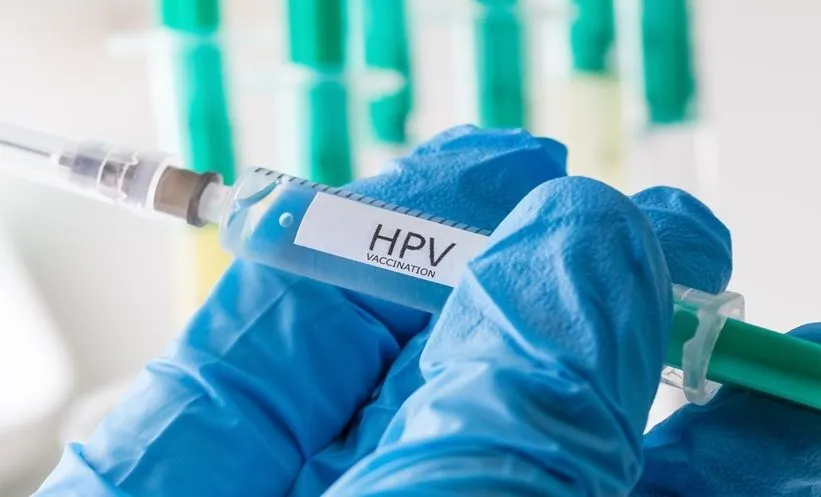
A SINGLE DOSE of the human papillomavirus (HPV) vaccine provides protection against high-risk HPV infections comparable to a two-dose regimen, according to findings from a large randomised trial published in the New England Journal of Medicine. The results could have important implications for global vaccination strategies, potentially simplifying immunisation programmes and improving access to cervical cancer prevention.
The ESCUDDO trial investigated whether one dose of HPV vaccination was noninferior to two doses in preventing persistent infections with HPV types 16 and 18, which are responsible for approximately 70% of cervical cancers worldwide.
Although multidose HPV vaccination is highly effective, global uptake remains uneven, with barriers including vaccine availability, cost, and difficulties completing vaccination schedules. Researchers sought to determine whether a single-dose approach could provide comparable protection while reducing the resources required for vaccination programmes.
Single-Dose Vaccination Achieves Over 97% Effectiveness
The randomised trial enrolled 20,330 girls aged 12–16 years, who were assigned to receive either one or two doses of a bivalent HPV vaccine or one or two doses of a nonavalent HPV vaccine.
The primary endpoint was a new HPV16 or HPV18 infection occurring between months 12 and 60 that persisted for at least 6 months. Researchers also assessed vaccine effectiveness by comparing infection rates among vaccinated participants with those observed in a separate, nonrandomised survey involving 3,005 unvaccinated girls and women.
Results demonstrated that a single dose of either vaccine was noninferior to two doses in preventing persistent HPV16 or HPV18 infection.
For the bivalent vaccine, the difference in infection rates between one and two doses was −0.13 infections per 100 participants (95% confidence interval [CI]: −0.45 to 0.15; P<0.001 for noninferiority).
Similarly, the nonavalent vaccine demonstrated a rate difference of 0.21 infections per 100 participants (95% CI: −0.09 to 0.51; P<0.001 for noninferiority).
Importantly, vaccine effectiveness was at least 97% across all four vaccination groups, highlighting the high level of protection achieved with both single-dose and two-dose regimens. No safety concerns were identified during the trial.
These findings provide strong evidence that administering a single HPV vaccine dose can offer comparable protection against persistent infection with HPV16 and HPV18 over the study period.
The results are particularly relevant for countries where limited resources, vaccine supply constraints, or challenges accessing healthcare services may prevent adolescents from completing multidose vaccination schedules.
Reducing the number of required doses could simplify vaccination delivery, lower programme costs, and allow available vaccine supplies to reach more individuals. This may be especially valuable in low- and middle-income countries, where the burden of cervical cancer remains disproportionately high.
However, the trial assessed persistent HPV infection rather than cervical cancer incidence, and longer-term monitoring will be important to establish the durability of protection beyond the five-year follow-up period.
Overall, the researchers concluded that one dose of either the bivalent or nonavalent HPV vaccine was noninferior to two doses in preventing persistent HPV16 or HPV18 infection. The findings strengthen the evidence supporting simplified HPV vaccination schedules and could contribute to broader global efforts to prevent cervical cancer.