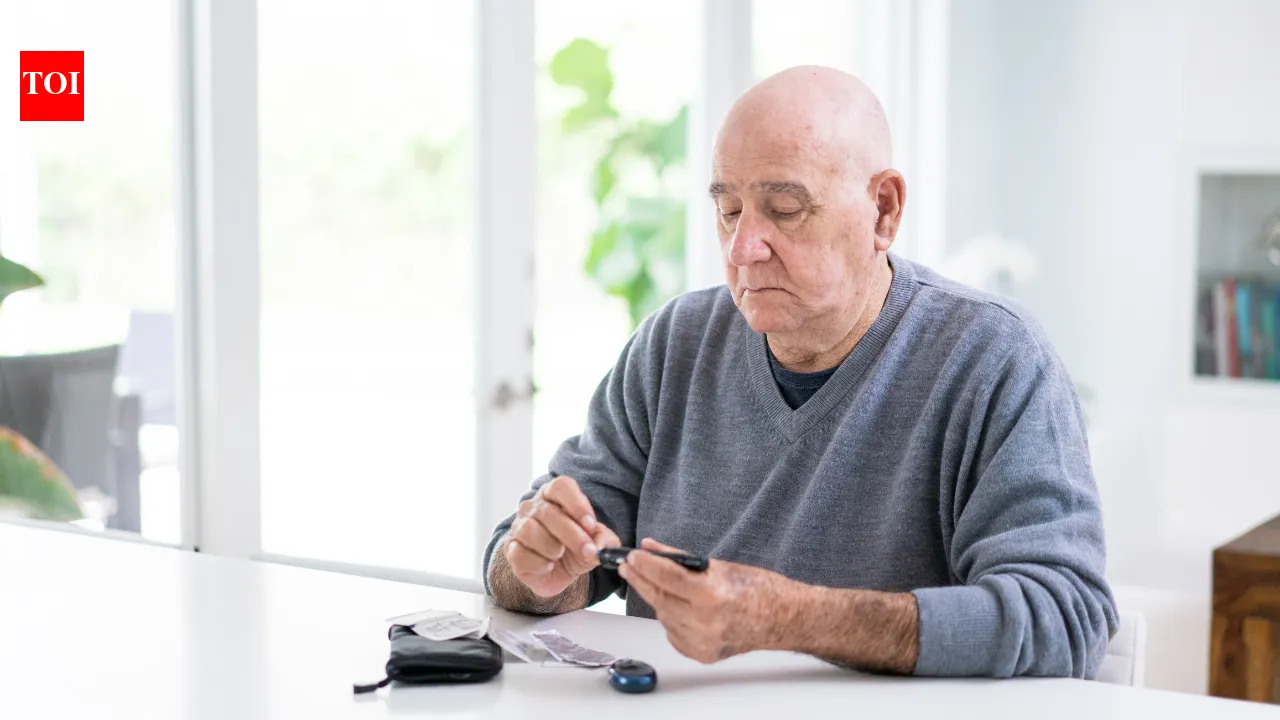
Some winter mornings, a grandfather who has handled his diabetes for twenty years wakes up to numbers that make no sense. He ate the same dinner and took the same tablets. The only thing that changed was the weather. Cold does more than stiffen the knees. For older adults with diabetes, it quietly rearranges how the body behaves.
The body works harder to hold on to its heat in cold weather. In older people whose metabolic control is already shaky, that effort can push blood sugar up suddenly, even when meals stay the same. This is what Dr Ritu Rana of HelpAge India has pointed out. She also notes that self-reported diabetes affects about 14% of Indians aged 60 and above, and that over 70% of seniors live with at least one chronic condition. A cold snap rarely lands on a healthy baseline.
To save warmth, the body narrows the blood vessels in the hands, feet and legs. Where diabetes or peripheral artery disease has already thinned the blood supply, flow drops sharply. The same narrowing can raise blood pressure and strain the heart. Government health bodies agree that poor circulation raises the risk of cold injury. The US National Institute on Aging explains this in its Cold Weather Safety for Older Adults guidance.
Dry, cracked winter skin is a nuisance for most people. With reduced blood flow and slower repair, a small crack on a diabetic foot can turn into an ulcer or a serious infection. A daily check of the soles, heels and toes for cracks, redness or pressure spots takes two minutes and can prevent weeks of trouble.
Joint pain flares, and the fear of slipping on a cold floor keeps people in their chairs. Less movement means more insulin resistance. Diet shifts too. Appetite rises, and sore teeth or gums push people toward soft foods like sweetened porridge. These need almost no chewing and can send blood sugar soaring after meals.
Indoor warmth matters more than most families realise. The NIA advises keeping the heat at 68°F or higher, since even mildly cool homes of 60 to 65°F can lead to hypothermia in older adults. A few other habits help:
Wear loose, breathable layers instead of one heavy garment.
Moisturise dry skin, but keep creams away from the gaps between toes, where damp encourages fungus.
Check sugar more often, keep up fluids, and favour balanced meals over soft, sweet ones.
Add gentle indoor movement, even a few slow laps of the living room.
Caregivers carry real weight here. They can make sure medicines are taken on time and notice early warning signs. A doctor should be called whenever sugar swings or unusual symptoms appear.