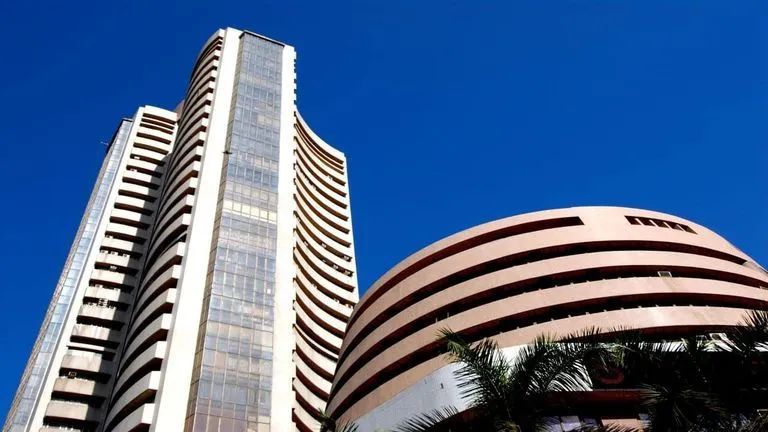


The Indian stock market appears to have delivered its verdict on the US midterm elections even before the political dust has settled. The emphatic Democratic victory, which strips President Donald Trump of Republican control of both chambers of Congress, has been greeted with a rally in Indian equities, a sharp correction in crude oil prices and signs of foreign investors returning to the market.
The reasons for the optimism are not difficult to see. A weakened Trump administration could mean less room for fiscal expansion, greater congressional oversight of foreign policy and trade, and, importantly, a reduced appetite for geopolitical adventurism. For India, which has borne the brunt of elevated oil prices, tariff uncertainty and a volatile external environment, this definitely signals a meaningful improvement in the macroeconomic backdrop.
The Nifty has risen 5.6 percent over five trading sessions through November 4. Foreign portfolio investors have also turned buyers for four consecutive sessions, purchasing equities worth Rs 7,284 crore on November 4. On Thursday, the benchmark index opened 1.66 percent higher, taking it to a near three-month high.
The election has provided an additional catalyst to a market that was already beginning to find its footing. The rally is being driven by the prospect of three favourable developments: lower oil prices, easing global financial conditions and a recovery in corporate earnings.
Oil: The biggest immediate dividend
For India, the most consequential fallout of the election could be a reduction in geopolitical risk premium embedded in crude prices.
Trump's Republican administration has faced mounting domestic opposition to the war with Iran. The Democrats' sweeping victory, including their capture of both the Senate and the House of Representatives, raises the political cost of continuing the conflict. Congressional oversight of military appropriations and the possibility of a negotiated resolution could constrain the administration's ability to sustain or escalate the war.
The market has already begun pricing in this possibility. Brent crude has fallen sharply from its October highs, slipping below $94 a barrel on Thursday.
This is particularly significant for India, where the oil import bill had risen about 24 percent year-to-date, with Brent averaging around $97 a barrel, according to Emkay Research.
The brokerage estimates India's FY27 current account deficit at 1.7 percent of GDP if Brent averages $100 a barrel, against 1.4 percent if it averages $90. The difference illustrates how sensitive India's external balances are to oil prices.
A sustained decline in crude would ease imported inflation, improve the current account balance, reduce pressure on the rupee and lower input costs for a wide swathe of companies. Oil marketing companies, airlines, paints, chemicals and other energy-intensive businesses stand to benefit.
More importantly, lower oil prices could remove one of the principal constraints on domestic monetary policy.
RBI gets breathing space; global yields and the dollar matter
The combination of softer crude and a weaker dollar could ease the pressure on the Reserve Bank of India to maintain a defensive monetary and currency stance.
Elevated oil prices had complicated the inflation outlook, while a weak rupee and persistent foreign outflows had increased the cost of defending the currency. A reduction in these pressures would give the RBI greater flexibility to prioritise domestic growth rather than remain preoccupied with imported inflation and exchange-rate stability.
The US bond market is providing another source of relief. The 10-year US Treasury yield fell six basis points to 4.89 percent following the election, while the dollar weakened. The prospect of legislative gridlock reduces the likelihood of another round of unfunded fiscal expansion and potentially limits the pressure on US borrowing costs.
This is very important for emerging markets, including India, because elevated US yields and a strong dollar have made it more attractive for global investors to remain in dollar-denominated assets.
A sustained moderation in US yields and the dollar could improve the relative attractiveness of emerging-market equities and debt, and lower the risk premium demanded by foreign investors.
There are, however, limits to this optimism. Many economists also caution that the US fiscal deficit is unlikely to be put on a durable path of consolidation. With interest payments rising rapidly and spending pressures persisting, the scope for a sustained decline in Treasury yields may be limited. Sticky US inflation could also keep interest rates elevated.
But that’s a story for another day.
For now, this is more likely to be a period of reduced external pressure for India.
A less hostile Washington, even if trade relief is not immediate
The political implications of the Democratic victory are also super important for India.
Trump's second term has been particularly challenging for India's economic and strategic interests. Tariff actions, uncertainty over H-1B visas and pressure over India's purchases of Russian oil have all created multiple points of friction.
A Democratic-controlled Congress could make it politically more difficult for the administration to pursue an aggressive unilateral agenda. Of course, this can not be mistaken for an immediate rollback of tariffs or immigration restrictions. The President retains substantial executive authority over trade, including the use of Sections 232 and 301 of the Trade Act. Nor does the election automatically reverse existing tariff measures or executive agency scrutiny of employment visas.
The global market commentary suggests the real and meaningful change is in the political incentive structure. With affordability emerging as a central electoral issue, the administration may find it harder to justify policies that increase consumer prices or disrupt supply chains. This could reduce the risk of fresh escalation against trading partners, including India.
The AI rotation argument may be overstated
One popular argument for an Indian market recovery has been that global investors will eventually rotate out of expensive AI-related stocks and redirect capital towards relatively under-owned emerging markets such as India.
The immediate market reaction to the US election does not offer much support for this thesis.
The Nasdaq Composite rose 1.4 percent on November 4, with some of the largest technology companies leading the gains. Microsoft, Amazon and Alphabet advanced as investors bet that a more measured pace of data-centre expansion could strengthen the competitive position of established technology companies. The semiconductor index, however, fell 3.1 percent, while smaller data-centre operators came under pressure.
In other words, the election has triggered a differentiation within the AI trade rather than a wholesale flight from it.
Emkay Research also argues that the midterms are more of a sentiment shock for AI infrastructure than a fundamental capex shock. While local opposition to data centres could slow project approvals and increase regulatory risks, the larger technology companies' investment plans are unlikely to be derailed.
Consequently, betting on an automatic diversion of global capital from AI to India may be premature – and even wrong. India's investment case will have to stand on its own earnings and macroeconomic fundamentals. The good news is, on this, the tide seems to be turning.
Earnings recovery could make the difference
This is where the Indian market's prospects look more encouraging.
After a prolonged period of earnings disappointment, there are signs that corporate profitability is recovering. Motilal Oswal recently raised its FY27 and FY28 Nifty earnings estimates after companies in its coverage universe reported a 33 percent year-on-year increase in net profit in the July-September quarter. Even excluding oil marketing companies, profit growth was around 30 percent.
The improvement in earnings, coupled with a moderation in crude prices and easing external pressures, could provide the foundation for a more sustainable market recovery.
Valuations also offer a more supportive starting point than they did during the market's previous peak. Several sectors have seen corrections, expectations have moderated, and the risk-reward equation has improved. Nomura has pointed to valuations below post-pandemic averages across several sectors, alongside improving corporate earnings and a moderation in foreign investor selling.
This combination points to a healthy market. When valuations are already demanding, an improvement in the macroeconomic environment may not translate into significant upside. But when earnings expectations are recovering and the cost of capital is easing, even a moderate improvement in the risk premium can support a meaningful re-rating.
The potential beneficiaries extend beyond companies directly exposed to lower oil prices. Banks and financials could gain from improving foreign investor appetite and better domestic liquidity conditions. Consumer-facing companies could benefit from lower input costs and a revival in purchasing power. Industrials, capital goods and manufacturing companies could gain from the improvement in economic confidence, and improved visibility in on projects going forward.
The risks have not disappeared
The Democratic victory does not fundamentally alter the US fiscal trajectory, nor does it eliminate the possibility of fresh trade disputes. Trump's executive powers remain significant, and the possibility of a debt-ceiling confrontation in 2027 could introduce another bout of global volatility.
But surely, the balance of risks has shifted in India's favour. The midterm elections have reduced the likelihood of further geopolitical and trade shocks at a time when domestic earnings are showing signs of recovery. The rewards for equity investors can’t be far behind – beyond today’s euphoric rise.