MC INTERVIEW Data centers to be major capex avenue in 3-5 years says Citi’s Neeraj Kumar
India can build its own AI narrative across these layers without necessarily developing foundational models or manufacturing GPUs, says Citi India Corporate banking head
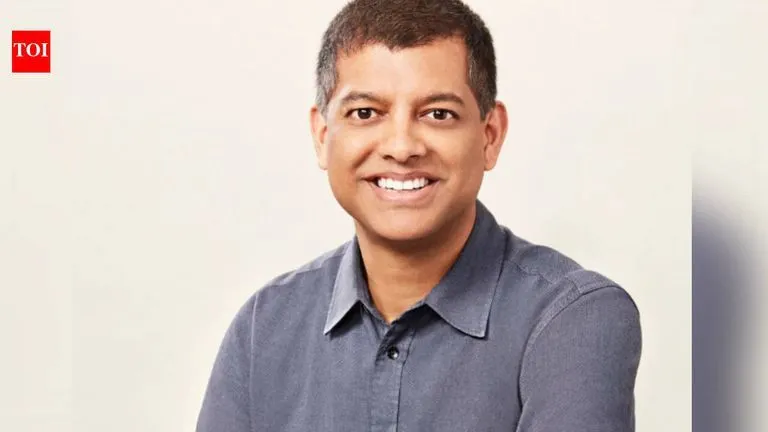
Neeraj Kumar, Managing Director, Head of Corporate Banking, South Asia, Citibank
India’s private capital expenditure cycle is gaining momentum across power, renewable energy, transmission and distribution, data centres, semiconductors and electronics manufacturing, even as corporates remain cautious about volatile global markets and elevated hedging costs.
Speaking to Moneycontrol, Citi India’s Neeraj Kumar, Managing Director and Head of Corporate Banking, says external commercial borrowings (ECBs) could potentially reach $65-70 billion in FY27, though companies are evaluating dollar and rupee funding options amidst increasing hedging costs.
Kumar is betting big on data centres to emerge as the major investment opportunity in India. On the AI front he is optimistic that India can build its presence through energy, data centre infrastructure and applications rather than competing in foundational models and GPU manufacturing.
As for increasing interest rates, Kumar believes it is unlikely to derail most corporate investment plans, although marginal projects could be deferred. Kumar calls the expansion of domestic lenders in M&A financing as a positive move as it as lowered borrowing costs and enabled larger transactions. Edited excerpts:
What's your view on ECB likely to be raised this fiscal?
The market is very volatile and uncertain. From April to July, it was about USD 20 - $23 billion. With this run rate, we may get to USD 65 - 70 billion. The hedging costs are very elevated. This means many large clients will continue to optimise their financing strategies.
Is the switch increasingly happening from dollar bonds to rupee bonds because of the hedging factor?
It is difficult to give a definitive estimate. Large corporates looking to raise billions of dollars have the flexibility to switch between dollar and rupee markets depending on which offers more favourable conditions at a given point. However, what makes rupee funding more attractive today may not hold true three or six months down the line, when an opportunity could emerge in the dollar markets. We will need to keep tracking the trends. Market parameters are changing very frequently.
Are you seeing corporates holding back from their dollar options at this point in time?
The country anyway saw a massive dollar raise during the FCNRB window. We haven't seen a lot of take off in the OFCB (offshore corporate bonds) windows so far. Corporates are definitely reviewing that what makes more sense today – whether equity or debt, because fundraise needs are real and private sector capex is coming back across sectors.
Where are you seeing convincing comeback in private capex?
We are seeing investments across sectors, particularly in the broader power sector—not just in thermal and renewable generation, but also in transmission and distribution infrastructure. Renewable energy capex continues to grow, driven by the country's rising energy demand.
Data centres are another emerging area, although India is still at an early stage compared with the US and other Asian markets such as Singapore, Malaysia and Australia. We have seen increased interest over the last six months from financial sponsors looking to build data centre platforms. I expect data centres to be a major capital-intensive sector over the next three to five years.
We are also seeing continued investments in the semiconductor and electronics manufacturing ecosystem.
In some economies like Australia there’s protest against setting new fresh data centers for environmental reasons. In India, while evaluating data center projects, are you baking similar risks?
I think these risks are relatively limited in India at the moment because the sector is still at an early stage. To put things in perspective, India's current data centre capacity is around 1.5 gigawatts, which is expected to rise to 6-8 gigawatts by the end of the decade, although some estimates put it as high as 10 gigawatts.
Compare this with the US, which has around 65 gigawatts of existing data centre capacity, projected to increase to 110-120 gigawatts by the end of the decade. The difference in scale is significant. While these risks are real, they will become more relevant as India's data centre industry expands. Unlike the US, where individual data centres can have capacities of 1-5 gigawatts, India's entire installed capacity is currently just 1.5 gigawatts. As capacity builds up, these concerns will become increasingly relevant in India as well.
Has India lost out on the AI race?
Broadly speaking, there are five layers in AI and India is going to play in few layers. India will play into the first energy layer, data center layer and into the application layer. We are not there in GPUs and in the foundational models.
Is that enough for India to be on the global AI map?
Since foundational AI models have already been developed, there is little value in trying to replicate them at scale. India can leverage these models to build applications on top of them, much like the Indian IT industry successfully did over the past two to three decades. India can build its own AI narrative across these layers without necessarily developing foundational models or manufacturing GPUs. While the US was an early mover in the AI wave, India is now defining its own narrative, with investments gathering pace.
Does that give you comfort that India can build its AI stack without creating a debt bubble as envisaged in the US?
Indian corporates are investing less in AI than their US counterparts, and a significant portion of AI investments in the US is debt-financed. To that extent, India is likely to be less vulnerable. However, the risk of a debt bubble cannot be ruled out. Whenever there is a major technological transformation, companies tend to build capacity in anticipation of future demand. If that demand does not materialise, weaker players may struggle. For us, the key is to continue working with dominant players in their respective sectors, backed by strong and resilient balance sheets.
Do you believe Indian corporates would be willing to go out to the debt market even if interest rates go up another 75 to 100 basis points?
If you look back over the past 20-30 years, dollar interest rates and LIBOR were typically around 4-5% before the global financial crisis (GFC). The decade or so after the crisis was an unusual period of benign inflation and low interest rates. What we are seeing now is a degree of mean reversion, and elevated benchmark yields across currencies are likely to stay for the foreseeable future.
Rising trade barriers, tariffs and restrictions on global flows are structurally increasing the cost of goods and services. Add to that the impact of geopolitical conflicts and higher crude prices, and inflationary pressures are likely to persist.
For corporates, this means factoring in higher financing costs when evaluating new projects. However, a rise of 200 basis points in financing costs is unlikely to fundamentally alter the economics of most projects, although marginal projects could get deferred. Credit spreads have remained relatively resilient over the past 12-18 months. We have yet to see any major clients significantly reconsidering their investment decisions because of higher interest rates.
How are you defending your 21% market share in the MNC banking space, especially now that you have banks from Japan and Middle East vying for the same business?
The nature of MNC business is such that it is very corridor specific. A large part of the MNCs operating in India come from the US, Europe and UK corridoes into India, where Citi is a dominant player. The Japanese and Middle Eastern banks are not very large in these corridors. Their ability to take away the business from banks like us, will be challenged.
What about on the M&A financing front? We have seen some smaller banks and Indian private banks get into the party. Have they started eating into Citi’s pie?
I see this as a positive development. Opening up financing to a wider pool of lenders is bringing down borrowing costs and enabling larger transactions. In many cases, international banks like ours may underwrite a large portion of the financing upfront and subsequently syndicate it to other banks, though the structure will vary depending on the transaction.
Hamsini Karthik Number crunching, drawing interesting inferences (sometimes contrarian), and penning them in an impactful manner, best describes what I do. As a BFSI specialist, I enjoy telling stories about what’s working and what not for lenders, breaking down regulatory jargon and how they affect customers and financiers, and simplifying the economics of money. When not glued to banks, the world of autos and airlines keeps me busy.
Discover the latest Business News, Sensex, and Nifty updates. Obtain Personal Finance insights, tax queries, and expert opinions on Moneycontrol or download the Moneycontrol App to stay updated!