National Cancer Awareness Day
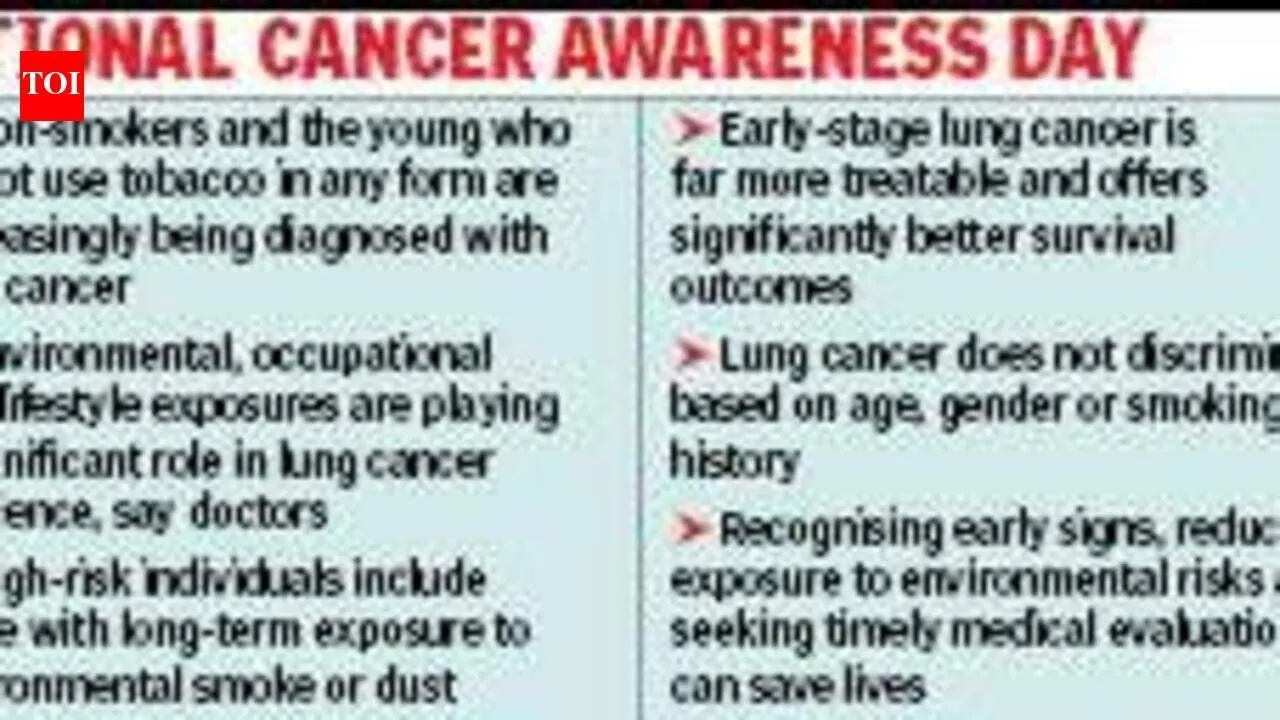
Kolkata: Passive smoking or indirectly inhaled smoke has been causing more aggressive cancer, a reason why fume-spewing firecrackers should be strictly prohibited, said oncologists on National Cancer Awareness Day on Saturday. The Diwali period is one of the worst in terms of environmental smoke and flags off a season of poor air as winter approaches, aggravating lung ailments and exposing a significant section to the risk of lung cancer, they said. Bengal, they pointed out, has one of the highest secondhand smoke exposure rates in India, according to National Family Health Survey (NFHS-5) data. It says 54.2% of women and 68.1% of men here report routine exposure to passive smoking in indoor or public environments. “In non-smoking women exposed to passive smoke, we have noticed a faster cancerous growth than even smokers. Non-smokers are exposed to not just cigarettes and bidis, but growing pollution and other fumes, including chulla smoke at home. Light-emitting firecrackers are extremely bad since they spew carcinogenic material that remain suspended in air and penetrates lungs. It leads to cell changes in the long run, causing cancer,” said Sanjoy Roy, oncologist, Ruby General Hospital. Lung cancer accounts for approximately 14% of all cancer diagnoses in Bengal, significantly higher than the national average of around 6%. Clinical observations across regional oncology centers (including Tata Medical Center and Chittaranjan National Cancer Institute) indicate that non-smokers — predominantly exposed to passive smoke, biomass fuel, and ambient air pollution — now constitute nearly 40% to 50% of all lung cancer cases in the region, according to the Indian Cancer Society. The number of non-smokers, including a significant number of women in Kolkata, suffering from lung cancer has gone up sharply over the last decade and a half, said oncologist Subir Ganguly. “While tobacco smoke is a trigger, environmental pollution is now probably a bigger trigger. Also, non-smokers tend to be more vulnerable to the harmful effects of passive smoking,” said Ganguly. Tobacco smoke contains over 7,000 chemical compounds, of which at least 70 are known human carcinogens. Charnock Hospital pulmonology head Soumya Sengupta said smoke from chullahs and passive smoking were the two major triggers of lung cancer among non-tobacco users. “Also, those working in aluminium, metal processing or cement plants or living close to them are susceptible to lung cancer. The fine particles and dust from these plants lead to lung inflammation which may turn cancerous in the long runAlso, those with severe COPD or lung diseases are prone to develop lung cancer, even if they are non-tobacco users,” added Sengupta. Shyam Krishnan, pulmonologist, CMRI Hospital, said one of the most critical contributors is prolonged exposure to air pollution. “Fine particulate matter, especially PM2.5, penetrates deep into the lungs and causes chronic inflammation, DNA damage and cellular changes over time. Many Indian cities, including Kolkata, consistently record air quality levels far above safe limits, and this long-term exposure significantly raises lung cancer risk, even among those who have never smoked,” added Krishnan. Sengupta, however, argued that pollution doesn’t lead to lung cancer. “Particulate matter may trigger COPD or asthma but can’t cause cancer,” he said. Ruby General Hospital oncologist Sanjoy Roy said around a third of lung cancer patients he encounters have no tobacco use history. “Other than external factors, genetic mutations are also responsible. They are possibly being triggered earlier and in a cancerous form due to pollution, stress or other lifestyle reasons. Also, more women are now getting the disease,” added Roy.
End of Article