We already know that staying active is a major part of living a heart-healthy lifestyle. But new research suggests that adding one specific type of exercise to your workouts could lower your blood pressure in just a few weeks.
Meet the experts: Kevin Shah, M.D., board-certified cardiologist and program director of Heart Failure Outreach at MemorialCare Heart & Vascular Institute at Long Beach Medical Center in Long Beach, CA.; Anna Di, D.C., C.E.S., corrective exercise specialist, chiropractor, and owner of UNITY Chiropractic Wellness in New York City
That’s the takeaway from a recent study published in BMJ Open Sport & Exercise Medicine, which set out to assess the effect of isometric exercises—or static moves, like planks, glute bridges, or wall-sits, that require you to hold a certain muscle contraction—on blood pressure over time.
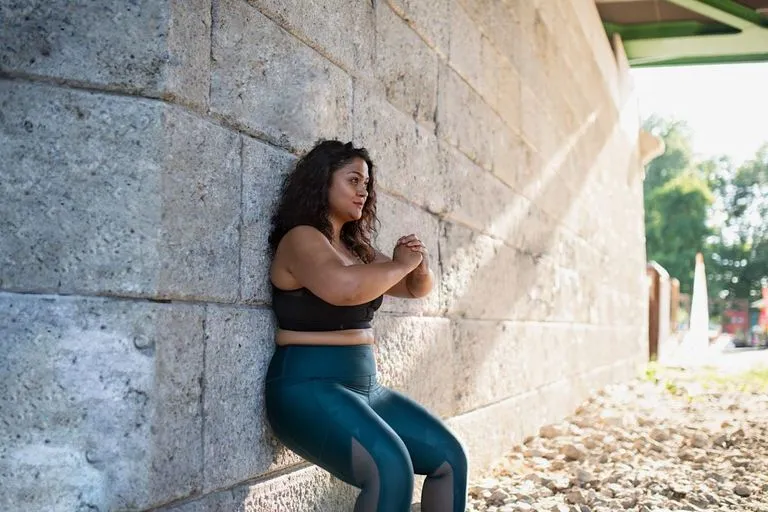
The study was structured in two four-week phases. During the first four weeks, all participants did an isometric exercise training (IET) session—a set of four wall-sits, where you line your back up against a wall, bend your knees as if sitting in a chair, and hold it, with two minutes of rest in between each one—three times per week. During the second four weeks, they were separated into groups that continued exercising three times a week, reduced their exercise to once or twice a week, or stopped exercising altogether.
All of the groups that completed IET sessions in that first four-week phase showed improvements in their blood pressure. By the end of the second four-week period, the groups that reduced their IET sessions to once or twice a week had lowered their systolic blood pressure by an average of 6.56 to 6.95 mmHg, but it was starting to show signs of drifting back upward. The group that maintained the three sessions a week, on the other hand, had the greatest benefit, with an average reduction of 13 mmHg. That group also experienced more sustained perks to their heart rate and blood vessel health.
Ahead, experts break down what all that means for your heart—and your workouts.
Why are the findings significant?
If cardio workouts like brisk walking, cycling, or running aren’t for you, the findings show that you don’t necessarily have to get sweating to see significant heart health benefits. “Relatively simple exercises, which require little time or equipment, may help lower resting blood pressure,” explains Kevin Shah, M.D., board-certified cardiologist and program director of Heart Failure Outreach at MemorialCare Heart & Vascular Institute at Long Beach Medical Center in Long Beach, CA. “For people who struggle to find time for longer workouts, this offers another accessible way to support cardiovascular health.”
As for why it may work? “Over time, exercise can help improve how efficiently our heart works and how well our blood vessels respond to changes in blood flow,” explains Anna Di, D.C., C.E.S., corrective exercise specialist, chiropractor, and owner of UNITY Chiropractic Wellness in New York City. And cardio exercise—something that requires your muscles to be in constant motion—isn’t the only type that “counts” as exercise. Isometric exercises certainly fit the bill, just in a different way. “Isometric exercises are different because you’re contracting your muscles without actually moving your joints,” Di says. Plus, exercise may help relieve stress, which she says is an important factor for blood pressure management.
And it doesn’t take long to see results, either. People were already seeing improvements in their blood pressure levels after just four weeks.
Importantly, the people who maintained the habit over the following four weeks saw the biggest benefit. “The biggest takeaway is that consistency matters. Participants who continued performing isometric exercises three times a week experienced the largest sustained reduction in resting blood pressure,” Dr. Shah says.
Di agrees. “Our bodies adapt to the activities we regularly perform,” she explains. “When we exercise consistently, we can develop positive cardiovascular adaptations. But when we stop exercising, some of those improvements can gradually diminish.”
That falls in line with the study’s findings that cutting a session or two of exercise per week led to less robust blood pressure benefits. But only the group that did zero sessions after four weeks was back to square one in the BP department—the other folks still experienced some of the perks.
“Even when participants reduced the amount of isometric exercise they were doing after the first four weeks, they were still able to maintain some of those blood pressure benefits,” Di says. After all, life, work, and travel often get in the way, and we all realistically have to take breaks from our usual exercise routines. “It’s nice to know that reducing the frequency of exercise doesn’t necessarily mean that all the benefits we’ve worked toward will immediately disappear.”
What makes isometric exercise helpful?
The stillness of these isometric moves is actually pretty deceiving, according to Di. “Sometimes we forget that it actually takes quite a bit of strength to hold our bodies in one position,” she explains. “Think about holding a plank or a wall-sit. Even though you’re not moving, your muscles are continuously working to support your body and maintain that position.”
One of the major benefits of isometric training is that it can be a more stable and controlled way to strengthen the same muscles that you work in other exercises that require you to move through a range of motion. For the same reason, Di says isometric exercises are often used in PT or rehab for certain injuries.
And just because these exercises are static doesn’t mean you can’t up the intensity over time. That may mean increasing your endurance by holding a position for longer. But Di says it could also mean playing around with performing the exercises at different muscle lengths. For instance, a shallower wall-sit may feel less intense than a 90-degree one, which lengthens your leg muscles further.
That said, the best exercise routines incorporate a wide variety of moves (barring any injuries or conditions that make that difficult for you), so Di warns against doing only isometrics. “Our muscles aren't meant to stay in one position forever,” she says. “[We move them] throughout the day, whether we're walking, bending, reaching, or lifting something. So while isometric exercises are great for building strength and stability in specific positions, we also need dynamic exercises that train our muscles to move through different ranges of motion.”
What does this mean for you?
If there’s one thing the study’s results highlight, it’s that incorporating a few manageable, repeatable exercises into your routine could make a measurable difference—you don’t have to overhaul your workouts overnight. “If you are interested in isometric exercise, wall squats or static leg extensions may be useful additions to your routine,” Dr. Shah suggests. “Progress, not perfection, is the goal. The best routine is one you can maintain consistently.”
If you’re new to them, resist the urge to hold your breath while you’re maintaining the position. “It’s important to breathe normally during these exercises because holding your breath while straining can cause your blood pressure to rise significantly,” Di says.
And since varying your workouts usually comes with the most benefits, Dr. Shah recommends incorporating other types of exercises, whether that be strength training or even a 10-minute walk, when you can. Just be sure to check with a doctor before starting any strenuous exercise program for the first time, especially if you have hypertension or another medical condition.
But remember that exercise is only one piece of the heart health puzzle. Dr. Shah says eating a heart-healthy diet, getting enough sleep, limiting stress, and avoiding smoking and excess alcohol are also key for blood pressure management. “Finally, know your numbers. High blood pressure often has no obvious symptoms, so checking your blood pressure regularly and discussing elevated readings with your healthcare professional can help identify problems early,” he says. “Lifestyle changes are powerful, but they should complement, not replace, prescribed treatment when medication is needed.”
The bottom line
The study’s findings are an encouraging sign that even small, manageable exercises can help manage blood pressure in a meaningful way, but there’s more to consider. Dr. Shah points out that the study’s sample was relatively small and consisted mainly of young adults who weren’t taking blood pressure medication, so more research is needed to see how the results may apply to other groups.
Still, there’s reason to be optimistic. “This reinforces the idea that regular, manageable activity can make a meaningful difference in cardiovascular health,” Dr. Shah says. “Wall squats and static leg extensions are practical options that people can incorporate into their routines without needing a gym or specialized equipment.”
Di agrees. “I think it’s encouraging to know that exercise can be a drug-free way to help manage blood pressure, especially when we’re talking about exercises that don’t necessarily require equipment or a gym membership. Of course, that doesn’t mean exercise should replace medication for people who need it.”