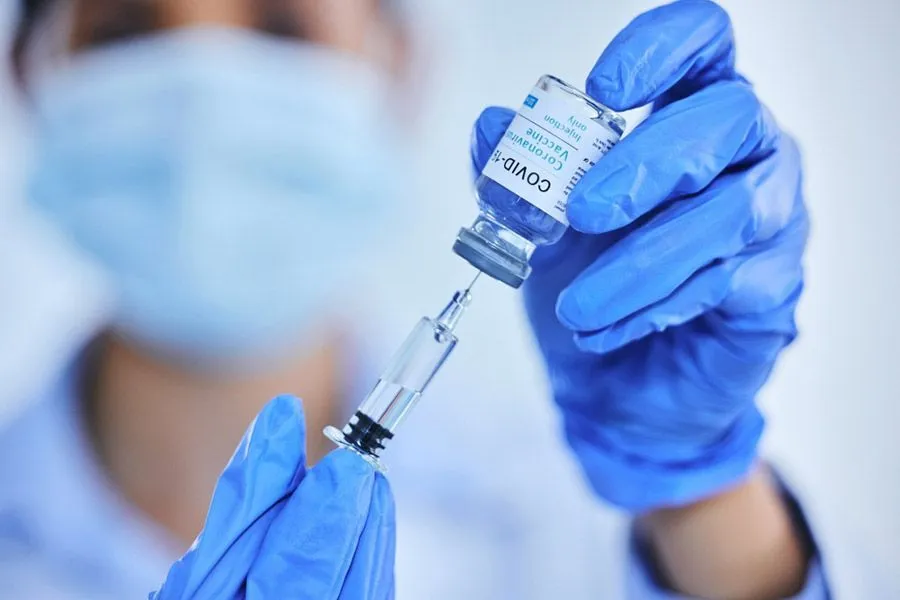
Covid-19 vaccines generated estimated health and economic returns of up to $809 for every dollar invested during the first year of vaccination, but richer countries benefited more because they received doses earlier and rolled them out faster, a study has found.
Published in PLOS Medicine, the research examined data from 173 countries, comparing vaccine development, manufacturing and delivery costs with benefits including lives saved, hospitalisations avoided and reduced healthcare and productivity losses.
"While developing and rolling out these vaccines at unprecedented speed required substantial upfront investment, the health and economic benefits far outweighed the costs within just one year," said lead author Hallie Benjamin, who worked on the research as a student at the London School of Hygiene and Tropical Medicine.
Researchers from the institution, Imperial College London and New York University, estimated returns ranging from $59.70 to $809 per dollar invested, depending on how benefits were valued. These estimates reflect health and economic value, not cash profits. The analysis covered December 8, 2020, to December 8, 2021.
High-income countries benefited from early access, higher vaccine uptake and faster rollouts. Their older populations also faced greater risks of severe illness and death.
Many low- and middle-income countries did not gain widespread access until late 2021, after substantial numbers of people had already contracted Covid-19 and developed some immunity, the researchers said.
"The lesson is there should be a way to get this vaccine to countries that need it faster. Because of the delays, it wasn't as useful to many of those countries as it could have been," said author Mark Jit, a professor at New York University's School of Global Public Health.
"Our study provides evidence that the unprecedented, rapid investments made into COVID-19 vaccines early in the pandemic paid off massively both in health and economic benefits," he added.
Despite the delays, low-income countries recorded the greatest savings in healthcare and productivity costs relative to their economies and populations.
The researchers said assessments of vaccination often focus on the price of buying doses, without accounting for the investment needed to develop them.
"Vaccine development, as well as equitable vaccine distribution globally, should be prioritised before and during global health crises," Jit said.
He noted that Covid-19 vaccine development was not solely a private-sector undertaking. Governments, including those of the US, China and European Union countries, provided substantial funding to reduce the financial risks for manufacturers.
The study relied on earlier estimates of vaccination's impact and examined only the first year of the rollout, limitations the authors acknowledged.
(With inputs from PTI)