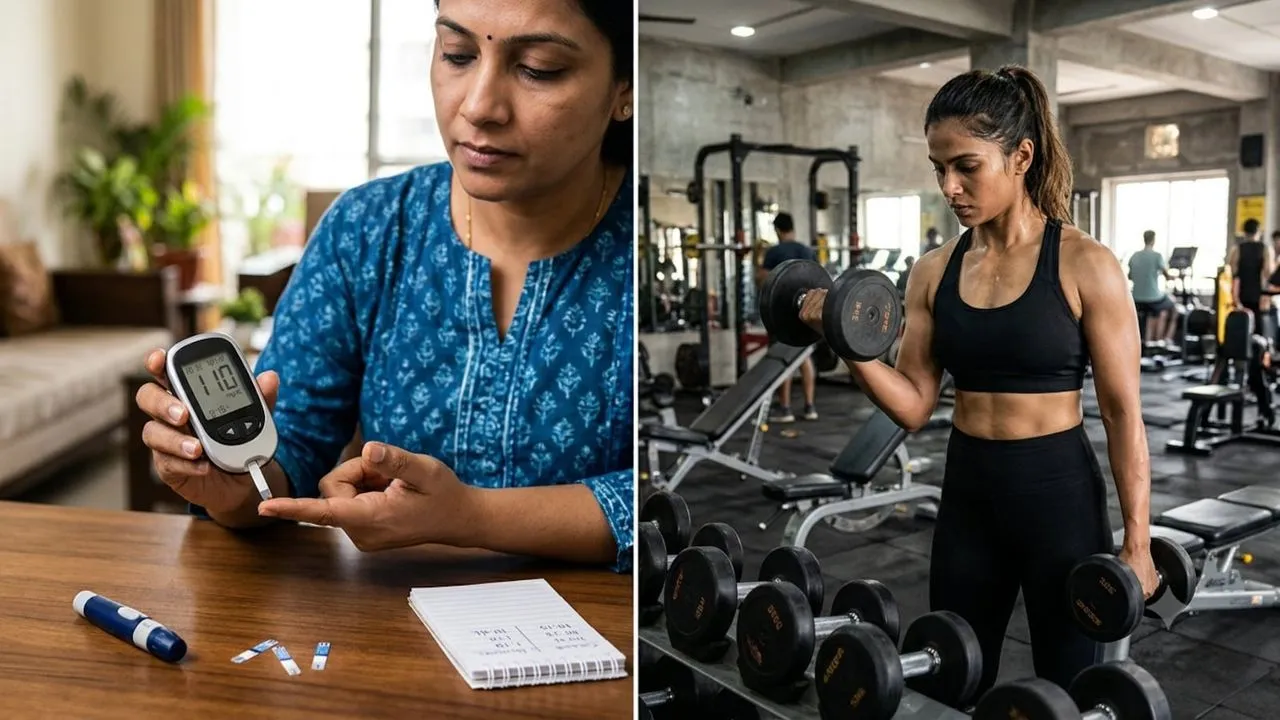
When we talk about preventing diabetes, the conversation usually revolves around cutting sugar, losing weight, eating better and walking more. But there is another important factor that often gets overlooked: muscle. Muscles do much more than help us move, lift weights or stay physically fit. They play a crucial role in regulating blood sugar. In fact, skeletal muscle is the body's largest site for insulin-stimulated glucose uptake. This means how much muscle we have, and how efficiently it works, can influence our metabolic health. As we approach World Diabetes Day on November 14, doctors are drawing attention to an important question: Could building and maintaining muscle be as important as watching our blood sugar?
Why does muscle matter for blood sugar?
Dr Ambrish Mithal, Group Chairman, Endocrinology and Diabetes Max Healthcare, explains that skeletal muscle plays a central role in controlling blood glucose, particularly after meals. "When blood glucose rises after a meal, insulin stimulates muscle cells to take up glucose from the bloodstream. This glucose is either stored as glycogen or used as immediate energy." Muscles also help regulate glucose availability between meals and during physical activity. There is another interesting aspect to this process. When muscles contract during exercise, they can take up glucose through pathways that do not depend entirely on insulin. Regular physical activity also improves insulin sensitivity, helping the body use insulin more effectively. In simple terms, healthier and more active muscles help the body manage blood sugar better.
What happens when we lose muscle?
Muscle mass and function tend to decline with age, particularly when physical activity levels are low. But the implications go beyond reduced strength or mobility. Dr Mithal points out that declining muscle mass reduces the body's capacity to take up and utilise glucose. "If this is accompanied by reduced physical activity and increased fat, it leads to deterioration in muscle quality and insulin resistance increases." There is also an important difference between muscle quantity and muscle quality. Muscle can accumulate fat within and around its tissue, making it less efficient metabolically, even when its overall volume appears relatively preserved. This means that simply having a certain amount of muscle does not necessarily mean that it is functioning optimally. It is one reason why body weight and BMI alone cannot provide a complete picture of metabolic health.
READ | South Actor Madonna Sebastian's Workout Routine Includes Strength Training: How It Benefits Women's Bones, Muscles
The thin-fat Indian: Why a normal BMI may not tell the whole story
This discussion is particularly relevant to Indians. Many Indians have what is commonly described as a thin-fat phenotype, sometimes called TOFI (thin outside, fat inside). As Dr Mithal explains, "Indians tend to have what is often described as a thin-fat phenotype (TOFI - thin outside, fat inside). They have less muscle and a greater proportion of body fat, particularly visceral fat, even when our BMI is normal." This means a person may not appear overweight but could have relatively little muscle and more fat around internal organs. Visceral fat is particularly concerning because of its association with insulin resistance and other metabolic problems. This body composition pattern may help explain why Indians can develop type 2 diabetes at younger ages and at lower BMI levels than many Western populations.
Research among Asian Indians has also highlighted differences in muscle strength and muscle quality among people with prediabetes and type 2 diabetes, sometimes even when their muscle mass appears similar. The takeaway is important because being slim does not automatically mean being metabolically healthy.
Can you be slim, have a normal BMI and still be metabolically unhealthy?
Dr DM Manoj, Sports Physio, Founder and Director, Physioactive India says, "BMI is a useful screening tool, but it does not distinguish between muscle and fat or tell us where fat is stored. Someone with a normal BMI could still have low muscle mass, reduced strength and excess abdominal fat. Dr Manoj suggests three simple ways to get a better understanding of muscle and body composition:
1. Grip strength- Grip strength is a simple measure of muscle strength. A handgrip dynamometer can be used to assess it. Lower grip strength may indicate reduced overall muscle function.
2. The chair-stand test- Try sitting down and standing up five times without using your hands. Taking more than 15 seconds may indicate reduced lower-body strength and the need for further assessment.
3. Waist measurement- For Indians, a waist circumference of more than 90 cm in men and 80 cm in women indicates increased abdominal obesity risk.
These checks can provide useful clues, but they are not a substitute for a medical assessment. Blood glucose, HbA1c, blood pressure and cholesterol levels are also important when evaluating metabolic health. The larger point is that the weighing scale cannot tell us everything about our health.
Is walking enough? Why strength training needs more attention
Walking is beneficial and should remain an important part of everyday physical activity. However, maintaining muscle requires more than simply increasing daily step counts. Resistance training, whether using weights, resistance bands or body weight, challenges muscles and helps maintain or build strength. It can also improve insulin sensitivity and glucose utilisation. The American Diabetes Association's 2026 Standards of Care recommend at least 150 minutes of moderate-to-vigorous physical activity per week for most adults with diabetes, alongside resistance exercise two to three times a week on non-consecutive days. Dr Manoj recommends incorporating three resistance-training sessions per week on alternate days, alongside approximately 30 minutes of aerobic activity such as walking, cycling or swimming. "Rest days are important because muscles need time to recover, repair and adapt to training."
Which exercises should you start with?
You do not necessarily need an expensive gym membership or sophisticated equipment to begin building strength. Dr Manoj recommends starting with six to eight exercises that work the major muscle groups. These include:
Squats or sit-to-stands: Strengthen the thighs and glutes.
Step-ups: Improve lower-body strength and balance.
Wall push-ups: Work the chest, shoulders and arms.
Rows: Strengthen the back and upper body.
Hip bridges: Activate and strengthen the glutes.
Farmer's walk: Improve grip strength, core stability and functional strength.
A practical starting point is two to three sets of eight to 12 repetitions, depending on individual fitness and ability.
How much weight should you lift?
The answer is not the same for everyone. Dr Manoj explains that the amount of resistance and number of repetitions should depend on a person's current strength, fitness and health. "The exercise should feel challenging towards the last two repetitions. As your strength improves, resistance should gradually increase. This is called progressive overload." The principle is simple, one should gradually increase the challenge placed on your muscles so they adapt and become stronger. Progressive resistance training does more than improve physical strength. It can improve insulin sensitivity, glucose utilisation and overall metabolic health. Combining resistance training with aerobic exercise can provide additional benefits compared with doing either alone.
People with diabetes, particularly those with complications or other medical conditions, should have their exercise routine individualised with guidance from their doctor or physiotherapist.
The bigger message is to look beyond the weighing scale
Diabetes prevention and management cannot be reduced to a number on the weighing scale. Body composition, muscle strength, visceral fat, physical activity and metabolic health all deserve attention. As Dr Mithal's observations highlight, the conversation around diabetes needs to move beyond weight loss alone and include the preservation of healthy, functional muscle. Dr Manoj's recommendations underline that building strength does not necessarily mean lifting heavy weights or spending hours in a gym. Starting with simple exercises, maintaining consistency and gradually increasing resistance can make a difference. This World Diabetes Day, remember: Building muscle is not just about looking fitter. It is also about giving your body a better ability to manage blood sugar.