

Donna Boyce: "The most competitive regions are those that turn scientific excellence into better health outcomes fastest"
As policymakers consider measures to streamline and better coordinate clinical trial assessments, these reforms should be judged by whether they improve Europe’s ability to attract clinical research, expand patient participation, and translate scientific strength into earlier access to innovation.
Tangible benefits for Europeans
For biopharmaceutical companies, an efficient, predictable regulatory system influences where research is conducted, investment allocated, and how quickly innovative medicines can be developed. For Europeans, success should mean more multinational clinical trials, broader patient participation across Member States and earlier access to treatments, sometimes years before commercial availability.
Other regions show what is possible when the environment is right. Pfizer’s partnership with 3SBio was built on a clinical development programme that generated evidence quickly and efficiently. The lesson is that effective regulatory frameworks attract research, capital and partnerships, which in turn strengthen scientific ecosystems and create opportunities for patients.
Europe needs coordination strong enough to deliver one coherent outcome, not simply better communication between fragmented national processes
China has made life sciences a strategic priority through faster reviews, alignment with global standards, stronger IP protection and a coordinated national approach. It now accounts for nearly 40% of global oncology trials and roughly 30% of the global R&D pipeline.
Ultimately, competitiveness and patient benefit are inseparable. The most competitive regions are those that turn scientific excellence into better health outcomes fastest.
Addressing EU regulatory fragmentation
Europe needs coordination strong enough to deliver one coherent outcome, not simply better communication between fragmented national processes. Today, multinational clinical trials face divergent scientific and ethical interpretations, repeated requests for information, and separate national decisions. The result is delays for patients, uncertainty for sponsors, and a less attractive environment for research investment.
One objective should therefore be a single assessment of the common scientific and ethical elements, drawing on expertise across relevant Member States. Crucially, the common conclusion must be binding. Otherwise, Europe risks creating another layer of coordination without removing the underlying duplication.
The common conclusion must be binding. Otherwise, Europe risks creating another layer of coordination without removing the underlying duplication
This should not be seen as a loss of national assessment autonomy. Quite the opposite: a more integrated system allows authorities to pool expertise and reduce administrative burden on common elements, while focusing national resources on clearly defined local aspects of the assessment. Implementation of EU legislation affecting clinical trials should also be aligned and harmonised as far as possible.
Success is about creating one predictable pathway, one effective point of contact and one set of timelines that can compete globally.
Beyond the Biotech Act
The next frontier, recognising that much of this rests with Member States, is to link regulatory reform with a new approach to valuing and rewarding innovation. Faster clinical trials and authorisations matter, but their value is realised only when innovative medicines reach patients broadly. Europe’s competitiveness depends on the full pathway, from R&D through reimbursement and access.
Health systems should look beyond short-term budget impact and recognise innovation’s broader value: better outcomes, reduced pressure on healthcare systems, greater productivity and long-term economic benefit. This is not about spending more indiscriminately but about investing strategically and creating conditions that encourage launches, attract investment, and sustain research.
Faster clinical trials and authorisations matter, but their value is realised only when innovative medicines reach patients broadly
Progress is possible and competition is not static. In late 2025, the UK reformed its innovation and value assessment for the first time in more than two decades. Within months, nine new treatments that would otherwise not have reached patients became available1.
The Biotech Act is an important step, but competitiveness will ultimately be measured by how quickly Europe can translate innovation into better health, stronger economies and faster patient access. Patients cannot wait; nor can Europe.
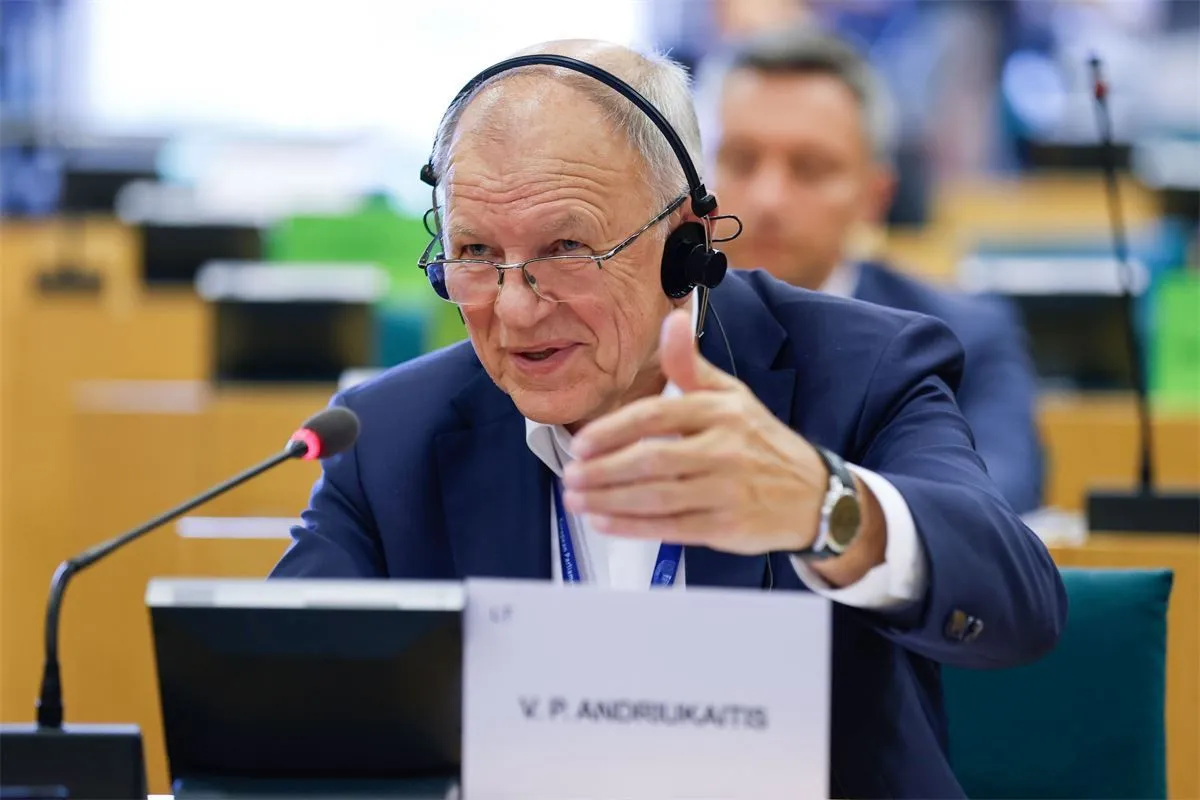
MEP Vytenis Andriukaitis: "Too often, access to European science still comes down to sheer luck: being born in the right country"
In Sofia, a patient is looking for a trial but no ongoing studies are available. In Paris, a researcher may be looking for that patient to join a trial. They may be right for one another, but they will never meet.
We have remarkable science, hospitals and specialists, patient registries, biobanks and genomic programmes. The European Reference Networks were built on a simple idea: expertise should travel, so that patients do not have to.
Research should not have boundaries in a knowledge-based economy. But too often, access to European science still comes down to sheer luck: being born in the right country.
Accelerating clinical trial assessments
The Biotech Act is our most immediate opportunity to ensure access to investigational innovative medicines for all patients in Europe, starting with faster, more coordinated and more predictable assessment and authorisation of multi-country clinical trials.
Too often, access to European science still comes down to sheer luck: being born in the right country
We need a coherent European assessment pathway, without unnecessary duplication across national systems, with a common EU core dossier, harmonised templates and clearer exchanges between regulators.
Faster timelines must not come at the expense of patient safety, scientific rigour or the involvement of clinical and patient experts, and independent ethics committees should work in parallel with competent authorities.
The voluntary FAST-EU pilot fosters collaboration between Member States on coordinated assessments. This should now be reinforced, with a stronger EMA role in supporting Member States and promoting consistency.
But more needs to be done. A rapid authorisation will offer little comfort to someone who will never be able to access a trial, just because it is run in another country.
Connecting the existing networks and infrastructure
Accessing a trial in another Member State remains a major challenge, especially for people with a rare disease. Patient populations are small and dispersed, and expertise is scattered: no national system can respond alone.
The European Reference Networks were built on a simple idea: expertise should travel, so that patients do not have to
Our 24 European Reference Networks (ERNs) already connect more than 1,600 specialist centres. Yet their potential to support multi-country clinical trials for rare diseases remains underused, because they lack a common legal entity or a mandate to act as trial-performing organisations.
What I envision is an interoperable European ecosystem, linking centres of expertise, registries and the Clinical Trials Information System, that connects eligible patients with suitable research opportunities.
Closing the distance
I don’t believe another institution or layer of bureaucracy is needed to close the distance between patients, researchers, and care. But we do need a clearer framework that allows existing institutions, national authorities and specialist networks to work together more effectively.
We need rules recognising participation in a clinical trial in another Member State as a legitimate part of a patient’s care pathway, with clear referral routes for clinicians and clarity for patients. When the EU’s cross-border healthcare framework is reviewed, Europe should consider how to better support patients for whom no suitable trial is available at home.
I don’t believe another institution or layer of bureaucracy is needed to close the distance between patients, researchers, and care
The real test is simple. Can a patient in Sofia access a suitable trial taking place in Paris when no equivalent opportunity exists at home? Can our regulators, specialist networks and research infrastructures cooperate across borders rather than stopping at them?
Too often, the answer is no. Changing that requires Member States to continue working hand in hand, and the EU to provide the coordination needed.
We have spent decades building world-class scientific networks, specialist centres and clinical expertise. It is now time to preserve this excellence and make it future-proof.
List of references
Dr Richard Torbett, Chief Executive, ABPI. The challenge of keeping global investment in UK life sciences. Financial Times. https://www.ft.com/content/6582301b-9492-4726-bed3-9fe65473ff6c
Follow the developments shaping Europe