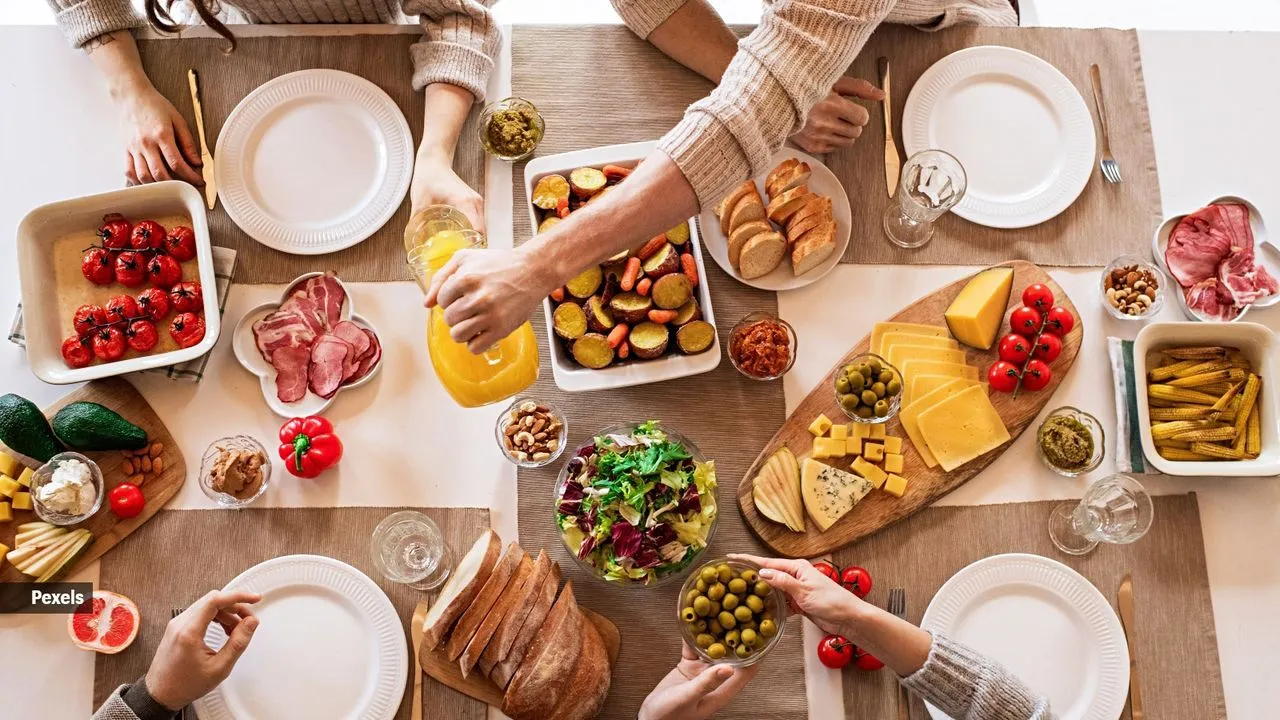
The researchers, led by Karen Della Corte of Brigham Young University, compared dietary guidelines from several countries and examined evidence from more than 250 scientific publications. Unlike the updated US dietary guidelines, which place greater emphasis on animal proteins, this international framework favours plant-based protein sources and unsaturated plant oils while allowing fish, poultry, eggs and dairy.
But what does this mean for Indian households? Do we need to eat less rice and roti and include more dal, vegetables and millets?
DISCLAIMER: This article is based on information from the public domain and/or the experts we spoke to. Always consult your health practitioner before starting any routine.
Why is the new food pyramid emphasising plant-based foods?
Research links plant-forward diets with better cardiovascular and metabolic health. Vegetables, fruits, whole grains, pulses, nuts, and seeds provide fibre, vitamins, minerals, and antioxidants that support heart health, gut health, and blood sugar regulation.
“I believe this is a positive shift towards a more balanced and sustainable approach to nutrition,” Divya Achrekar, Clinical Nutrition and Dietetics, Narayana Health SRCC Children’s Hospital, Mumbai, tells indianexpress.com.
The nutritionist believes that the objective is not to eliminate animal foods but to prioritise plant-based proteins and healthier fats.
Clinical dietician and diabetes educator Kanikka Malhotra echoes this while pointing out that the pyramid’s biggest strength is that it moves beyond simply categorising nutrients as good or bad.
“Its best feature is what it refuses to do. It does not preach ‘less carbs’ or ‘more protein’ in the abstract. It asks where each comes from,” she says.
She adds that plant foods also help displace saturated fats in the diet, which can raise LDL (bad) cholesterol. The shift is also intended to encourage more sustainable eating patterns.
What are the benefits for heart health and diabetes?
A plant-forward diet can support cardiovascular health by helping manage cholesterol and blood pressure. Fibre-rich foods such as oats, lentils and fruits can help lower LDL cholesterol, while unsaturated fats from nuts, seeds and plant oils improve the overall quality of dietary fat.
Achrekar explains that these foods also help people manage lifestyle-related conditions such as hypertension and diabetes.
“For people with diabetes, fibre-rich foods help improve post-meal blood glucose control and insulin sensitivity,” she says.
Fibre slows down digestion and glucose absorption, helping prevent sharp post-meal blood sugar rises. Whole fruits, for instance, are preferable to fruit juices because they retain their fibre.
Malhotra further highlights an important consideration for Indian diets: simply switching from white rice to brown rice or refined flour to millet flour may not be enough if overall carbohydrate consumption remains high.
She points out that clinical research has not found replacing 50 g of refined cereal with whole-wheat or millet flour to be associated with a lower diabetes risk. However, replacing around 5% of daily energy from carbohydrates with protein from plant, dairy, egg or fish sources was associated with a lower risk of diabetes and prediabetes.
She also cites India’s dietary imbalance, noting that carbohydrates account for approximately 62% of calories, while protein contributes only around 12%, according to national dietary survey data.
“Quality matters, and so does quantity,” she says.
How can you choose better-quality carbohydrates?
The new pyramid does not recommend eliminating carbohydrates. Instead, it encourages people to consider their fibre content, processing and glycaemic index (GI), which indicates how quickly a food raises blood glucose.
Malhotra suggests five practical ways to make better choices:
Choose intact grains: Include dalia, steel-cut oats, whole ragi and jowar more often instead of relying entirely on finely milled flours.
Check fibre on food labels: Malhotra suggests the 10:1 test, where you divide the total carbohydrate content by the fibre content. A ratio of 10 or less is a useful target when comparing packaged bread, cereals and biscuits. Whole-wheat atta and rolled oats have a ratio of around 6:1, while maida is considerably higher.
Consider glycaemic index: Basmati rice, parboiled rice, durum wheat pasta and bulgur can fit into a balanced diet. You do not have to abandon familiar staples.
Watch portions: Switching from white rice to brown rice does not automatically make a meal healthier if you end up eating a much larger quantity.
Eat whole fruits: Choose whole fruit instead of juice to retain its fibre and support better blood sugar management.
She also recommends eating vegetables, salad and dal before moving on to the roti or rice portion of the meal.
Do you have to give up meat, eggs and dairy?
Not at all. The new pyramid is plant-forward, not exclusively vegetarian or vegan. It allows animal foods but encourages people to obtain more of their protein from pulses, legumes, nuts and seeds.
Fish, poultry, eggs, milk and curd can all be part of a balanced diet. However, red and processed meats should be limited because of their association with cardiovascular disease and colorectal cancer. Processed meats such as sausages and salami can also contain considerable amounts of sodium.
Achrekar says, “Meat, fish, eggs and dairy can all be included in a balanced diet. Prefer lean poultry, fish, eggs, milk and curd, while giving greater importance to plant-based proteins such as dals, pulses and legumes.”
Malhotra recommends choosing curd and chaas more often instead of relying heavily on cream, butter and ghee. Vegetarians should also ensure adequate vitamin B12 intake, particularly when their diets rely heavily on plant-based foods.
What should a healthy Indian thali look like?
The good news is that Indians do not need to replace traditional meals to follow the new pyramid. “The thali is mostly a plant-forward format. The problem is proportion,” says Malhotra.
Achrekar echoes this and suggests a simple plate division:
Half the plate: Vegetables and salad.
One-fourth: Whole grains such as roti or rice.
One-fourth: Protein sources such as dal, pulses, paneer, eggs or fish.
A bowl of curd and a small quantity of healthy fats can complete the meal.
“The focus should be on dietary variety, adequate protein and portion balance rather than eliminating rice or roti,” she says.
Malhotra points out that many Indian meals are disproportionately grain-heavy, with several rotis or a large serving of rice accompanied by very little sabzi and dal. She recommends including at least two vegetable preparations, preferably one leafy vegetable, along with salad.
For the grain portion, people can alternate between whole-wheat rotis, mixed-flour rotis and rice. Millets such as ragi, jowar and bajra can also be incorporated, making up around 30–40% of the cereal portion by raw weight. Dal, rajma or chana should be treated as a proper protein component rather than just an accompaniment. Curd or chaas can complete the meal, with eggs, paneer or fish included on different days.
Breakfast also deserves attention. Instead of relying on plain parathas or biscuits with tea, Malhotra suggests options such as moong dal cheela, besan chilla or idli with sambar, accompanied by curd.
What are the simplest dietary changes you can make?
You do not have to overhaul your diet overnight. Malhotra recommends starting with a few manageable changes:
Add more vegetables: Include an additional vegetable and salad at lunch and dinner.
Make room for protein: Replace a small portion of your usual cereal serving with dal, rajma, chana, curd, eggs or paneer.
Choose less-processed grains: Experiment with dalia, oats, and whole grains. You can also mix besan or ragi into regular atta.
Rethink cooking fats: Use unsaturated oils such as mustard, groundnut, sesame or olive oil more often, while keeping butter and ghee to smaller quantities. Coconut and palm oils, despite being plant-based, are also high in saturated fats.
Replace sugary drinks and snacks: Choose water, chaas or unsweetened nimbu pani over sugary beverages, and keep roasted chana, makhana, nuts and whole fruits handy.
People with diabetes who take insulin or blood-sugar-lowering medication should consult their dietitian before significantly changing carbohydrate portions. Those with kidney disease may also need individual dietary advice.
To put it simply, the new food pyramid is not asking Indians to give up carbohydrates, turn vegetarian or abandon traditional meals. It encourages them to eat more whole plant foods, diversify their protein sources, and pay attention to the quality of the fats and carbohydrates they consume.
DISCLAIMER: This article is based on information from the public domain and/or the experts we spoke to. Always consult your health practitioner before starting any routine.