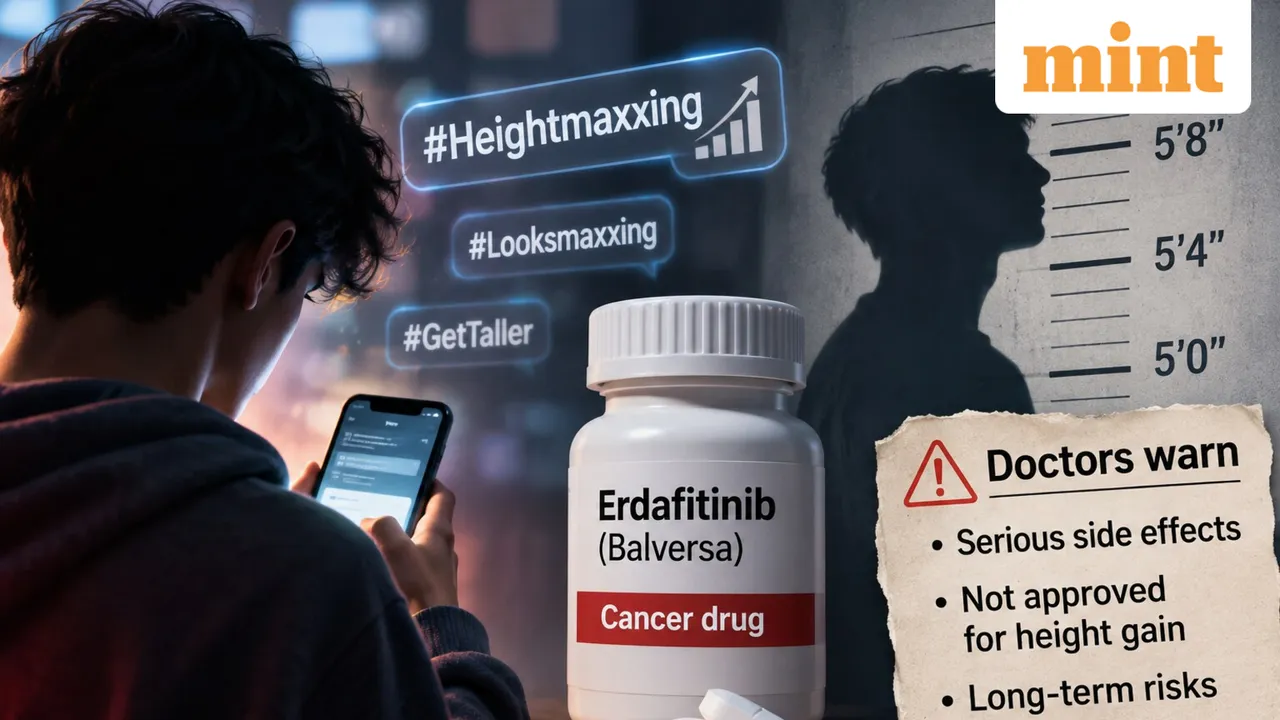
Teenagers are reportedly turning to a prescription cancer drug in the hope of gaining a few extra inches, as a social media trend called 'heightmaxxing' fuels anxiety around physical appearance and height.
The trend is part of the wider 'maxxing' culture, in which young people share methods they believe can help them achieve an ideal version of themselves. One prominent offshoot is 'looksmaxxing', where young men exchange tips on improving their facial features, physique and overall appearance.
According to a report by Rolling Stone, some teenagers have started taking erdafitinib, a drug used to treat certain cancers, believing it could help them grow taller. Online, they refer to the medicine as 'erda' and share updates about their height, duration of use and reported side effects.
Why are teenagers taking erdafitinib for height gain?
Interest in the drug appears to have been fuelled by medical reports of unexpected growth in children who received erdafitinib during cancer treatment. However, it has not been approved or established as a height-enhancement treatment.
One teenager featured in the report is Zak, a 17-year-old TikTok user from New York, who said he had been taking erdafitinib intermittently since he was 15.
He reportedly purchased the medicine from overseas online sellers, initially paying $300 (approximately ₹28,206) for a month's supply. Aware of the risks of taking a cancer drug without medical supervision, Zak said he had started setting aside money for potential hospital bills.
He attributed his height-related insecurities partly to social media videos discussing how tall men should be to find partners, as well as being teased at school for being shorter than girls in his class.
Zak reported side effects including nosebleeds, extremely dry skin and severe joint pain. Although he has since stopped taking the medicine, he said he was satisfied with the growth he believed he had experienced and was considering taking it again. According to his own measurements, he grew several inches between 15 and 17.
What is erdafitinib and what does research say?
Erdafitinib, sold under the brand name Balversa, blocks proteins known as fibroblast growth factor receptors (FGFRs), which play a role in regulating cell growth.
Initially approved in the US in 2019, the prescription drug is used to treat certain adults with locally advanced or metastatic urothelial cancer, a type of cancer that commonly affects the bladder, when their tumours have specific genetic alterations.
A study titled Accelerated Linear Growth during Erdafitinib Treatment: An FGFR-Related, but Growth Factor and Sex Steroid-Independent Mechanism?, published online on July 31, 2024, examined two children treated at the Medical University of Vienna.
The researchers reported accelerated linear growth and changes in the children's growth plates, including widening and increased mineralisation. Both children had received the drug through a compassionate-use programme after standard treatment options and clinical trial possibilities had been exhausted.
However, the findings do not establish that erdafitinib is safe or effective for healthy teenagers seeking to increase their height.
Doctors caution against using cancer drugs for cosmetic reasons
Adalbert Raimann, a paediatric endocrinologist at the Medical University of Vienna, explained that the medicine blocks proteins involved in regulating bone growth. He warned that the long-term consequences of interfering with these processes in otherwise healthy children remain unknown.
Andrew Dauber, a paediatric endocrinologist at Children's National Hospital, also said he would not prescribe erdafitinib to help children grow taller, describing the practice as too dangerous.