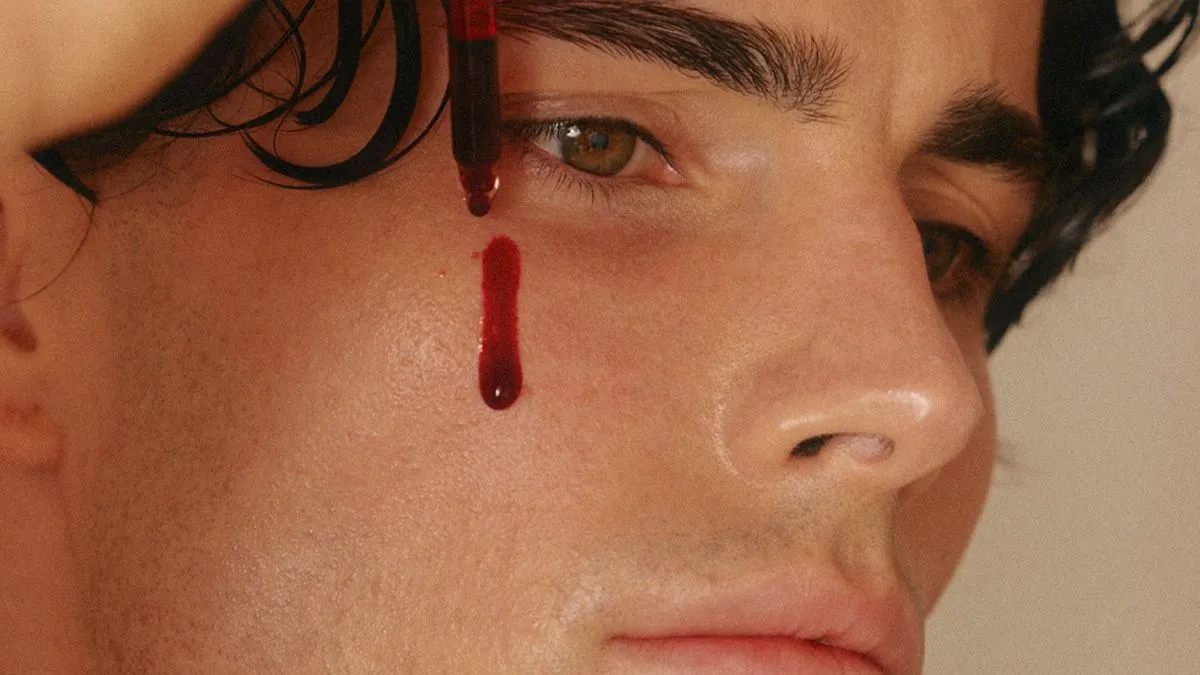
Dark circles? A dull, washed-out complexion? Hair that’s seemingly shedding more than usual, or nails that break at the slightest touch? According to a growing corner of TikTok, the culprit could be your ferritin levels. Dubbed ‘ferritin face’, the viral new term links a collection of visible beauty changes to low ferritin, the protein responsible for storing iron in the body.
From ‘cortisol face’, the TikTok shorthand for facial puffiness allegedly linked to elevated stress, to the weight loss-adjacent ‘Ozempic face’, social media is now a hotbed for decoding what the body might be telling us in the mirror. So far, #FerritinFace has amassed more than 16 million views on TikTok, with videos of users attempting to identify the signs in their own appearance, offering advice on everything from supplements to traditional Chinese medicine, and even facial mapping. Since October, Google searches have been up 5,000% in the UK alone.
However, the conversation has also attracted a wave of caution from health professionals, warning against drawing medical conclusions from skin-deep assumptions.
“Ferritin is the protein that stores iron in your body, so a blood ferritin level is essentially a snapshot of your iron reserves — your ‘tank’ rather than just the iron circulating in your blood at that moment,” explains Dr. Lamia Zafrani, a recognized leader in women’s health. Iron plays a crucial role in oxygen transport, energy production, and healthy hair and nails, meaning depleted reserves can have implications for how we look and feel. Yet, she stresses that if someone suspects they might have it, “the first step is to see your GP and specifically ask for a ferritin test alongside a full blood count.”
Still, the trend points to a broader shift in how consumers engage with beauty: moving away from simply treating what they see in the mirror with topical or superficial solutions, and toward understanding the potential causation beneath the skin. Where once dark circles might have prompted a new eye cream, there is now a growing appetite to investigate the why — from nutrition and hormones, to gut health and cellular aging.
For the beauty industry, it indicates a future in which skincare sits alongside diagnostics, supplements and personalized wellness services, with a growing number of players looking to meet that demand. But how much can our appearance really reveal about our internal health? Can we really diagnose imbalances like low ferritin by simply looking at ourselves? And as consumers become more interested in finding the cause rather than combatting the symptom, who will stand to benefit from a growing health-led approach to beauty?
Why is ‘ferritin face’ having a moment?
“Much like Ozempic face, ferritin face is another example of a social media trend prescribing beauty standards and boxing specific symptoms or effects into a ‘look’,” says Lisa Payne, head of beauty at Stylus. There is a more constructive side to the conversation, though. While trends like these can shift perceptions of beauty and create new aesthetic anxieties, Payne argues that ferritin face also encourages consumers to approach beauty more holistically.
“I grew up in Korea, where it’s standard to believe that the face reflects what is happening inside the body; it’s been read as a signal for generations,” says Mina Lee, founder and creative director of her eponymous Chelsea facial studio. “So ferritin face strikes me not as a discovery, but as an old instinct finding a new vocabulary. I think the vocabulary is now clinical: not just ‘I look tired’, but inflammation, ferritin, thyroid.”
Lee’s own approach takes a similarly inside-out view of skin, although she is careful not to reduce it to any one marker or diagnosis. “My approach, and what we do at the studio, has never been just about what the eye can see. Before I touch someone’s face, I want to know what they have been eating, how their digestion is, what is keeping them awake, and what’s on their mind,” she adds. “Much of what appears on the skin begins somewhere in that conversation.”
Now, she is seeing this approach play out beyond Korea, especially in the West. “It’s partly because access to [health] tests and [wellness tracking] wearables are providing people with metrics they’ve never had. I suspect that it’s also due to fatigue with surface-level fixes, encouraging the idea to look inward,” Lee says. We’re also spending more time than ever looking at ourselves, meaning the more familiar we become with our own reflections, the more likely we are to notice — and try to explain — every change. “We look at our own faces more than any generation before us, be it on video calls, in a front-facing camera, all day. Becoming more aware of and noticing our faces is expected.”
“It’s also important to understand why someone may be iron deficient, rather than simply trying to correct the numbers,” cautions Xenia Mitsiou, senior registered nurse and advanced aesthetic practitioner at the Knightsbridge-based HVN longevity clinic. “Iron supplements can be very helpful when needed, but taking them without establishing whether there is a deficiency can cause side effects and, in excess, toxicity. It can also mean that an underlying cause is missed.”
Lee is supportive of the thinking behind the trend, but also cautions against drawing conclusions from appearance alone. “Of course, I’m a big advocate for the underlying principle and question being asked. People are right to be viewing with a lens that looks deeper than just surface level, and that belief has sat at the heart of my work for 20 years,” she says. If consumers are concerned, Lee recommends treating what you see as a question, not a conclusion. “I’d suggest looking at patterns over weeks rather than a single photograph, or while examining yourself at eleven at night in bad light. At the same time, equally consider whether your daily habits and choices are caring ones.”
Opportunity vs risk
Payne predicts that the rise of trends like ferritin face will accelerate demand for a more personalized approach to beauty, with brands using scans and tests to make more tailored product recommendations. “Examples where brands present companion products — such as supplements to take alongside a topical product — will resonate especially,” she says.
Some of the industry’s biggest players are already moving in this direction. In March, Lancôme launched Cell BioPrint, a diagnostic device developed by parent company L’Oréal that uses a cheek swab, facial imaging, and protein biomarker analysis to assess skin biology and provide personalized recommendations. Meanwhile, Nestlé Health Science has introduced Solgar Smart Mirror, an AI-powered facial scanning tool that offers tailored wellness insights.
“The results are fascinating,” Bukobza says, “because they suggest that certain areas around our eyes may offer information about our internal health that isn’t apparent from simply looking at someone’s face.” There are important caveats, however. “The research is at an early stage, and detecting anemia is very different from measuring ferritin.” Indeed, haemoglobin measures the protein in red blood cells that carries oxygen, while ferritin measures the iron stored in the body. Ferritin levels can fall before haemoglobin levels, meaning someone can have iron deficiency without yet developing anemia.
The appetite for beauty-from-within products — from functional beverages that support gut health like Poppi, to drinkable skincare like Kylie Jenner’s K20 electrolyte brand — can be seen in their continuous rollout. According to Euromonitor International, 20% of dietary supplements launched globally since the second half of 2024 carry some form of beauty claim. Beauty-positioned supplements also grew by 6% in real terms in 2025, compared with 2% growth across the wider consumer health market.
“There has been a boom in supplement interest as more people become aware of what is happening inside the body, rather than just trying to conceal or treat what they see on the outside,” says Ingenious’s Ghatora. “Consumers are increasingly looking beyond topical products and thinking about how their health, nutrition, and lifestyle influence their appearance.”
For Ghatora, the next challenge is ensuring that the products entering this space are backed by credible science. “Consumers are becoming more ingredient-aware, and they want to understand what they are taking, why they are taking it, and whether there is evidence behind the claims,” he says. “Brands that prioritize transparency, appropriate dosages, and clinically supported ingredients will be better placed to build long-term trust than those relying on viral trends or exaggerated promises.”
There is also a risk that greater awareness encourages consumers to self-diagnose and supplement unnecessarily. “My biggest concern is when awareness turns into self-diagnosis and then unnecessary supplementation. Iron is essential, but taking additional iron when it is not needed can cause side effects and can even be harmful. It is also important to identify why someone’s iron levels are low rather than simply trying to correct the number,” Ghatora adds.
Despite the opportunities and risks, for Lee, it all signals a positive development in the kinds of questions consumers are asking. “What I do find hopeful is that the question itself has shifted from ‘what can I put on this?’ to ‘what is this telling me?’ It moves people from correcting themselves to caring for themselves,” she says. That doesn’t mean turning every change in appearance into a problem to solve, though. “Remember, your face is also allowed to simply be a face. Sometimes, tiredness is tiredness, and the honest advice is rest rather than a test result or a new product.”