Last Updated:November 14, 2026, 09:55 IST
On World Diabetes Day 2026, we break down what to eat, what to avoid and how to make smarter food choices without giving up your favourite meals.
If you have diabetes, chances are you’ve received unsolicited dietary advice from just about everyone. Don’t eat rice. Stay away from mangoes. Avoid potatoes. Switch to millets. Have this instead of that. Suddenly, deciding what to put on your plate feels like an examination you didn’t sign up for. But does managing blood sugar really mean bidding farewell to your favourite rajma chawal, avoiding fruit altogether or settling for meals that take all the joy out of eating?
On World Diabetes Day, November 14, it’s time to look beyond the endless list of food restrictions and understand what a balanced diabetes-friendly diet actually looks like. The 2026 theme, ‘Early Action on Diabetes’, highlights the importance of early diagnosis, timely access to care and reducing the risk of type 2 diabetes. When it comes to food, the focus is on choosing nutritious options, being mindful of portions and building eating habits that support better blood sugar management.
So, what should you include in your daily diet, and which foods should you limit? Here’s a look at the foods to eat and avoid to help manage blood sugar levels.
Foods To Eat To Help Manage Blood Sugar Levels
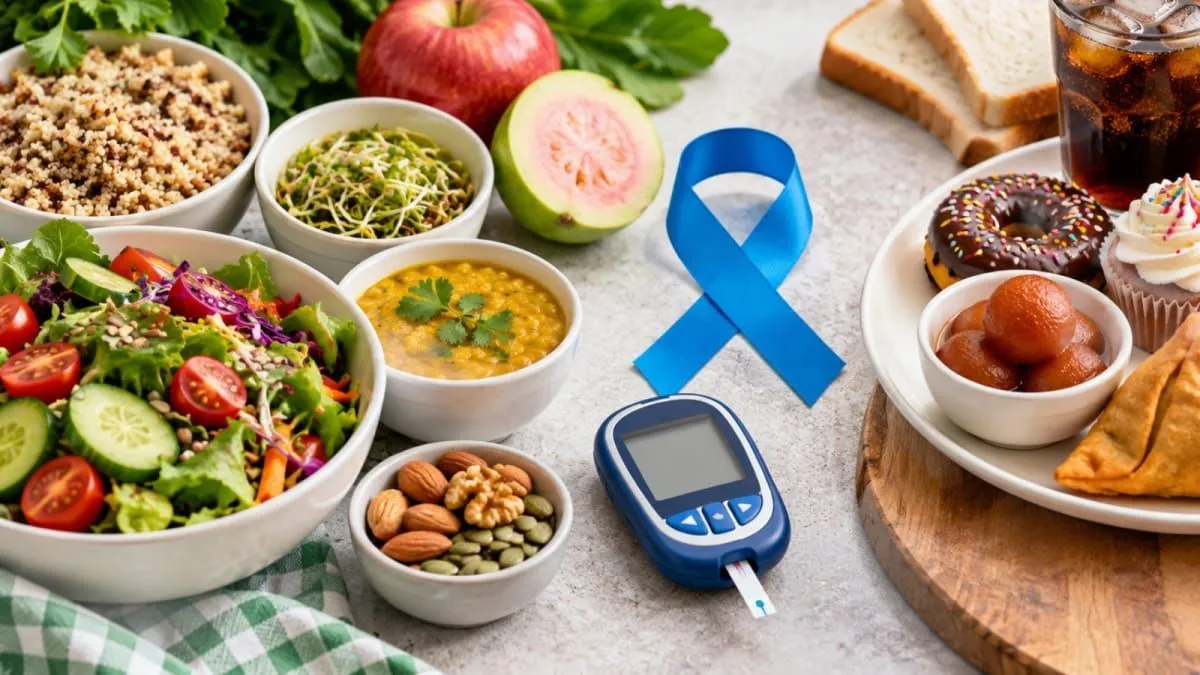
1. Whole grains and millets: Oats, brown rice, whole wheat, barley, ragi, jowar and bajra are useful alternatives to highly refined grains. Their fibre content can slow digestion and help moderate the rise in blood glucose after a meal. You don’t necessarily have to give up rice or rotis; focus on choosing less-refined options and keeping portions in check.
2. Green leafy and non-starchy vegetables: Spinach, methi, broccoli, cauliflower, cabbage, cucumber, beans and gourds provide fibre, vitamins and minerals. They are also relatively low in carbohydrates, making them useful additions to everyday meals. Include a generous serving of vegetables at lunch and dinner.
3. Lentils and pulses: Dal, chana, rajma, lobia and other pulses provide plant protein and fibre, which can help slow digestion and keep you feeling fuller for longer. They can easily be included in Indian meals as dal, sprouts, chana salad or rajma. Just remember that pulses also contain carbohydrates, so portion sizes still matter.
4. Protein-rich foods: Eggs, fish, skinless chicken, tofu, paneer and unsweetened yoghurt can help make meals more balanced. Protein supports muscle health and satiety. Choose grilled, steamed, baked or lightly sautéed preparations more often instead of deep-fried versions.
5. Whole fruits: Having diabetes doesn’t mean giving up fruit. Apples, guavas, oranges, pears, berries and papaya can be part of a balanced diet. Choose whole fruits instead of juices, as whole fruit retains fibre and is generally more filling. Be mindful of portions and how your blood glucose responds.
6. Nuts and seeds: Almonds, walnuts, pistachios, chia seeds, flaxseeds and pumpkin seeds offer fibre, healthy fats and other nutrients. A small handful of unsalted nuts or a spoonful of seeds added to yoghurt or a salad can make for a nutritious addition. Avoid sugar-coated and heavily salted varieties.
7. Unsweetened beverages: Unsweetened tea, coffee and plain chaas can also fit into a diabetes-friendly eating pattern. Limit drinks with added sugar.
Foods To Avoid Or Limit When Managing Diabetes
1. Sugary drinks and packaged juices: Soft drinks, sweetened iced tea, energy drinks and packaged fruit juices can cause blood glucose to rise quickly. Choose water, unsweetened drinks or whole fruit instead.
2. Refined carbohydrates: White bread, maida-based biscuits, pastries, noodles and other highly refined grain products generally contain less fibre than whole-grain alternatives. Choose whole-wheat bread, oats and other less-refined options more often, while keeping portions under control.
3. Sweets and desserts: Mithai, jalebi, gulab jamun, cakes, pastries and ice cream can contain substantial amounts of added sugar. They don’t necessarily have to be permanently off the menu, but keep portions small and avoid making them an everyday indulgence.
4. Deep-fried and highly processed foods: Samosas, pakoras, chips, fried snacks and fast food can add excess calories, saturated fat and salt to your diet. Make roasted, steamed, grilled or baked options your regular choices instead.
5. Processed and fatty meats: Sausages, bacon, salami and frequent servings of fatty red meat are worth limiting because of their saturated fat and sodium content. Opt for fish, eggs, skinless poultry, tofu, beans and lentils more often.
6. Foods with hidden added sugar: Flavoured yoghurt, breakfast cereals, packaged sauces, salad dressings and some health drinks can contain added sugar even when they don’t taste particularly sweet. Check nutrition labels and compare products before buying them.
Ultimately, managing diabetes through food is not about giving up everything you enjoy. It is about understanding portions, choosing fibre-rich foods, balancing carbohydrates with protein and vegetables, and limiting excess added sugar. There is no single diet that works for everyone, so speak to your doctor or a registered dietitian about a meal plan that suits your medication, lifestyle and blood glucose targets. If you take insulin or medication that can cause low blood sugar, don’t drastically cut carbohydrates or skip meals without medical advice.