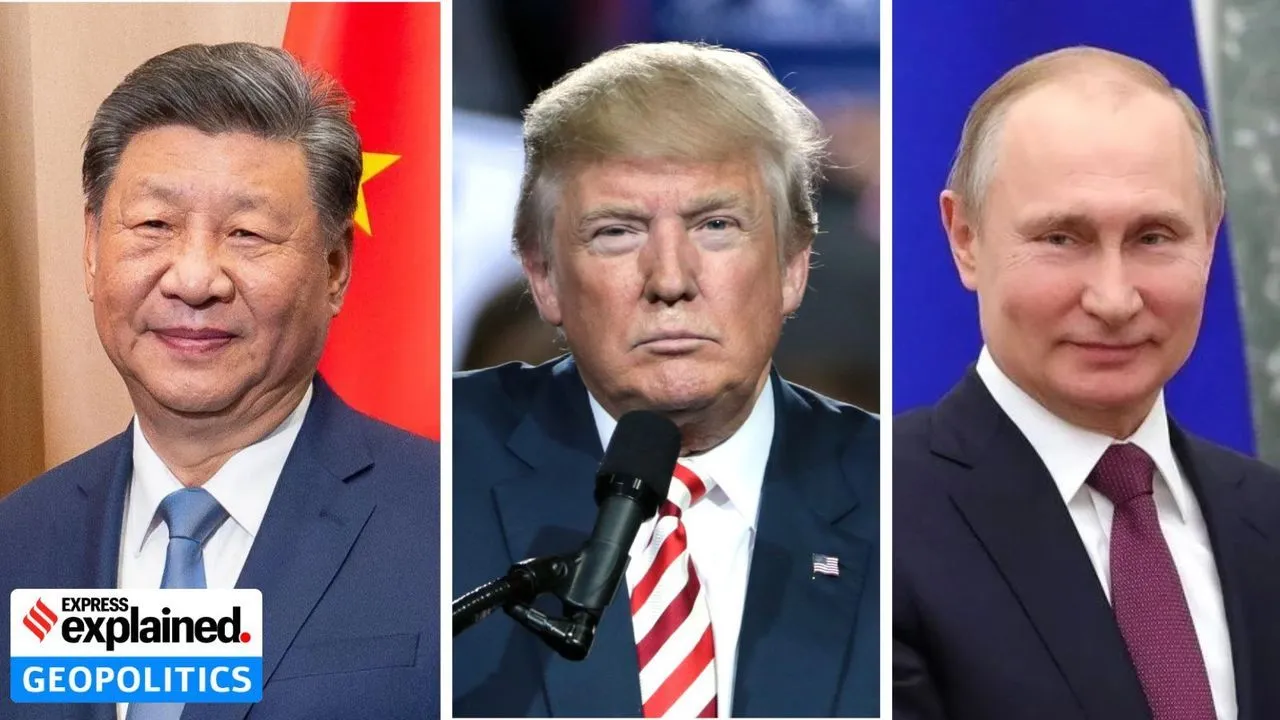
Tuesday’s meeting in Manila of the leaders of Australia, India, Japan and the United States promises to resurrect a forum widely presumed dead. Thursday’s meeting in Shenzhen between Trump, Putin and Xi could give birth to a new format for consultations among the world’s three leading powers.
The Quad’s agenda
The sequence is accidental but significant. Trump will meet America’s Asian partners before engaging the Chinese and Russian leaders. His preference might have been to focus on the latter, but the American establishment sees value in reassuring its allies. It also recognises that the Quad could strengthen Trump’s bargaining position with Xi and Putin.
Until recently, many had written off the Quad. The obituaries were premature. Ministerial consultations and practical cooperation continued despite the absence of summit-level engagement. Manila has an interesting place in the Quad’s history. The forum first met there in 2007. After becoming moribund, it was revived in Manila in 2017. Nearly a decade later, Manila is once again the setting for its renewal.
The proposed agenda is practical: critical minerals, resilient supply chains, energy security and the protection of commercial shipping. Maritime security, emerging technologies and strategic infrastructure remain important areas of cooperation.
Why G-3 is not quite a new Yalta
If Manila is renewing an established forum, Shenzhen is about launching a new one. The prospect of the American, Russian and Chinese presidents sitting together has revived speculation about a “new Yalta”, recalling the 1945 meeting of American, British and Soviet leaders that helped shape the post-war European order.
Story continues below this ad
But the historical analogy has limits. Yalta followed intensive cooperation among the Allies in defeating Nazi Germany. Trump, Putin and Xi are meeting amid expanding rivalry, with little agreement on the rules of the international order. Their immediate objective is to explore common ground rather than negotiate a grand geopolitical bargain.
Unsurprisingly, there is little clarity about the G-3 agenda. Nuclear arms control and cooperation in managing conflicts involving Iran and Ukraine are among the possibilities. Regulating artificial intelligence could be another. For Trump, the meeting reflects his faith in personal diplomacy and his ability to strike grand bargains. But much of the American foreign policy establishment remains sceptical of his approach to Putin and Xi. Any major concession by Trump to Russia and China with produce a vigorous American backlash.
For Putin, Shenzhen offers recognition of Russia’s enduring place at the global high table. Xi’s priorities are different. For Xi, trade, technology and strategic competition with Washington matter more than creating a trilateral institution. Yet Xi has little reason to reject a meeting that pleases Putin while consolidating Beijing’s status as the critical element of a global “triumvirate”.
The relevance for India
For India, the Quad’s revival offers an opportunity to reboot its troubled relations with Washington. But as part of the hedge against American unpredictability, Delhi will continue to deepen cooperation with Europe, Russia and Japan while seeking to manage the structural tensions with China.
Story continues below this ad
Critics at home and abroad have often derided India’s foreign policy as excessively transactional, especially its attempt to ride several horses, including BRICS and the Quad. But the new reality is that the great powers are doing much the same— balancing and bargaining. That is now baked into the international dynamic today.
Russia is a vociferous critic of America, but it seeks accommodation with Trump. China wants to reduce American influence in Asia but also seeks recognition as Washington’s equal. Neither sees a contradiction in pursuing apparently competing objectives.
For India, strategic flexibility can’t be an end in itself. An open-ended foreign policy, strong international partnerships must go hand in hand with the purposeful modernisation and upgradation of national capabilities. Without domestic unity and strength, India’s multi-alignment runs the risk of remaining trapped in intellectual abstraction rather than becoming a transformative tool towards advancing national interest.