US President Donald Trump, Brazil’s Luiz Inacio Lula da Silva and Canadian Prime Minister Mark Carney are also expected to attend the summit.
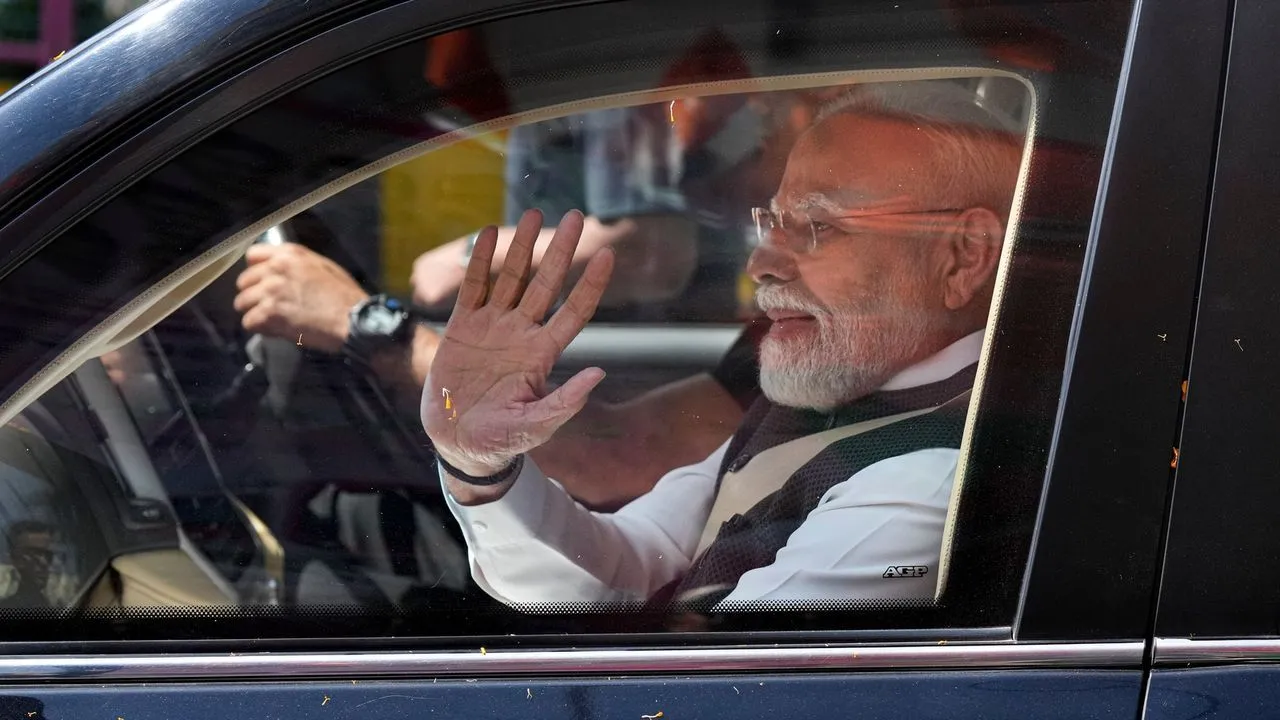
He is also expected to join the leaders of Australia, Japan and the US for a Quad Leaders’ Summit and hold several bilateral meetings.
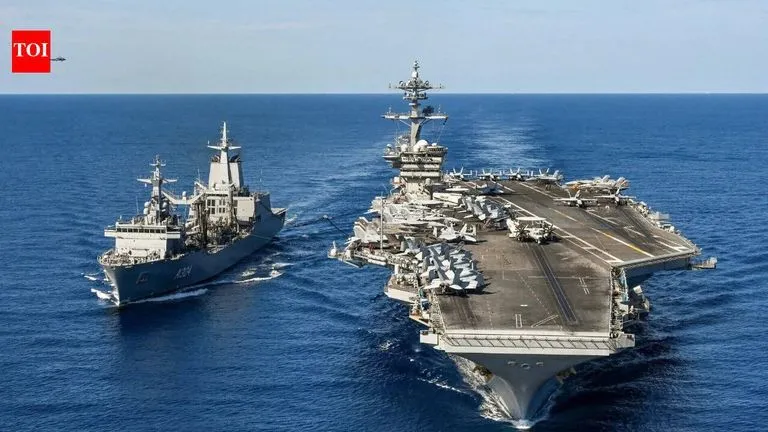
Throughout the India-ASEAN and East Asia summits, New Delhi is looking to boost naval and maritime coordination among like-minded Indo-Pacific states.
New Delhi will be joining major global powers, including Washington, Beijing, Tokyo and Canberra, as an official dialogue partner.
The three-day summit, which includes scheduled talks with world leaders, including US President Donald Trump, will focus on conflicts, including the war in Myanmar, The Associated Press reported citing drafts of post-summit communiques.
Trump, Brazil’s President Luiz Inacio Lula da Silva, Canada’s Carney and Russian foreign minister Sergey Lavrov also feature on the roster for November 17.
Annual trade between India and ASEAN member states is worth about $122 billion.
“India strongly believes that as an Indian Ocean country that abuts this very important Southeast Asian maritime zone, a strong strategic relationship with ASEAN member states, as a collective as well as individually, is good for both of us,” Tandon said.
“It will make us more resilient to handle the very rapid geopolitical changes that are taking place around us. It will also contribute to peace and stability in Asia as a whole.”
According to the senior official, strengthening maritime defence mechanisms and commercial exchanges will be among the key agendas during the deliberations.
Serving as the premier diplomatic platform across the Asia-Pacific for addressing defence and security challenges, the East Asia Forum has fundamentally shaped regional strategic evolution since its launch in 2005.
Alongside the core Southeast Asian member countries, the wider regional dialogue framework encompasses New Delhi, Beijing, Tokyo, Seoul, Canberra, Wellington, Washington and Moscow, bringing together all ASEAN member states.
In the context of trade with the Southeast Asian block, Tandon said New Delhi wants the review of the ASEAN India Trade in Goods Agreement (AITIGA) to be completed “as soon as possible”. India is also engaged in discussions with individual ASEAN member states for trade facilitation and trade agreements to open up new opportunities, he said.
Tandon acknowledged that the review of AITIGA is a “difficult” process as it involves developing consensus with all ASEAN member states. AITIGA entered into force in 2010 and the review began six years ago, largely because of India’s concerns about trade imbalance due to imports of more than $80 billion from ASEAN member states.
Asked about India’s position on dealing with the situation in Myanmar, Tandon said: “We have always said that isolating Myanmar is not the right approach because if we do, someone else will fill that vacuum. There is no alternative to engagement.”
India strongly supports ASEAN initiatives to engage the Myanmar government, while taking into account the country’s complex history and society. “Patience and consistency in engagement is very important,” Tandon said.