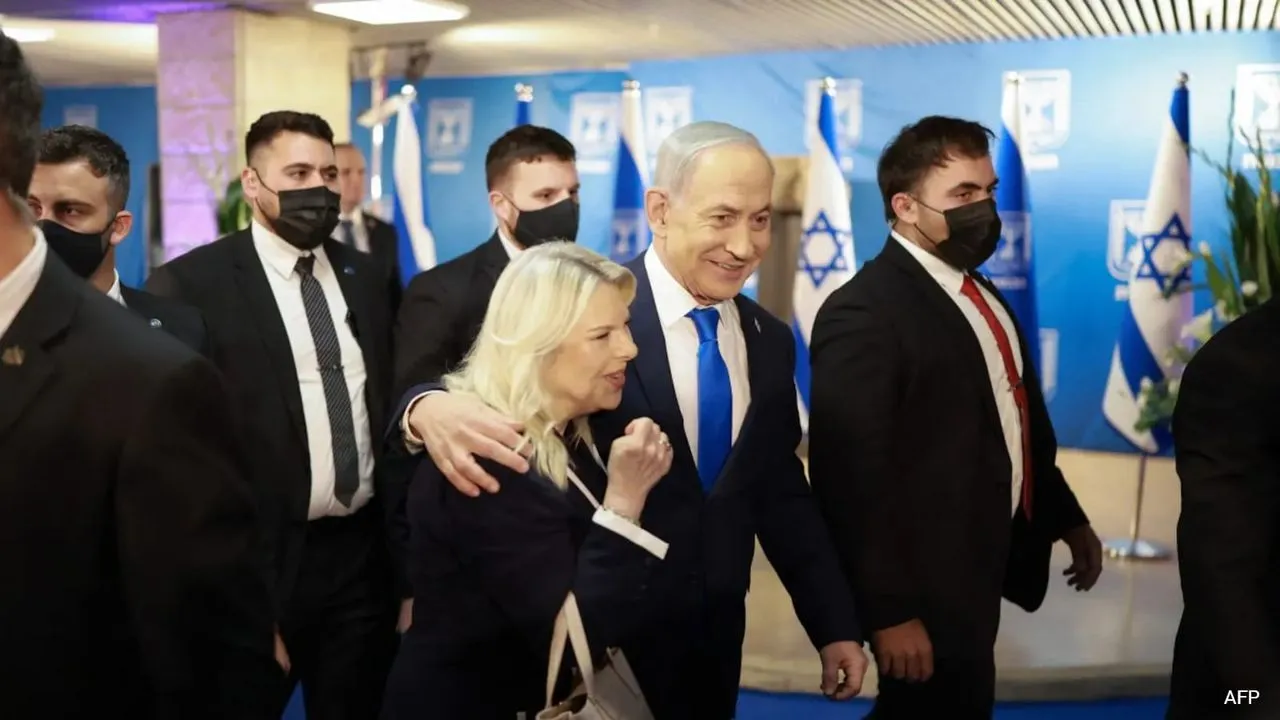
A video showing Israel Prime Minister Benjamin Netanyahu's wife Sara engaged in a heated argument with former Israeli PM Naftali Bennett is doing the rounds on social media. The confrontation took place on Tuesday when Netanyahu, who is serving as caretaker Prime Minister after inconclusive elections, was addressing the country's Parliament Knesset on national unity. Bennett interrupted the speech demanding answers about the alleged Qatar ties of Netanyahu and the investigation into the October 7, 2023, attack. Israel's National Security Minister Itamar Ben-Gvir responded by calling Bennett a "shameless man" and a "worthless nobody".
As Sara Netanyahu joined in, the confrontation escalated. She accused Bennett, the political rival of Netanyahu, of hypocrisy for his political ties.
"You sit with the Arab Joint List, you worthless man. Shame on you! You shameless man!" Sara Netanyahu said.
It was the first day of Israel's newly elected Parliament after elections in October.
In his address, Netanyahu warned that the country could soon come under intense international pressure to accept a nuclear-armed Iran and the continuation of its current regime, which he accused of posing an existential threat to Israel.
"In the very near future, we're going to be confronted by international pressure to accept a nuclear-armed Iran and the preservation of this terror regime that seeks to annihilate us," Netanyahu said.
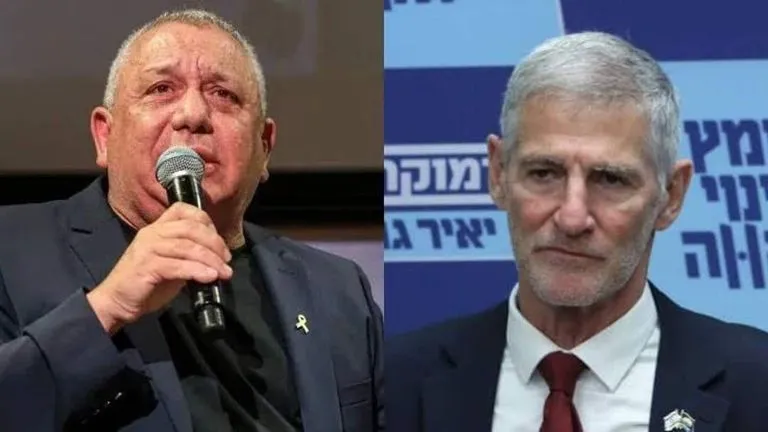
However, his remarks drew an immediate and strong reaction from former Israel Defence Forces (IDF) Chief Gadi Eisenkot, who accused the caretaker Prime Minister of using an important state occasion to further his political interests. Describing Netanyahu's speech as "shameful", Eisenkot questioned his suitability to continue holding office.
The sharp exchange has further intensified the political confrontation between the two leaders, both of whom are seeking to secure the numbers required to form Israel's next government. Neither Netanyahu nor Eisenkot currently has the support of the 61 lawmakers needed to command a majority in the 120-member Knesset.