Calling Jawaharlal Nehru the principal architect of modern India, the Congress on Saturday (November ) invoked the legacy of the country’s first Prime Minister, highlighting his commitment to democracy, secularism and scientific temper on his 137th birth anniversary.
Also Read | Chacha Nehru: The man who fought for tomorrow
Party president Mallikarjun Kharge and former party chief Rahul Gandhi recalled their contributions in building a progressive nation.
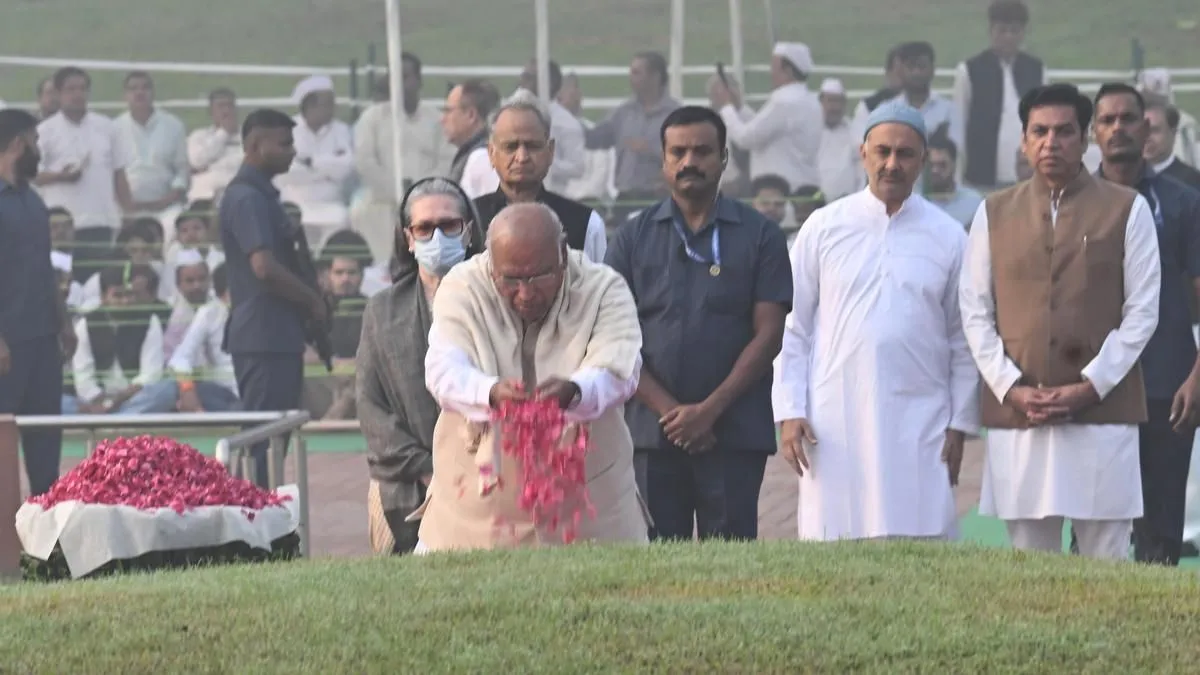
Mr. Kharge and Congress Parliamentary Party chairperson Sonia Gandhi visited Shanti Van, Nehru’s memorial, to pay their respects. Several Congress leaders, including former Rajasthan Chief Minister Ashok Gehlot, were present.
They later paid floral tributes to Nehru’s portrait in the Central Hall of Samvidhan Sadan, the old Parliament building. Lok Sabha Speaker Om Birla, Congress chief whip whip Kodikunnil Suresh, and other leaders were also present.
However, Trinamool Congress leader Derek O’Brien pointed to the absence of Union Ministers at the tribute ceremony. “We paid floral tributes this morning in Central Hall, Parliament, to India’s first Prime Minister, Pandit Nehru. Not even one of the current PM’s 29 cabinet ministers were present. Decency? Common courtesy?”he asked in a post on X.
Mr. Gandhi, in a post on X, described Nehru as the “Jewel of Hind” and said freedom was not his destination but a milestone in the country’s new journey. “India was a quest, an idea for him — diversity as its strength, democracy as its faith, and equality as its foundation,” he said.
Mr. Kharge said Nehru understood that a country as diverse as India could remain united only through democracy that accommodated different cultures, beliefs, political voices and aspirations.
“As we pay our solemn tributes to him at Shanti Van today, we must reaffirm our resolve to preserve, protect and defend the Constitution, our democratic institutions and the values that bind us together,” he said.
Mr. Kharge also recalled Nehru’s commitment to scientific thinking, secularism and equality, and his faith in providing every citizen with equal opportunities. Nehru’s affection for children and his emphasis on their education, he said, remained a reminder that the country’s future rested with the coming generations.
Congress communication chief Jairam Ramesh, on X, shared the interest that the digital archive of Nehru’s works generated. “Over the past year, this digital repository of the 100 volumes of the Selected Works of Jawaharlal Nehru covering the period 1903-1964 has had well over 1 million unique visitors and has had 4 million+ page views. The volumes run into around 77,000 pages, have 34,000+ text documents and 3000+ images,” Mr. Ramesh said.
“They are essential to understanding 20th century India through the eyes of someone who so very profoundly shaped it,”he added.