Market Mastery
Webinar by Vishal Malkan
Find the weak links
in your portfolio by Vishal Malkan
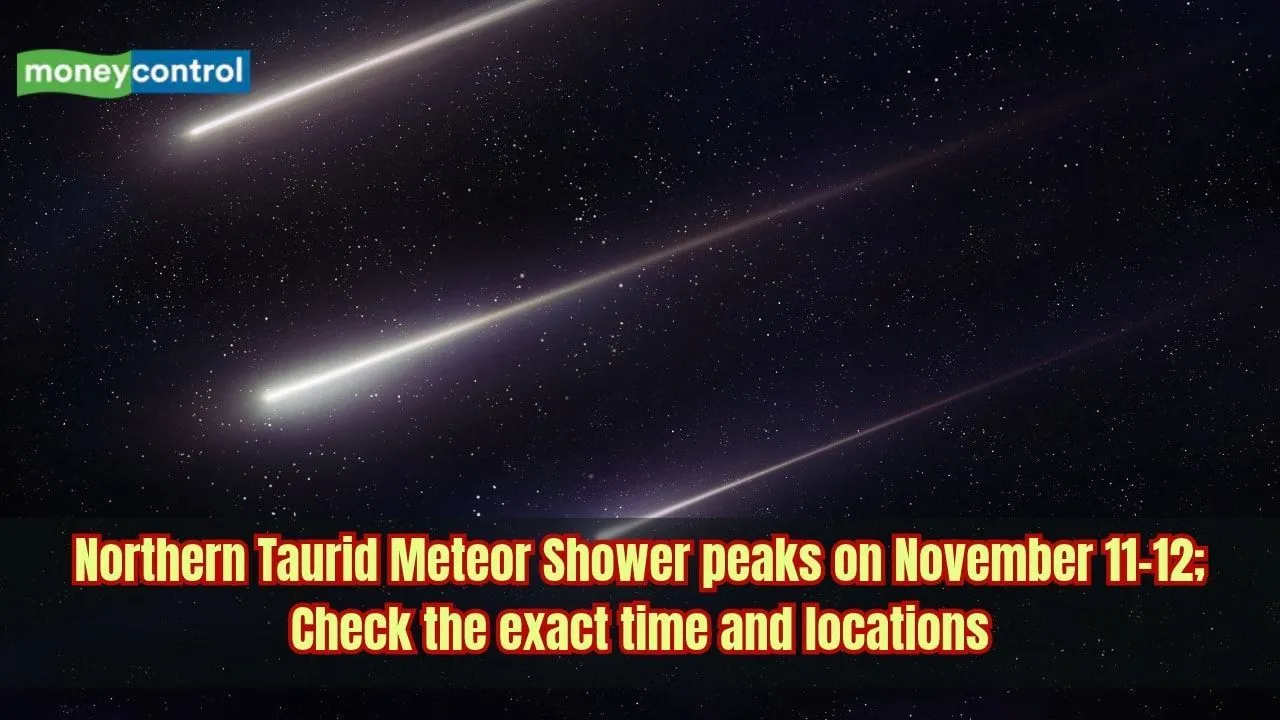
Skywatchers are in for a chance to witness bright fireballs streaking across the night sky as the Northern Taurid meteor shower reaches its peak on November 11–12, 2026. Known for producing occasional exceptionally bright meteors, the annual celestial event will be visible across several continents, including India.
Although the shower produces fewer meteors than major annual displays, its unusually bright fireballs make it worth watching. Here is what to expect and when to look up.
When will the Northern Taurid Meteor Shower peak?
The Northern Taurids are expected to peak overnight on November 11–12. The predicted peak moment is approximately 1:02 pm EST on November 12, equivalent to 11:32 pm IST.
However, the activity is not restricted to this exact moment. The meteor shower remains active from October 20 to December 10, offering several opportunities to observe it.
Where can you watch the meteor shower?
The Northern Taurids are visible from both the Northern and Southern Hemispheres. Skywatchers across North America, Europe, Asia, Africa and Australia can observe the event.
In India, observers can look towards the night sky after sunset, when the Taurus constellation becomes easier to locate. A dark location away from city lights will offer better viewing conditions.
What can skywatchers expect tonight?
The Northern Taurids typically produce around 5 meteors per hour under ideal viewing conditions. The meteors appear to originate from the direction of the Taurus constellation but can streak across different parts of the sky.
Observers do not need telescopes or binoculars. Watching with the naked eye provides a wider field of view and improves the chances of spotting meteors.
What is extraordinary about the Northern Taurids?
The shower is particularly famous for its occasional bright fireballs. These are exceptionally luminous meteors that can outshine ordinary shooting stars and leave glowing trails across the sky.
Unlike fast-moving meteor displays, Taurid meteors are relatively slow. Their larger debris fragments can sometimes create spectacular flashes, making this shower especially interesting for observers.
What causes the Northern Taurid Meteor Shower?
The Northern Taurids are associated with Comet 2P/Encke, which takes approximately 3.3 years to orbit the Sun. As Earth passes through debris left behind by the comet, tiny particles enter the atmosphere at high speeds.
The particles heat up and produce glowing streaks of light known as meteors. Larger fragments can create the bright fireballs for which the Taurids are famous.