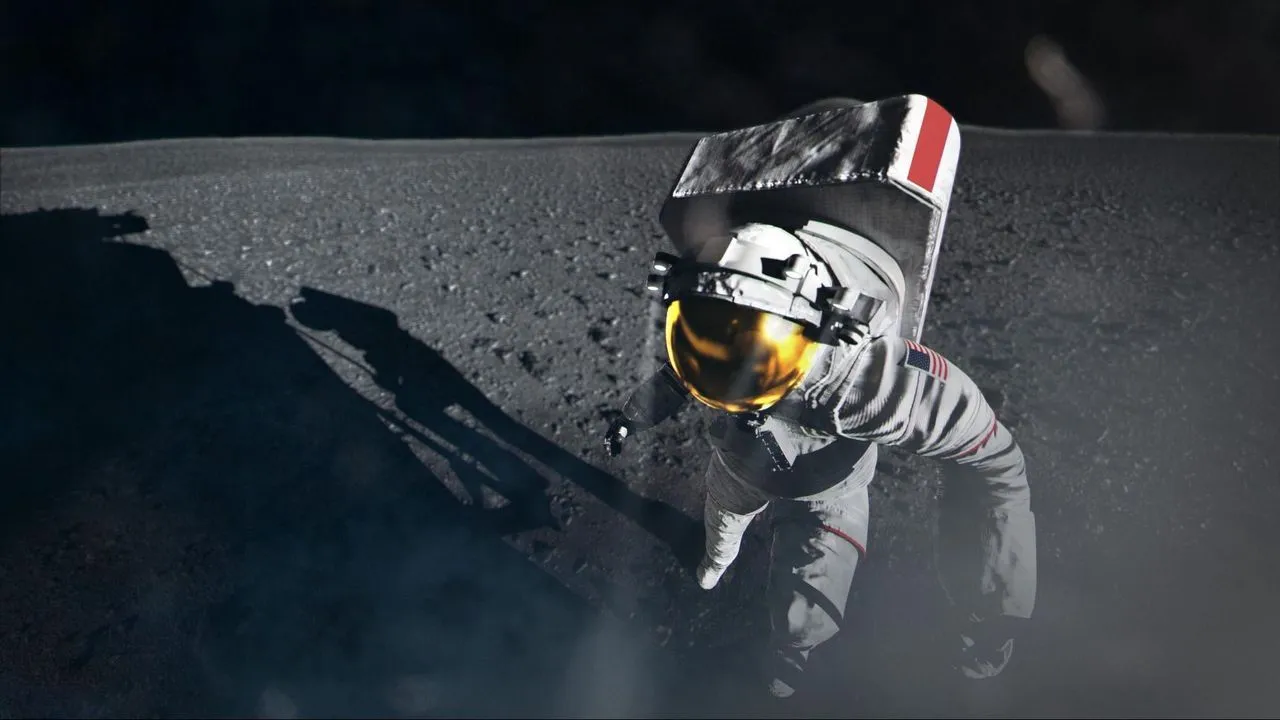
NASA has revealed new details about its effort to return American astronauts to the Moon in 2028. The updated strategy includes testing two competing lunar landers, streamlining rocket preparations, and introducing a lighter spacesuit to help make the first moonwalks possible sooner.
During a 23 October briefing, NASA Administrator Jared Isaacman and other agency leaders outlined the next steps for the Artemis programme.
The revised approach centres on two major missions: Artemis III, a test flight scheduled for 2027, and Artemis IV, which is intended to land astronauts on the lunar surface in 2028.
The announcement builds on priorities introduced earlier this year through NASA's Ignition initiative. Agency officials also highlighted recent progress in spacecraft development, mission preparations, and partnerships with private aerospace companies.
These efforts are intended to reduce technical risks, accelerate the schedule, and establish the foundation for a lasting American presence on the Moon.
"This is a very energised NASA, and these updates are only a small part of that story. We are bringing extreme focus to the mission to ensure delivery of world-changing outcomes as quickly, safely, affordably, and successfully as possible," said Isaacman.
"NASA is driving outcomes to make Moon missions a reality, and we're not waiting for others to bring their plans to us – the campaign must move with urgency as strategic competitors pursue a permanent presence beyond Earth."
Building a permanent human presence on the Moon
NASA's ambitions extend well beyond returning astronauts to the lunar surface for a single mission.
As the Artemis programme advances, the agency intends to send crews on increasingly challenging expeditions near the Moon's South Pole. This region is an important focus of future lunar exploration, and the missions are designed to expand how much of the Moon humans can investigate directly.
NASA describes the effort as part of a new Golden Age of innovation and exploration. The agency expects its lunar missions to support scientific discoveries, generate economic benefits, and encourage the development of technologies needed for more ambitious space exploration.
Ultimately, the goal is to establish an enduring human presence on the Moon, rather than repeat the brief visits of earlier lunar expeditions.
The experience gained from operating spacecraft, supporting astronauts, and carrying out increasingly complex missions on the lunar surface will also help NASA prepare for another historic objective: sending the first astronauts to Mars.