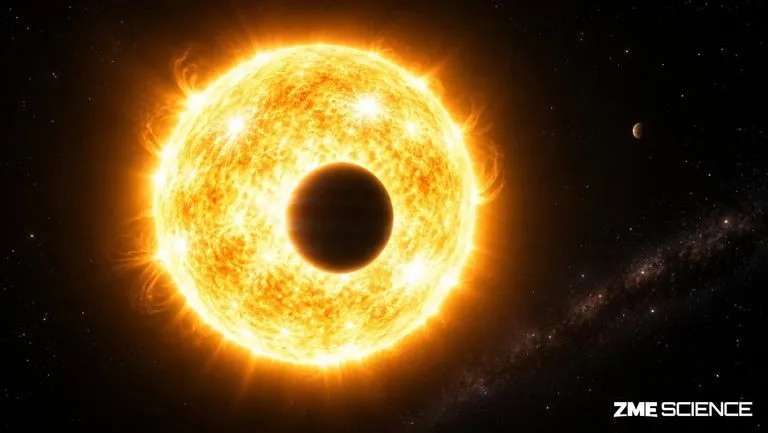
Black holes may sometimes emerge with a quiet flicker instead of a cosmic blast. That's the upshot of new work using gravitational-wave data from LIGO, Virgo, and KAGRA, which points to a large group of black holes likely created when massive stars collapsed straight into darkness instead of detonating as supernovas, reports Space.com. Analyzing 257 black hole mergers over a decade, researchers found a sharp pileup of black holes about 10 times the mass of the sun, making up roughly three-quarters of the sample—alongside a surprising shortage in the 12- to 16-solar-mass range.
Those 10-solar-mass black holes also share similar spin rates, hinting at a common origin. The team, whose work appears in the Physical Review D journal, argues that pattern fits best with failed supernovas, a long-theorized but still unconfirmed way for stars to die. Want to understand more about black holes in general? NASA's got you.
Read These Next
Nearly 200 big-name websites reportedly
China's president makes rare move
Famous Kessler twins explained their joint suicide
An Irish man is accused of causing $60M in damage