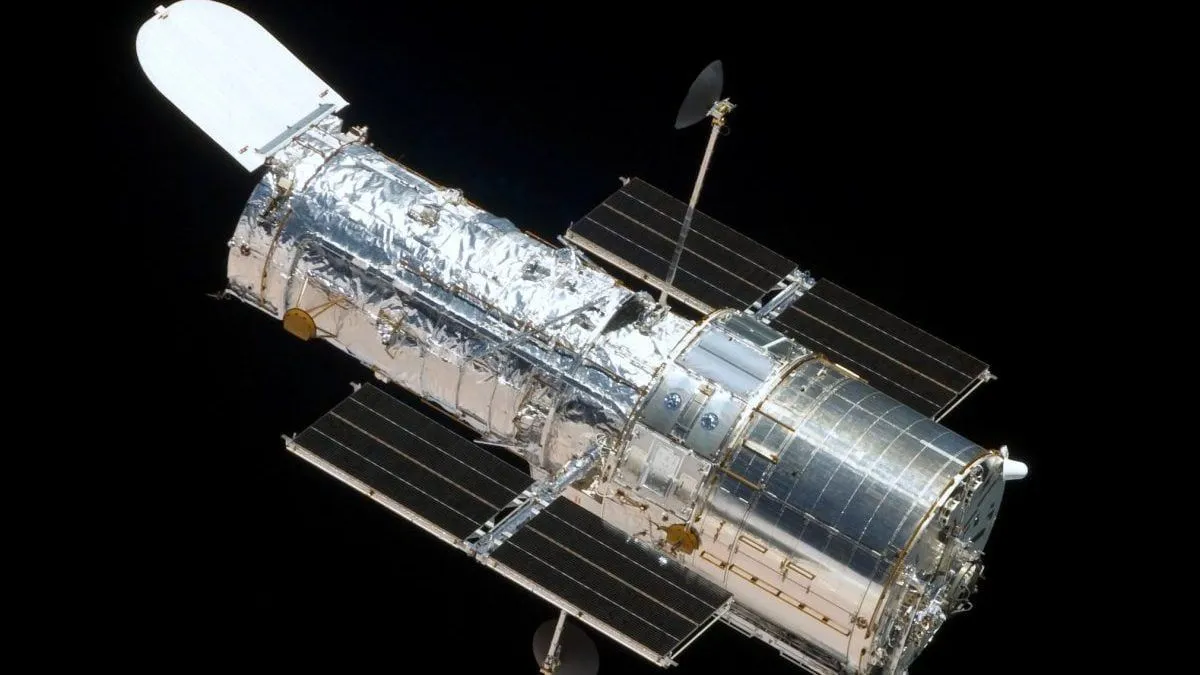
New Delhi: The National Aeronautics and Space Administration on 30 October issued a notice inviting private companies to service the Hubble Space Telescope. The notice, active till 30 November, is a request for information to service the telescope in space, without causing damage, before 2032.
“Hubble still has important science ahead of it, and we should be looking at every reasonable opportunity to keep it delivering for as long as possible,” said NASA Administrator Jared Isaacman in a press release.
The telescope, named in honour of the American astronomer Edwin Hubble, is a large observatory launched in 1990 to low Earth orbit (LEO), and has been providing insights on the universe ever since. It was jointly developed by NASA and the European Space Agency, and since its launch, the telescope has made over 1.7 million observations.
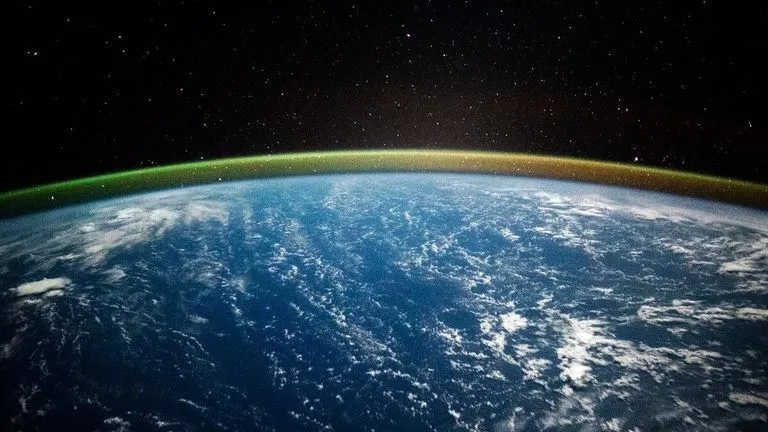
But the telescope, hovering 483 kms above the Earth’s surface, has an end date in sight as its orbit shrinks daily. Similar to most satellites in the LEO, Hubble is facing atmospheric drag, a phenomenon through which the atmosphere exerts microscopic friction on the object, causing it to lose its altitude and move downward.
Based on NASA’s calculations, Hubble is rapidly losing its orbit and will re-enter the Earth’s atmosphere by 2034 or 2035, in a “fiery return” that will cause it to burn up.
However, the American space organisation has expressed interest in saving the telescope and extending its life through a mission. The latest notice invites proposals for three main ways to save the telescope: moving it to a higher altitude, by servicing it to enhance its capabilities and extend its science lifetime, or by performing a controlled re-entry to Earth for a safe return.
Hubble was key in helping scientists with the theory that the universe was expanding, driven by dark energy, due to its cosmic observations. It also helped accurately determine the age of the universe to be 13.8 billion years. Through its detailed observations and pictures of the Universe, the Hubble telescope also helped identify many supermassive black holes, other galaxies, and protoplanets.
“Hubble is a national icon that has fundamentally changed how humanity views our universe for more than 35 years,” said Nicky Fox, associate administrator, Science Mission Directorate, NASA Headquarters in Washington, in a press release.
The extension of its lifetime now depends on commercial interest from private players, who are expected to respond to NASA’s RFI by 30 November. NASA made it clear that it is not a request for proposals, and the exact details of the mission to save Hubble are not yet decided. But the new notice will allow NASA to understand the different scientific proposals available, along with their feasibility, to embark on a mission to save the Hubble telescope.
(Edited by Insha Jalil Waziri)