An analysis of gravitational-wave signals has revealed a population of black holes that may have formed after the collapse of massive stars without a supernova explosion. Space.com reports this, citing a study published in the journal Physical Review D.
Data on black hole mergers
Researchers analyzed the mass distribution in 257 black hole mergers recorded by the LIGO, Virgo and KAGRA detector network over the past ten years. Since LIGO first detected gravitational waves in 2015, the network has identified more than 300 black hole collisions.
In the sample, black holes with masses about ten times that of the Sun accounted for 75%. At the same time, scientists found a shortage of objects with masses between 12 and 16 solar masses. In their view, this gap in the mass distribution may be related to the internal physics of massive stars before their death.
More current news is available on the UA.News Telegram channel Telegram.
Possible origin of the objects
The conventional model suggests that after exhausting fuel for thermonuclear fusion, the core of a massive star contracts and a shock wave causes a supernova explosion. The collapsed core can then become a black hole.
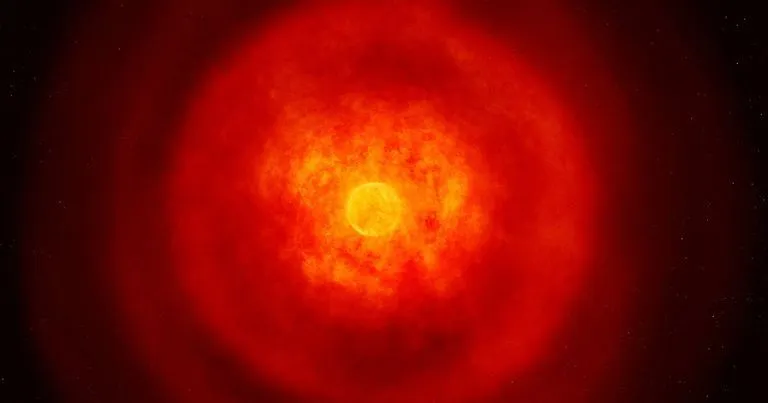
The new study suggests that some stars may not explode but instead collapse directly into black holes. The existence of such “failed supernovae” currently has no direct confirmation, but is supported by theoretical models. The researchers also studied the spin rates of black holes in mergers and found that objects with masses of about ten solar masses likely have a distinct range of spin rates. This may indicate their common origin.
Read us on