A renowned Harvard scientist is openly challenging a statement from the head of NASA regarding the true nature of a mysterious space object, insisting that it is definitely not an asteroid, Fox News reported.
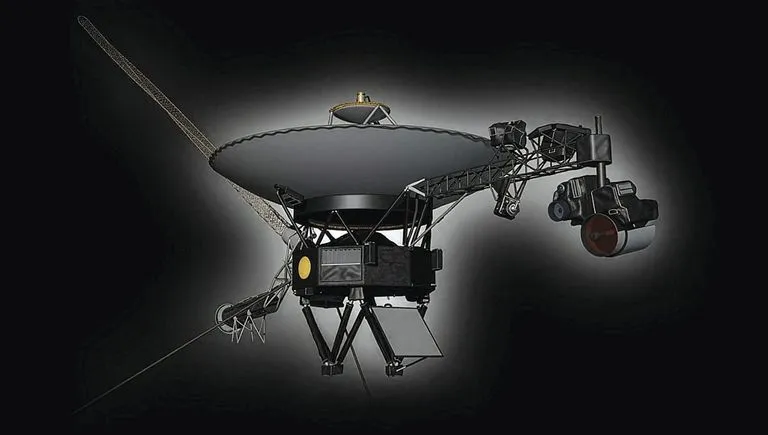
The object in question is 1998 KY26. A team led by Harvard astrophysicist Avi Loeb has suggested that the object may actually be Phobos 1, a Soviet spacecraft that lost contact with Earth during its mission to Mars in 1988.
The object measures only about 36 feet across, and according to the reports, the object has been behaving in unusual ways as it travels through space. It is accelerating without any clear explanation rather than following a standard gravitational path.
Also read | 'He Was Disappointed': King Charles' Unexpected Biggest Regret Revealed
Researchers compared a model of the lost Phobos 1 spacecraft with observations of 1998 KY26 and found similarities in the way the object reflects sunlight and rotates.
The object reflects about 52% of incoming sunlight and completes a full rotation in roughly 5.35 minutes, characteristics the team says could be consistent with an artificial object.
NASA Administrator Jared Isaacman recently shared his thoughts on the object on Thursday when he appeared on Fox & Friends. "I've not seen any evidence to suggest this is... anything other than an asteroid," Isaacman told the outlet.
But the Harvard astrophysicist challenged it. "Well, first of all, it's not an asteroid because 1998 KY26 appears to have non-gravitational acceleration, meaning it's being pushed by some force other than gravity, and asteroids are just rocks," Loeb said, as quoted by the Fox News.
Also read | Nvidia Robotics Engineer Quits Over Jensen Huang's Exit: "I Leave With Sadness And Gratitude"
Not all scientists agree with the spacecraft theory. Some studies argue that 1998 KY26 is more likely a natural asteroid, while another hypothesis suggests it could be a "dark comet".
But the researchers have not detected the gas emissions or tail typically associated with comets, weakening the dark-comet explanation.
"It could be a comet shedding some gas backwards that is pushing it forward, but in that case we should have seen the gas," Loeb said. "We should have seen the dust because for comets we see a tail and the dust particles are being pushed away from the Sun by the solar radiation."
"We don't see a cometary tail. We don't see any evidence for outgassing around this object. That's the puzzle," he added.
NASA has stated that 1998 KY26 poses no known threat to Earth and is being routinely monitored.