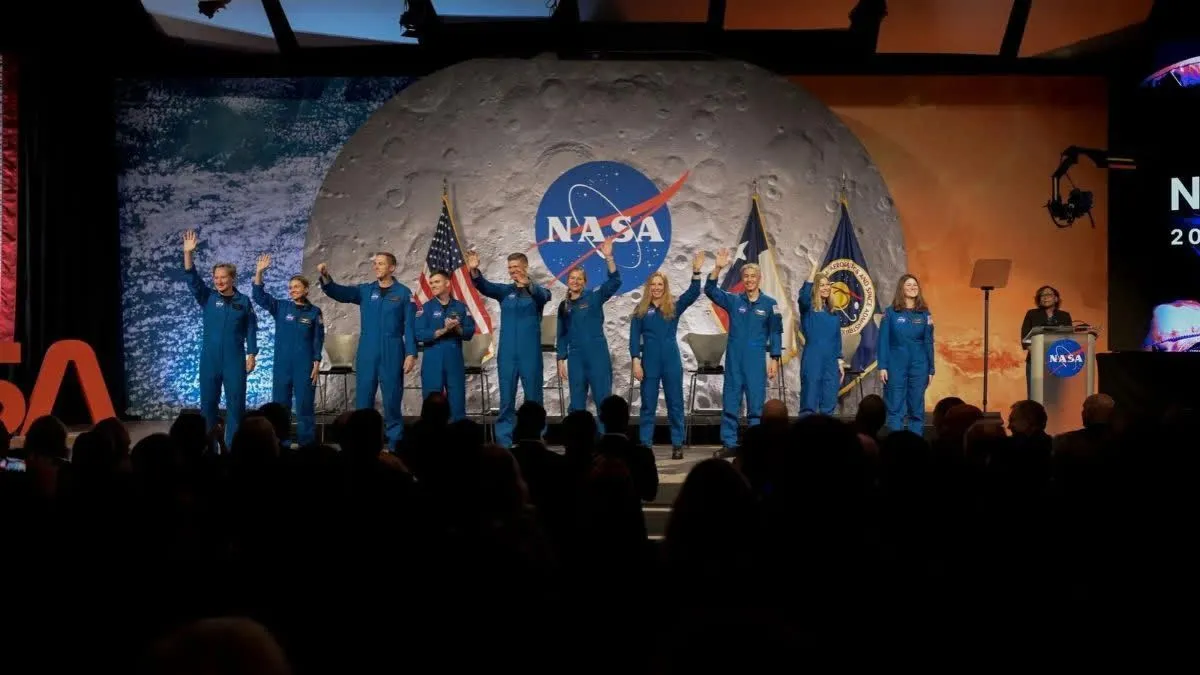
Who can apply?
Candidates can qualify in several ways. One route is a medical degree. NASA accepts a Doctor of Medicine, a Doctor of Osteopathic Medicine, a Physician Assistant degree, a Doctor of Nursing Practice, a Family Nurse Practitioner degree or a related medical qualification.
Another route is through test pilot training. Applicants must have finished or be studying on a nationally recognised Test Pilot School Programme. The course must be completed by July 2027. If this is the only advanced technical qualification a candidate has, they must also hold a bachelor's degree in a Science, Technology, Engineering, and Mathematics (STEM) subject. This includes engineering, biological science, physical science or computer science.
How to apply?
People who are interested can find out more about the application process and life as a NASA astronaut at go.nasa.gov/astro2026.
Work experience is required
NASA says all candidates need at least three years of related professional experience after finishing their qualifying degree.
Pilots can meet this rule through flying hours. The requirements depend on the type of aircraft, which are as follows:
High-performance jets: 750 hours as pilot in command.
Other fixed-wing aircraft: 1,500 total flight hours, including 750 as pilot in command.
Helicopters and other rotary-wing aircraft: 1,000 total flight hours, including 300 as pilot in command.
Medical doctors can count their residency training towards the experience rule. However, the residency must also be finished by July 2027.
Health and personal skills
Every astronaut candidate must pass NASA's long-duration astronaut flight physical. This test checks whether a person is fit enough for long stays in space.
Candidates must also show strong leadership, teamwork and communication skills. These matter because astronauts live and work closely with others in difficult conditions, often far from home.