PC: AI Generated
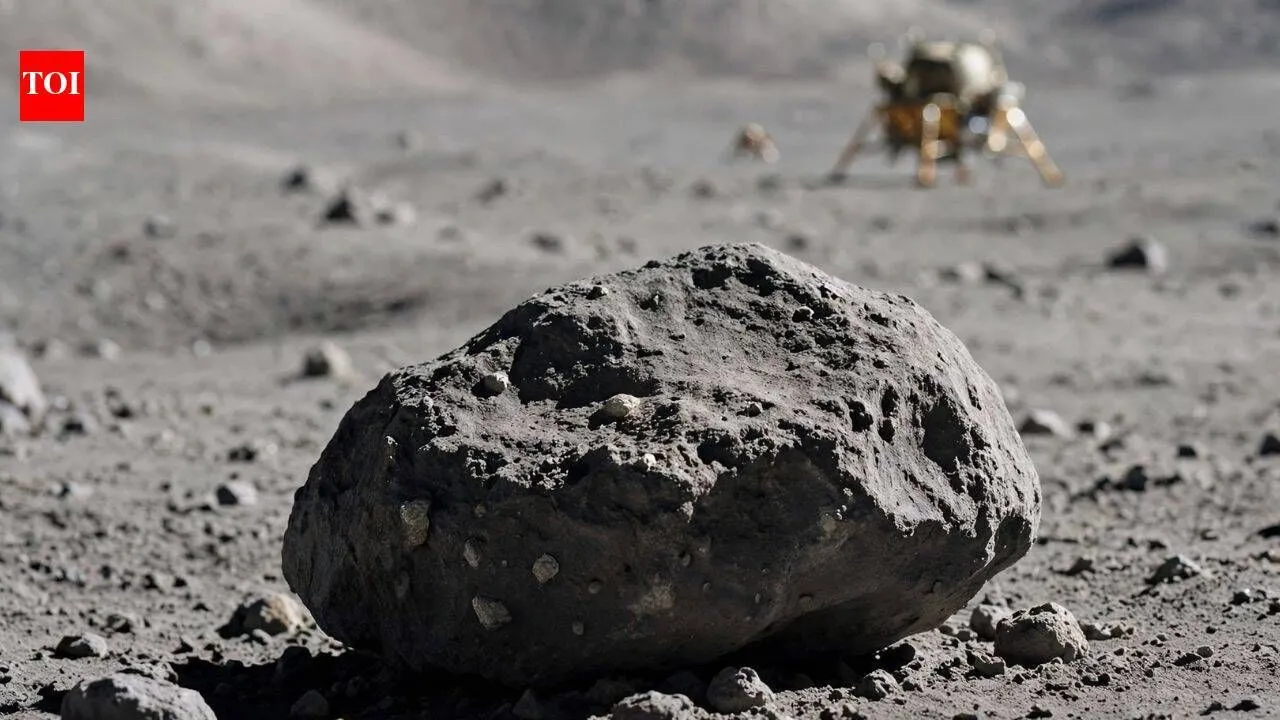
Scientists have identified a rare rock formed in an impact by a carbon-rich asteroid in lunar soil returned by China's Chang'e-6 mission. The discovery provides evidence that material from asteroids reached the Moon through powerful impacts. The fragment was found in samples collected from the Moon's far side. Its unusual chemical composition points to an impact involving a carbon-rich space rock. Such asteroids contain water and other materials that can easily turn into gas. According to research published in the journal Icarus titled ‘Delivery of carbonaceous materials to the Moon’, the discovery offers clues about how water and other materials may have reached the Moon. The researchers also found that the impact may have formed spinel-bearing troctolite by a route not previously identified.
Chang’e-6 samples reveal a rare rock with possible asteroid origins
The researchers studied lunar soil brought back by China's Chang'e-6 mission and found a small rock fragment with an unusual combination of minerals. They identified it as a spinel-bearing, troctolite-like rock. It contains olivine and plagioclase as its main minerals, along with smaller amounts of spinel and troilite. The team also found traces of iron and nickel. Its texture and chemical composition were different from those usually seen in lunar rocks. These differences led the researchers to investigate whether it formed in an asteroid impact. The authors describe it as the first reported identification of material from beyond the Moon in Chang’e-6 samples.
What do oxygen and metal levels reveal about the lunar fragment
The fragment contained several chemical features that are unusual for lunar material. Its olivine crystals had higher levels of certain elements, including cobalt, nickel, chromium, and phosphorus, than those typically found in Moon samples. The researchers also found an unusual oxygen signature. This means the oxygen in the fragment had a different composition from that normally found in lunar rocks. Another important clue was its high iridium content, a metal commonly associated with material from space. These findings, along with the fragment's texture, suggest that it came from an impact involving a carbon-rich asteroid. The researchers believe the asteroid may have been similar to a type known as a carbonaceous chondrite.
Ancient collision may have delivered water and other materials to the Moon
Carbon-rich asteroids can carry water and other materials that easily turn into gas. The researchers suggest that when one of these asteroids struck the Moon, it may have delivered a substantial amount of water and other volatile materials to the lunar surface. The impact would also have mixed material from the asteroid with existing lunar rock. The team found signs that some parts of the fragment's olivine crystals may have come directly from the impacting asteroid. This provides further support for the idea that the fragment formed during a collision. The discovery points to asteroid impacts as a possible route through which water and other materials reached the Moon.
What does the fragment reveal about the asteroid impact
The impact may have formed a spinel-bearing troctolite through a route not previously identified. The researchers suggest that the fragment formed when material from a carbon-rich asteroid mixed with lunar rock called norite. This process may have formed a spinel-bearing rock. Spinel is a mineral found in the Chang’e-6 fragment. The finding suggests that asteroid impacts can change the types of rocks found on the Moon while also bringing material from space to its surface. The researchers say the fragment preserves clues about both the asteroid and the lunar material involved in the collision.
End of Article