Market Mastery
Webinar by Vishal Malkan
Find the weak links
in your portfolio by Vishal Malkan
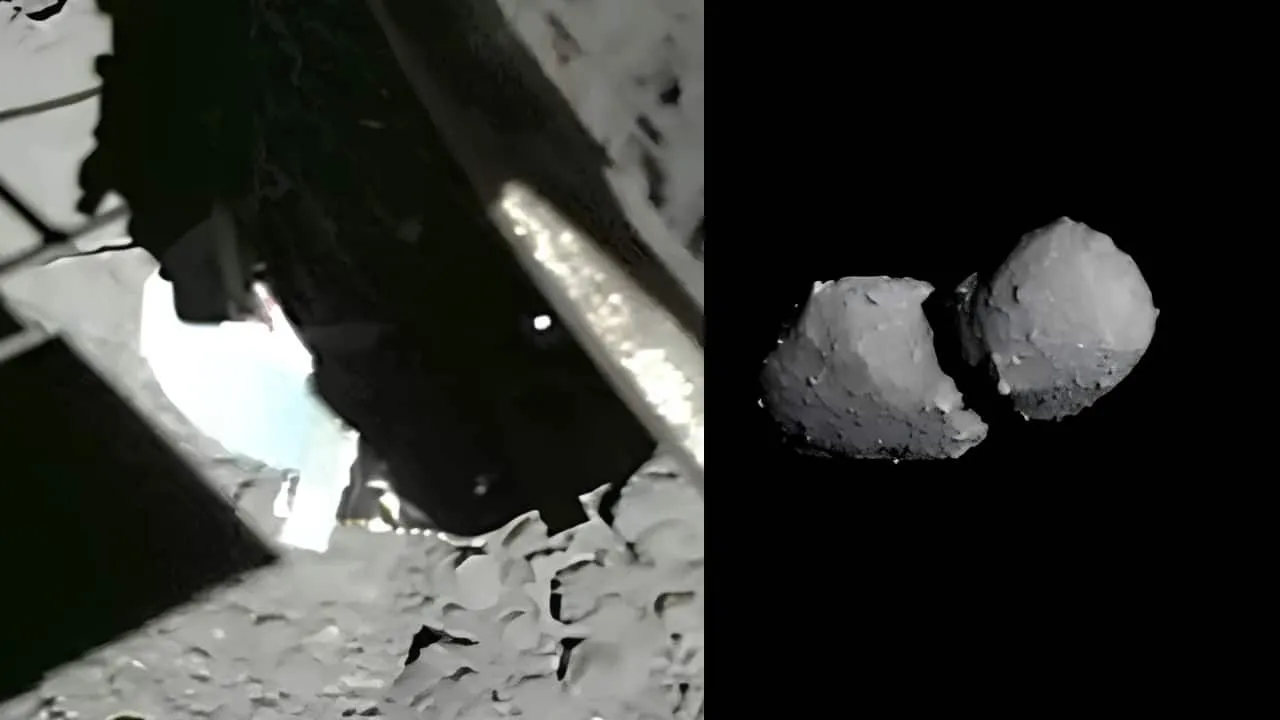
Japan's ambitious asteroid exploration mission has taken an unexpected turn after its ageing spacecraft developed engine problems. The Japan Aerospace Exploration Agency (JAXA) has changed the destination of its Hayabusa2 spacecraft, abandoning its planned 2031 rendezvous with the mysterious asteroid 1998 KY26.
Instead, the spacecraft will attempt to fly past another asteroid in 2028. The decision follows repeated malfunctions in its ion propulsion system, raising concerns about its ability to complete the original journey.
Did Japan cancel its asteroid mission?
Japan has not cancelled the entire Hayabusa2 mission but has abandoned its planned encounter with asteroid 1998 KY26. Announced on November 17, 2026, the revised plan will allow the spacecraft to continue its extended exploration using its remaining propulsion capabilities.
So, what is asteroid 1998 KY26?
Discovered in 1998, asteroid 1998 KY26 is a small near-Earth object that measures approximately 11 metres across. It attracted scientific attention because of its unusual characteristics, including an extremely fast rotation period of just 5.35 minutes.
Scientists had planned to study this asteroid closely to understand its composition, structure and behaviour. Its small size and rapid rotation make it an interesting target for planetary science.
Why did Japan change Hayabusa2's asteroid target?
The decision followed problems with Hayabusa2's ion engines. Its operating engine experienced repeated electrical discharges in August 2026, followed by a failure in the ion-source power supply.
JAXA found that the spacecraft's chemical thrusters could provide approximately 30 metres per second of additional velocity, whereas the original mission required around 200 metres per second for a planned Earth swing-by manoeuvre.
What is Hayabusa2's new destination?
The spacecraft will now target asteroid 2015 BM510. Estimated to measure between 17 and 74 metres, this object completes one rotation in approximately 49 minutes. JAXA plans a high-speed flyby to study it.
When will the new mission take place?
Hayabusa2 has previously collected samples from asteroid Ryugu and delivered them to Earth in December 2020. Its extended mission is continuing despite the change in destination.
Hayabusa2 is already in space, having launched on December 3, 2014. Its next planned asteroid encounter is a flyby of 2015 BM510 in April 2028. This is not a new rocket launch but another stage of its ongoing journey.