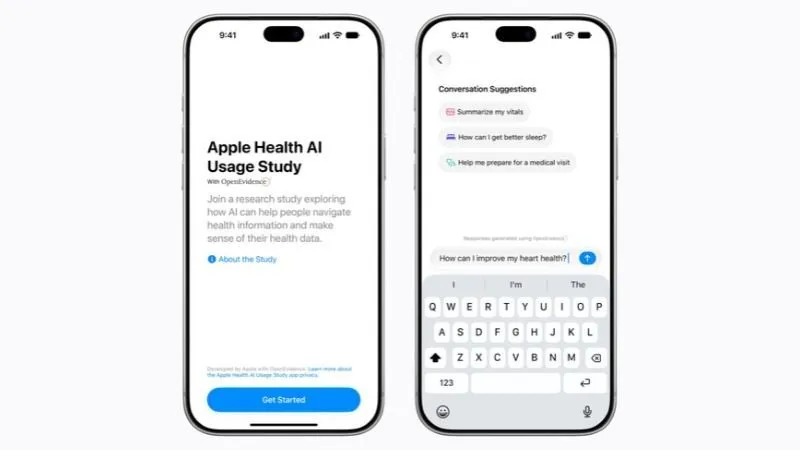
Apple has announced the launch of the Apple Health AI Usage Study in the United States, a virtual research study and dedicated app aimed at understanding how people interact with conversational health artificial intelligence tools.
Conducted in collaboration with clinical AI platform OpenEvidence, the initiative evaluates what drives user trust, response quality, comprehension and everyday health actions. OpenEvidence generates medical responses grounded in established, peer-reviewed publications including The New England Journal of Medicine, Journal of the American Medical Association and Nature.
Through the study app, participants can ask everyday health questions, explore complex medical topics translated into approachable language and inspect linked clinical citations supporting each response. Users may also opt in to share HealthKit metrics such as resting heart rate, activity, sleep, or lab results, to assess how personal health data enhances relevance and understanding, as well as how AI tools can help patients prepare for appointments with their physicians.
Commenting on the initiative, Sumbul Desai, M.D., Vice President of Health and Fitness, Apple, said, “At Apple, we believe responsible innovation starts with scientific rigor and clinical grounding. Health is deeply personal and conducting a dedicated research study is the most thoughtful way to understand how people engage with, comprehend and evaluate health AI in everyday life. Insights from this study will help advance the broader scientific conversation and ensure that as technology evolves, we continue building trusted tools that genuinely support people wherever they are on their health journey.”
Robert M. Wachter, M.D., Professor and Chair of the Department of Medicine at UCSF, noted, “Patients and clinicians are both turning to AI, but the tools they use are being built and tested in separate worlds. When patients and doctors draw on versions of the same trustworthy tools, patients arrive prepared, conversations improve and next steps happen seamlessly. Connecting these tools and rigorously studying what works, is how we’ll get there.”
Apple stated that the study is built with strict privacy protections, transparency and clinical safety guardrails, confirming that participant data will not be used to train AI models. The app also includes automated safeguards designed to detect concerning queries and advise users to seek care from a healthcare professional.