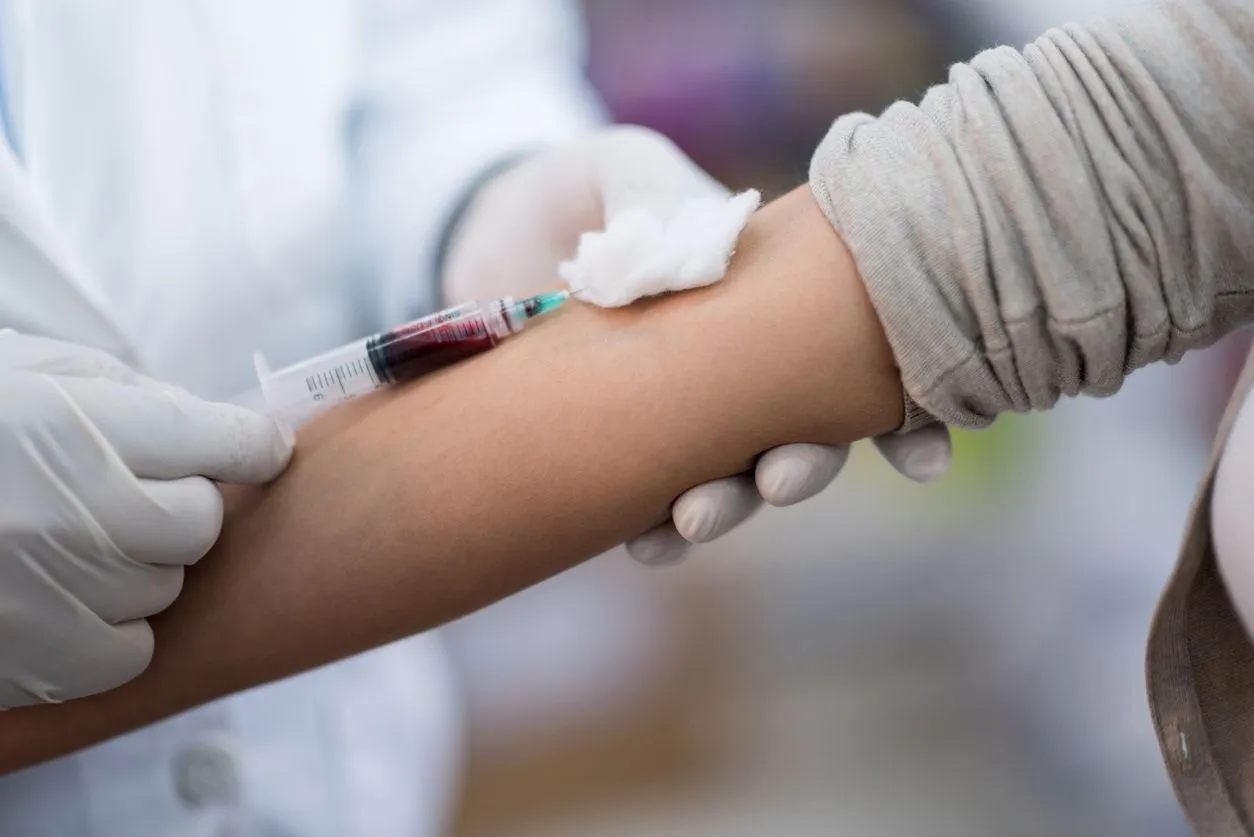
For patients who need a blood transfusion, one risk is that a donated unit may carry an infection not yet detectable through routine screening. A molecular test now being used at the Institute of Liver and Biliary Sciences (ILBS) is designed to reduce that gap by offering an additional safeguard against HIV and hepatitis B and C.
ILBS began individual donor nucleic acid testing (NAT) in January 2024 and has tested more than 30,000 donor samples. It is currently the only Delhi government hospital carrying out individual donor NAT, according to information provided by the institute.
How NAT reduces window period
The significance for patients lies in the “window period” — the time between acquiring an infection and the point at which a test can detect it. Conventional tests look for antibodies or antigens. NAT instead searches for the virus’s genetic material, which can become detectable earlier. This matters because a donor in the early phase of an infection may test negative in conventional screening even though the virus is present.
ILBS data indicate that, compared with antibody/p24 antigen testing, individual donor NAT reduces the estimated detection window from 15 days to 4.5 days for HIV-1, from 58.3 days to 2.2 days for hepatitis C, and from 38.3 days to 16.3 days for hepatitis B. The shorter window lowers the chance that an infected donation will pass undetected, although it does not make the risk zero.
The institute has installed a Procleix Panther system, manufactured by Grifols, in a dedicated NAT laboratory. The system has a stated capacity of up to 36,000 tests a month when operated round the clock. ILBS says this capacity is sufficient to meet its own needs as well as the combined NAT testing requirements of Delhi government blood centres, including anticipated future demand.
That capacity could matter beyond the institute if testing is extended across the government blood-centre network. ILBS describes the facility as capable of supporting that network; it does not say every government blood centre is already sending samples for NAT testing.
An additional safeguard, not a guarantee
For people receiving transfusions — including patients undergoing surgery, cancer treatment or emergency care — NAT provides an additional layer of screening before blood is issued. Blood safety still depends on voluntary, carefully selected donors, proper collection and storage, and routine screening alongside NAT. No test can eliminate every risk.
Also read: Health Ministry proposes immediate licence suspension for substandard drugs
The development strengthens Delhi’s public-sector blood screening infrastructure, but does not guarantee completely risk-free blood. Its impact will depend on how consistently the testing capacity is used across blood centres and how effectively safe blood reaches patients who need it. For families, this means a lower, not absent, risk.