The Delhi High Court has held, at a prima facie stage, that lifelong medicines required after a kidney transplant can form part of free treatment under the applicable government scheme, directing the Centre to continue reimbursing the medical bills of petitioner Surendra Kumar.
The interim order concerns Kumar’s claim for reimbursement of medicines needed after his kidney transplant. The petitioners had sought access to these medicines through the National Arogya Nidhi, arguing that treatment does not end with the transplant procedure and that the medicines required to sustain the transplant should also be covered.
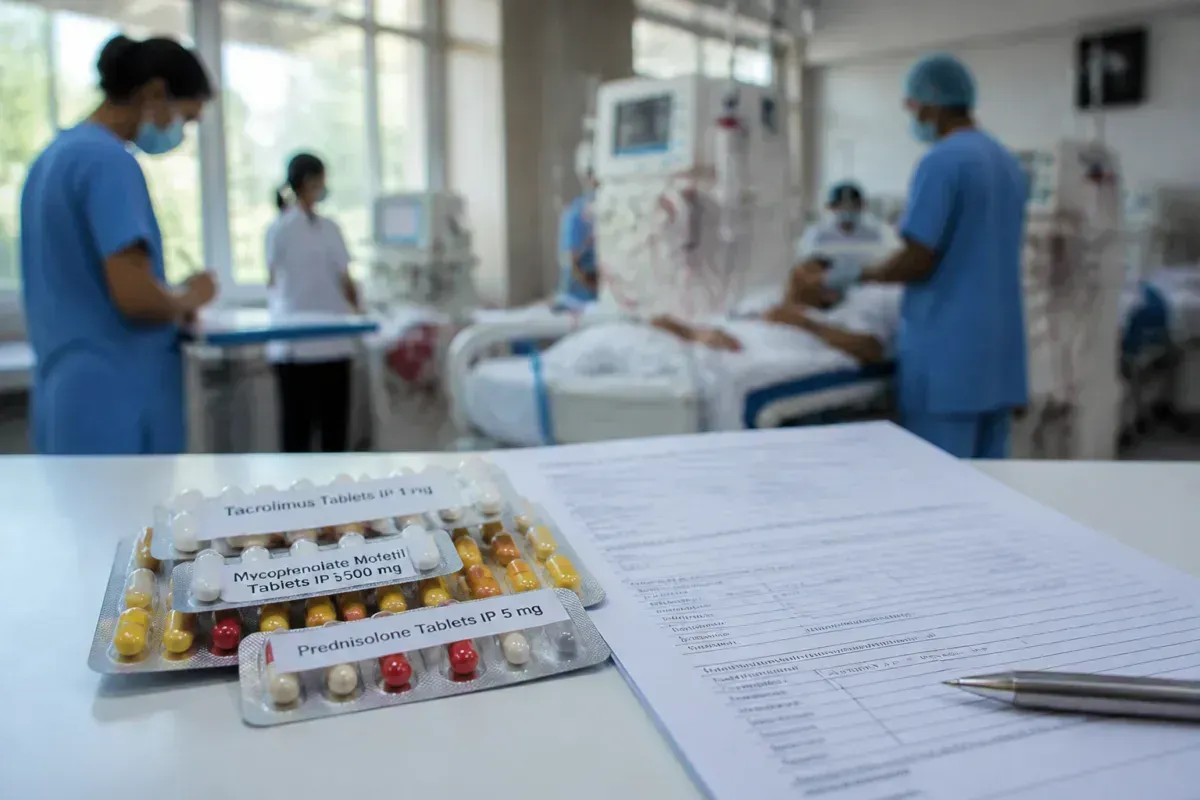
The court observed that an organ transplant is only one part of the treatment process. Since it was not disputed that a kidney transplant patient needs medicines throughout life after the procedure, the court said, prima facie, that the cost of those medicines would also be part of the free-treatment scheme.
The order places continuing post-operative care at the centre of the dispute. Kidney transplant recipients require regular medication after surgery, and the petition before the court raised the question of whether the public health support available for the transplant should also extend to the medicines required afterwards.
For Kumar, the court directed the Centre to continue reimbursement of his medicine bills. The order is interim in nature and arises from the individual petition. The report does not indicate that the court has issued a final, nationwide ruling altering all reimbursement rules or eligibility conditions under the National Arogya Nidhi.
The case is significant for the way public treatment schemes may be interpreted in relation to long-term care. A procedure-based understanding of treatment could leave patients responsible for recurring costs after discharge, while a care-based interpretation would consider essential post-transplant medicines part of the treatment required to preserve the outcome of surgery. The court’s prima facie observation addresses that distinction in Kumar’s case.
The matter also highlights the administrative connection between medical treatment and reimbursement. Patients may undergo a transplant in a hospital but depend on continuing approval and payment processes for medicines prescribed after the operation. The court’s direction requires the Centre to maintain reimbursement for the petitioner while the broader legal questions remain before it.
The next hearing is scheduled for 4 February 2027. The court’s further proceedings will determine how the petitioners’ request for lifelong post-transplant medicines under the National Arogya Nidhi is dealt with and whether any wider directions follow.