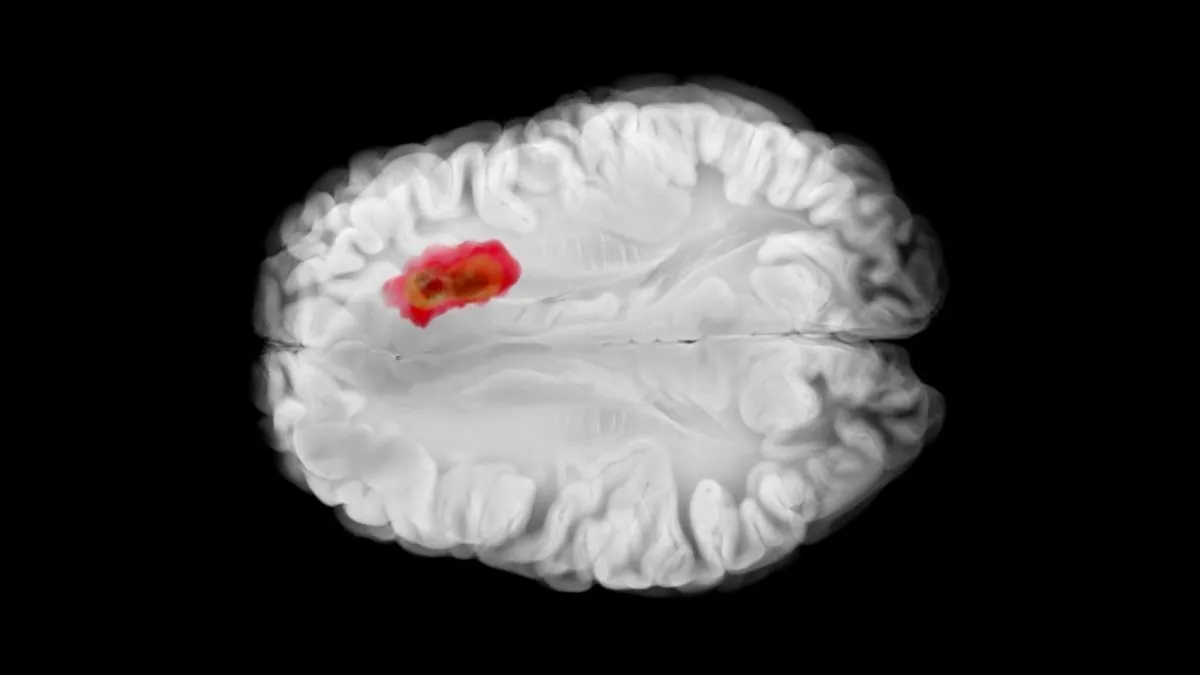
Scientists have eliminated an aggressive childhood brain cancer in every mouse tested using an experimental immune-cell therapy designed to switch on only after it enters the brain.
The findings could point to a new way of treating diffuse midline glioma (DMG), a devastating cancer with barely any effective treatment options available. However, experts caution that the results have so far only been demonstrated in mice and will need to be tested for safety and effectiveness in people.
Dr. Lucy Hooper, a physician and co-founder of Coyne Medical, told Newsweek: "CAR-T cell therapies have revolutionized treatment for some blood cancers, so it is very exciting to see work showing a possible way to extend that success to brain tumors. Diffuse midline glioma is a devastating childhood cancer, with a very high mortality rate and very limited treatment options.
"What is particularly interesting here is how the researchers have engineered T cells, a type of immune cell, with a biological switch called synNotch," she added. "This responds to a signal in the brain before turning on the cells' cancer-targeting machinery. The aim is to concentrate the treatment where it is needed and reduce the risk of damaging healthy tissues elsewhere in the body."
Targeting a Deadly Childhood Cancer
DMG grows into the brainstem, which controls critical functions such as breathing, heartbeat and swallowing. Nearly all children diagnosed with the disease die within a year, and existing treatments have had little success in stopping its progression.
Researchers at UC San Francisco developed the experimental treatment, known as B-SYNC CAR-T, to tackle some of the problems that have limited CAR-T therapy against brain tumors.
CAR-T therapy involves genetically modifying a patient's T cells so they carry receptors that recognize proteins on cancer cells and trigger an immune attack. B-SYNC adds another layer of control.
The researchers identified brevican, a protein distributed throughout the brain, and redesigned the synNotch system so exposure to it prompts the cells to produce cancer-targeting CAR receptors. Once activated in the brain, the cells can hunt tumor cells carrying proteins called EphA2 or IL13Rα2.
This means the engineered cells use the brain environment itself as the signal to switch on, rather than depending on a particular tumor mutation.
Tumors Eliminated in Every Mouse
B-SYNC was initially developed for glioblastoma, but researchers recognized that it could potentially target DMG because both cancers commonly display EphA2 and IL13Rα2.
When B-SYNC cells were administered intravenously to mice implanted with human DMG cells, some entered the brain and began producing the cancer-targeting receptors. Cells elsewhere in the body, including the blood and spleen, did not appear to switch them on.
Researchers then delivered the cells directly into the brain's fluid-filled ventricles. In two mouse models containing human DMG tumors, B-SYNC completely eliminated the cancer in every treated mouse. Conventional CAR-T cells were unable to control the tumors.
The protection also persisted. Nearly seven weeks later, researchers introduced DMG cells again, and every treated mouse rejected them. B-SYNC cells remained functional for more than 70 days after treatment.
"It's been a struggle to make CAR-T cells that overcome DMG without causing unacceptable side effects," Hideho Okada, a professor of Neurological Surgery at UCSF and co-corresponding author of the study, said in a statement. "By limiting B-SYNC's CAR expression to when and where it matters — in the brain — we saw consistent, total shutdown of DMG tumors in the lab."
Okada and fellow researchers are now working toward human testing using patients' own genetically modified T cells. A clinical trial at UCSF Health could begin as early as April 2027.
Hooper added: "The tumor clearance seen in these mouse experiments is very encouraging, but this is still early research. We need clinical trials to establish whether this approach can work safely and effectively in children. It offers a promising direction for a disease where better treatments are desperately needed."
Newsweek reached out to the study's authors via email for more information.
Reference
Lakshmanachetty, S. et al. (2026). Brain-sensing synNotch–CAR T cells enable precise targeting and clearance of diffuse midline glioma in multiple preclinical models. Science Translational Medicine. https://doi.org/10.1126/scitranslmed.aed9994.
Contact Newsweek editors on this story: Kara Dolman and Cristina Diciu.
Related Articles
Vitamin K Deficiency Causes Bleeding in Children – How To Get a Shot
New Drug Could Reduce Death Risk for Women With Common Cancer
College Athlete Books Skin Check After Mom's Warning—Then Comes Diagnosis