Brazil has launched two roadmaps to encourage other countries around the globe to accelerate the phasing out of fossil fuels and plan for a green transition. The roadmaps offer broad frameworks to encourage countries to develop their own, more specific, national climate and energy plans.
Brazil, the host of last year’s UN COP30 climate summit, announced the launch of its roadmaps in early November, ahead of COP31, which is being held in Turkey from 9th to 20th November. This follows the win of President Luiz Inácio Lula da Silva in the October general election for his fourth term in office over his right-wing challenger Flávio Bolsonaro. Lula has long championed green energy, and his electoral victory was seen by environmentalists as a win for Brazil’s rainforest and the broader climate landscape.
The roadmaps aim to demonstrate to other governments that it is possible to achieve economic growth and lift people out of poverty, while also reducing dependence on fossil fuels. André Corrêa do Lago, Brazil’s president of the COP30 summit, said the launch of the roadmaps aims to shift the dynamic of previous climate conferences toward implementing already agreed-upon targets rather than negotiating global agreements to tackle the climate crisis.
Corrêa do Lago said, “They are documents of implementation”, adding, “There is a different group of people that negotiate, and that implement. The problem we’ve had at many COPs is to think that the same people who negotiate might also need to coordinate the implementation – this is not the case.” He suggested that the roadmaps should be used by transportation, energy, and infrastructure ministries to establish national implementation plans.
ADVERTISEMENT
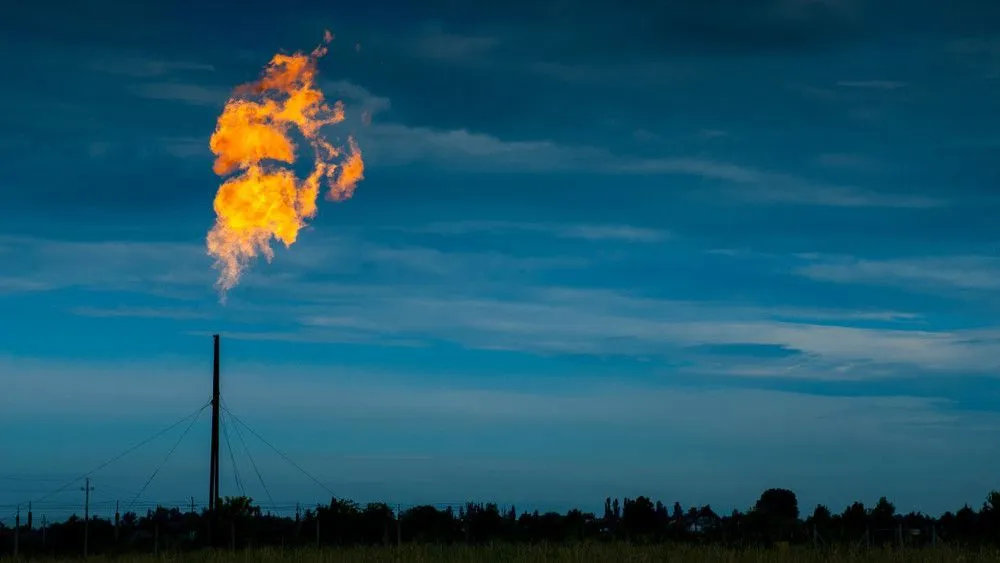
The Brazilian roadmaps include several recommendations that countries can choose whether to adopt when creating national climate legislation. Some of the recommendations include calling on oil and gas producers to reduce gas flaring and venting, reducing government subsidies for fossil fuel production and use, and developing new renewable energy capacity. Brazil also highlights the need to provide financial support to low-income countries to help tackle deforestation and climate change, as well as regulate trade between forested countries and consumer countries.
While many view the roadmaps as a positive step encouraging countries worldwide to take concrete action towards achieving a green transition, others believe that more work is needed to develop more comprehensive frameworks. Joeri Rogelj, a professor of climate science and policy at Imperial College London, explained, “The roadmaps are valuable but fall short of clearly indicating the pace of change needed by including no timeline or key benchmarks.” Rogelj added, “Because of this omission, they still leave much to be imagined about what is needed to achieve the Paris Agreement’s ultimate goal: limiting global warming to well below 2°C, and preferably to 1.5°C, to avoid dangerous climate harm.”
The Brazilian roadmaps outline possible steps to cut fossil fuel use, but are broad because they must be applied across various country settings. They contain neither deadlines nor action milestones, stating that there is no “one-size-fits-all” approach. Instead, the roadmaps allow individual countries to “diagnose” the extent of their reliance on fossil fuels to establish steps to reduce it.
Corrêa do Lago explained, “Every country will have a different rhythm [for moving away from fossil fuels] – it’s very important to concentrate on the diagnoses of countries’ circumstances… Based on these diagnoses, they can choose their levers [of policy] and implement the transition.”
Brazil's fossil fuel roadmap proposes coordinated international action through 2033, 10 years after the COP28 climate summit in Dubai, which called on member states to support a global transition away from fossil fuels under that UAE Consensus. At COP28, UN member states called for “transitioning away from fossil fuels in energy systems, in a just, orderly and equitable manner,” with the aim of achieving net zero by 2050.
Some countries have already developed national roadmaps to decrease dependence on oil, gas, and coal in recent years. Several countries met in April at a conference in Santa Marta, Colombia, to follow up on COP30 and discuss next steps toward a green transition. Around 60 countries that attended the event formed a “coalition of the willing”, with each member expected to establish a national roadmap. This has resulted in Germany, France, the Netherlands, and other countries establishing national plans tailored to each country’s context, with more specific actions and timelines.
ADVERTISEMENT
While the Brazil roadmaps may be broad, they provide a basic framework for countries looking to develop national plans and could encourage more countries to establish climate policies. It is particularly important that Brazil launched the initiative ahead of COP31, as it could draw greater attention to the countries that have not yet established clear strategies to achieve a national green transition.
By Felicity Bradstock for Oilprice.com
More Top Reads From Oilprice.com
$7 Billion in Oil Debt Has Nigerian Banks Holding Back Lending
Fusion's Next Race Is Over Superconducting Tape, Not Plasma
Global Power Grid Expansion Surges 50% to Record High