Chennai:
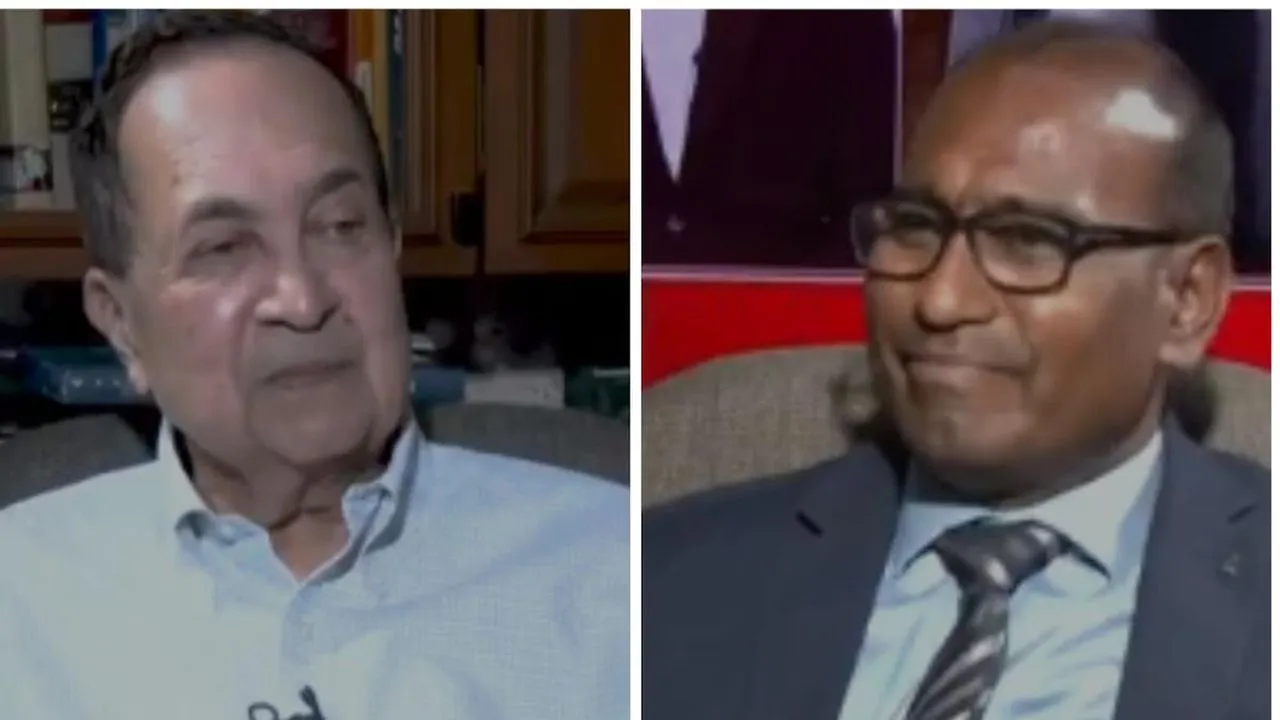
Sonia Gandhi's autobiography, "Belonging: A Journey of Love," released on Tuesday, offers a deeply personal account of her life with the Gandhi family, but also touches upon several political issues that could have a bearing on the 2029 Lok Sabha elections, N Ram, former Editor-in-Chief of The Hindu, told NDTV in an exclusive interview.
Ram, who read the book before its release and also interviewed Sonia Gandhi, said that while the memoir was not written with elections in mind, several political issues have emerged naturally in the course of her narration, particularly her views on the BJP, the RSS, the Election Commission of India and what she describes as "vote stealing" and "the destruction of institutions".
"It happened suddenly. There are inputs for the elections in this, particularly what she says about the BJP and the RSS and how people are restless, how there's been vote stealing, how institutions have been damaged or destroyed," he told NDTV's J Sam Daniel Stalin.
Read: Sonia Gandhi's Interview With NDTV In 2004, Now Seen From Her Memoir's Lens
"She particularly mentions the Election Commission of India. So all these issues, but they are playing right now. The 2029 elections are a little further away. Had it been for the election, she could have had it two years down the road. So it is not the case," he added.
'
Now It Is My Turn': Why Sonia Gandhi Wrote The Book
The timing of the book, Ram said, was determined by Sonia Gandhi's desire to tell her own story after remaining largely silent while several accounts of the Gandhi family were published over the years.
She has described the book as an attempt to portray her family honestly, as people she knew and loved.
"Others have spent decades telling my story. Now it is my turn," she has said, both on social media platform X and in her interview with Ram.
Read: "Absolutely Not" To "Theek Hai" To Firm "No": Sonia Gandhi On PM Post Tussle
According to Ram, Gandhi felt that several books about her family had failed to capture the human side of the people they wrote about.
He said she began jotting down her thoughts nearly ten years ago, though the writing process was not always smooth.
"Sometimes it came in a flow, sometimes there was a block. There was some frustration. But she devoted the last five years to this," Ram said, adding that there were periods when she could not write because she was not in the right frame of mind.
He also revealed that Sonia Gandhi had discussed the issue of books written about the family with her husband Rajiv. Their conclusion was that they should not pay attention to such accounts. Sonia herself, Ram said, told him that she did not read those books.
The PM Dilemma: Rahul And Priyanka Opposed Her Becoming Prime Minister
One of the most revealing portions of the memoir concerns the dramatic events surrounding Sonia Gandhi's decision not to become Prime Minister in 2004.
Read: "Take A Good Look": Sonia Gandhi's Most Harrowing 2002 Gujarat Riots Memory
Ram said Sonia did not want the post, but there was a period of vacillation before she finally declined. Congress leaders had been pressing her relentlessly to take over as Prime Minister, and at one point, she even agreed.
But her decision to say yes triggered an intense reaction within the family.
Rahul and Priyanka Gandhi opposed her becoming Prime Minister, fearing that her life would be under threat. Sonia herself was acutely conscious of the possibility of another assassination in the family, particularly after the killing of Rajiv Gandhi.
Ram described her eventual decision to turn down the post as one of the extraordinary decisions in Indian political history.
The memoir also records the extraordinary personal circumstances behind Rajiv Gandhi's entry into politics. Indira Gandhi wanted her elder son to enter politics following the death of Sanjay Gandhi, but Sonia Gandhi strongly opposed the idea. Rajiv, however, eventually responded to what he saw as a call of duty, despite his fear that he could be assassinated.
Rajiv, Indira And The Emergency
Indira Gandhi and Rajiv Gandhi emerge as two central figures in Sonia Gandhi's account. The memoir also revisits the Emergency, which Ram described as a dark chapter in the history of Independent India.
He said Sonia Gandhi provided the circumstances that led to the Emergency and expressed regret over what happened. The book also refers to Rajiv Gandhi's concerns about the negative things he heard during the Emergency and how people around Indira Gandhi kept her away from uncomfortable truths.
Read: "How Has He Left Me?" Priyanka Recalls Sonia Gandhi's Grief After Rajiv's Death
Ram said he believes that the Congress should be more forthcoming in acknowledging its responsibility for the Emergency.
"Emergency was a dark chapter in the history of independent India. The Congress should be more forthright in its acknowledgement," he said.
The book also touched upon the Bofors controversy. Sonia briefly addressed the allegations, including Rajiv Gandhi's position that neither he nor his family had received any commission.
However, Ram pointed out that Rajiv Gandhi had acknowledged that commission agents were involved in the deal and had asked Swedish authorities to investigate the matter.
Gandhi also recalled her husband's Rajiv's statement in Parliament, which he described as the highest forum of democracy, that neither he nor his family had taken any consideration.
The Love Story That Started In Cambridge
Beyond politics, the autobiography takes readers into Sonia Gandhi's personal life, including her first meeting with Rajiv Gandhi at Cambridge.
Ram described it as an instant attraction, with love on both sides.
Read: "We Fell In Love With Him": Sonia Gandhi On 1st Son Who Died Just After Birth
Sonia was drawn not just to Rajiv but also to the Gandhi family's role in India's freedom movement and its political history.
Her father, an army man who admired Russia, had given all three of his daughters Russian names, including Sonia. He was initially strict about the marriage but eventually agreed.
The memoir also recalled the devastating aftermath of Rajiv Gandhi's assassination and its impact on Rahul Gandhi and Priyanka Gandhi Vadra, who had to be home-schooled.
Ram says their growing up and entering adulthood under such circumstances was extraordinarily difficult.
Manmohan Singh, The Congress Revolt And Karunanidhi
The memoir also offers glimpses into Sonia Gandhi's political relationships and the personal hurt caused by opposition from within the Congress.
She refers to the revolt by Sharad Pawar, PA Sangma and Tariq Anwar, who had questioned her foreign origin and opposed her leadership.
Sonia Gandhi recalls feeling that she was still regarded as an outsider, adding that perhaps those leaders had their own reasons.
Ram said her ability to put herself in the shoes of others distinguishes her from many political leaders. He also pointed to her approach as a social democrat who recognised the need to work with parties even when there were ideological differences.
Read: 'Pranab Mukherjee Shocked Me With Change At Top Suggestion': Sonia Gandhi
Her relationship with former Prime Minister Manmohan Singh comes through with considerable warmth. Sonia Gandhi has expressed great respect and admiration for him.
Ram also recalled how her love for literature helped her appreciate former Tamil Nadu Chief Minister M Karunanidhi, despite political campaigns alleging that he was soft on the LTTE.
Sonia On Modi, RSS And India's Institutions
The book does not shy away from contemporary politics either.
Sonia Gandhi says even if the BJP is voted out of power, the damage she believes has been done to institutions would have long-term consequences.
She also speaks about her ideological and social differences with Prime Minister Narendra Modi.
Ram pointed out that Sonia Gandhi acknowledged Modi's rise from a non-privileged background, even while arguing that his political ascent has been amplified by public relations machinery.
Read: "I'd Quake In My Seat": Sonia Gandhi On Mother-In-Law Indira Gandhi's Temper
On the RSS, Sonia is dismissive, saying there is not much to learn from the organisation.
The memoir also reflects her concerns about the Election Commission, the Special Intensive Revision (SIR) of electoral rolls and allegations of vote theft.
A Candid Sonia, Beyond The Public Image
Ram said the memoir is written in a direct, unornamented style, with nothing fudged, but with considerable nuance. He saw it primarily as a personal memoir with politics providing the backdrop, rather than a political account attempting to settle scores.
What stands out, he said, is Sonia Gandhi's candour, which runs counter to the public perception of her as a closely guarded and inaccessible political figure.
From her love story with Rajiv Gandhi and the difficult years after his assassination to her hesitation over becoming Prime Minister, the book offers readers an unusually intimate look at the family behind one of India's most consequential political legacies.