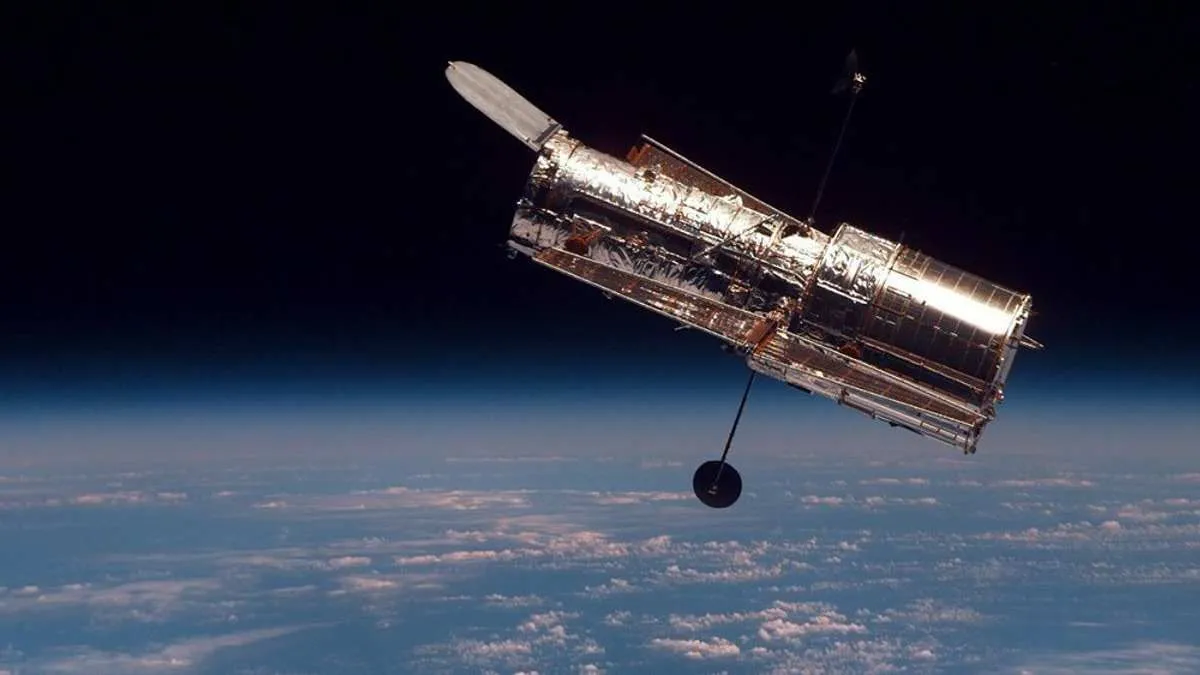
NASA is hunting for a lift for the Hubble Space Telescope and is seeking assistance from private space firms. In a Request for Information issued on October 29, 2026, the premier space agency inquired of the commercial industry about what it can do to extend the life of the over 35-year-old telescope. Hubble has no propulsion system of its own, so atmospheric drag is slowly dragging it down.
Per NASA’s analysis, the telescope is likely to re-enter the atmosphere between 2033 and 2034, which means a rescue mission would have to fly by 2032. NASA Administrator Jared Isaacman said Hubble still has “important science ahead of it” and that the agency owes it to the American taxpayer and the scientific community to explore every reasonable option.
What’s On The Table
The RFI invites interest in a reboost to a higher orbit and in servicing to upgrade the telescope’s capabilities. A safe, controlled re-entry or orbital disposal at the end of Hubble’s life is also on the list. In his statement, NASA’s Nicky Fox, associate administrator of the Science Mission Directorate, described how the commercial industry has evolved rapidly in satellite capture and servicing. He remarked.
Commercial industry has rapidly evolved in recent years to offer new capabilities for in-space satellite capture and servicing. Given the time we have until Hubble’s anticipated re-entry, we are eager to explore the breadth of possibilities to boost Hubble to a higher orbit while we develop the flagship mission to follow.”
Rescue Mission: A Race Against Time
Astronauts last serviced Hubble in May 2009, on a space shuttle flight. In 2022, NASA and SpaceX signed an unfunded agreement to study a boost, and NASA said at the time that it had no plans to pay for a dedicated mission. Per The Register, Isaacman had backed a SpaceX reboost before becoming administrator, but the idea was rejected. The same report notes that no replacement for Hubble is expected before the 2040s.
Meanwhile, responses to the NASA RFI are due by 3 p.m. EST on Monday, November 30. You can access the RFI here.
See Also: What Did NASA's Hubble See On Your Birthday? Here's How To Check
Cover: NASA