One day after NASA's Swift observatory burned up over Indonesia, the agency made clear it does not want the Hubble Space Telescope to end the same way. NASA is asking private companies how they could push Hubble into a higher orbit, upgrade it, or guide it to a safe, controlled end, and any such mission would need to fly by 2032.
The agency issued a Request for Information on Oct. 29 and publicized it on Nov. 4, according to the NASA release. Responses are due by 3 p.m. EST on Monday, Nov. 30. This is a fact-finding step — not a contract. NASA has not approved, funded or selected any mission.
A Telescope Without an Engine
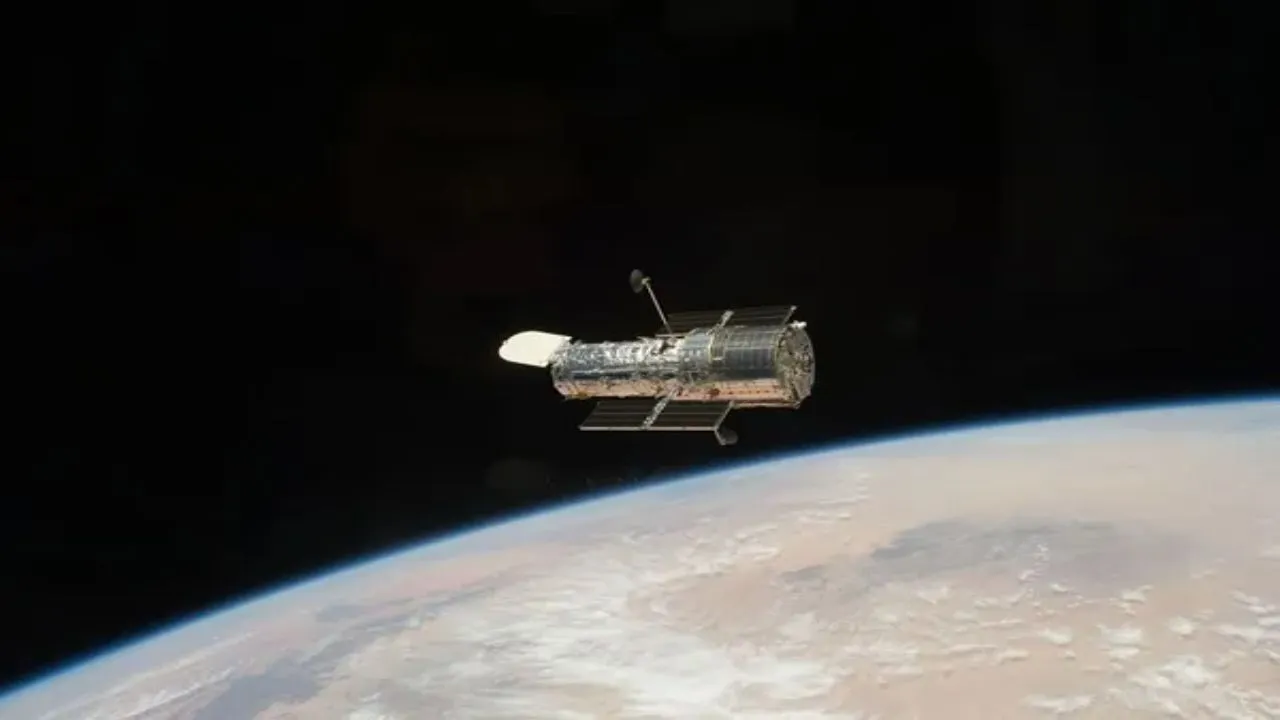
Hubble has orbited Earth since 1990, and like Swift, it has no propulsion system of its own. Thin traces of atmosphere at its altitude create drag that slowly lowers its orbit, and nothing on board can push back.
During the space shuttle era, astronauts periodically boosted Hubble during servicing visits. The last of those missions flew in 2009. Since then, the telescope has been sinking gradually, and NASA now estimates it will reenter the atmosphere between 2033 and 2034 without help.
That timeline is why 2032 matters. A reboost has to happen before the orbit decays too far. According to Ars Technica's reporting on the request, NASA is looking for ways to lift Hubble to at least 373 miles (600 kilometers), and any mission must not harm the telescope.
The Swift story shows what happens otherwise. NASA's gamma-ray observatory reentered at 7:39 a.m. EST on Nov. 4 after a commercial rescue attempt failed and its orbit decayed beyond recovery. Hubble is far larger, and an uncontrolled reentry of a spacecraft its size raises bigger debris-safety concerns.
Three Paths on the Table
NASA's request lays out three options. The first is to capture Hubble and boost it to a higher orbit, buying years or decades of extra life. The second is a servicing mission that would upgrade the telescope's performance, improve its resilience and extend its lifetime in orbit.
The third is retirement done safely. A spacecraft would grapple Hubble and either guide it into a controlled reentry over a remote ocean area or move it to a disposal orbit. That option ends the science but removes the risk of an unpredictable fall.
Under the request, a contractor would supply the launch vehicle, the servicing spacecraft, mission operations and, if needed, a crew. NASA wants to know who could realistically do it, how, and at what cost.
Isaacman's Long-Running Interest
The request carries a personal history. Before he became NASA administrator, Jared Isaacman proposed a private Hubble reboost using a SpaceX Crew Dragon through his Polaris Program. In 2022, NASA and SpaceX signed an unfunded agreement to study the idea. In 2024, NASA decided not to pursue a reboost at that time, citing risks to the telescope.
"Hubble still has important science ahead of it," Isaacman said in the new announcement. He added that NASA owes it to taxpayers and the scientific community to explore innovative, cost-effective ways to extend the life of assets already in orbit.
Nicky Fox, who leads NASA's Science Mission Directorate, pointed to how much has changed. "Commercial industry has rapidly evolved in recent years to offer new capabilities" for satellite capture and servicing, she said. NASA says it wants options that could keep Hubble productive while it develops the flagship observatory that will follow it.
The Risks and Open Questions
Servicing Hubble without the shuttle is uncharted territory. No commercial company has captured and reboosted a major government science observatory. Swift's rescue attempt this year showed how hard it can be: the robotic LINK spacecraft developed propulsion and pointing problems and never reached its target.
Hubble does carry a helpful feature — during the 2009 servicing mission, astronauts installed a soft capture fixture designed to let a future spacecraft latch on. Even so, any mission would have to dock with a delicate, aging telescope without disturbing its optics or its remaining gyroscopes. Hubble has operated in a reduced, one-gyroscope mode since 2024 to preserve its remaining hardware.
Cost is the other unknown. NASA has not said how much it could spend, and the request does not commit the agency to buying anything. The agency must weigh any rescue against Hubble's operating costs and other science priorities.
Hubble's record makes the stakes clear. Since its launch on April 24, 1990, the telescope has made more than 1.7 million observations, according to Space.com, and it continues to publish new results on planets, stars and galaxies.
The people with the most at stake are astronomers who rely on Hubble's ultraviolet and visible-light views, which the infrared-focused James Webb Space Telescope does not fully replace. Students, teachers and the public also benefit from Hubble's free image archive, one of the most widely used science resources in the world.
The Road to a Decision
The next milestone is the Nov. 30 response deadline. NASA will then review what industry submits and decide whether to pursue a formal solicitation. Any real mission would require funding, technical reviews and a launch window well before 2032.
For readers, the key point is that Hubble is still working and producing science today. Nothing about its operations changes now. The question is whether a commercial mission can be planned, approved and flown in time.
Given the Swift outcome, NASA appears to be starting earlier this time. Whether that becomes a rescue, an upgrade or a carefully controlled farewell will depend on what companies propose and what the agency can afford.
What Readers Want to Know
What did NASA announce about Hubble? NASA issued a Request for Information asking companies how they could boost Hubble's orbit, service it, or retire it safely.
Has a Hubble rescue mission been approved? No. The request gathers information only. NASA has not approved, funded, or selected any mission.
Why is Hubble losing altitude? Atmospheric drag slowly lowers its orbit, and Hubble has no engine to push back. NASA estimates reentry in 2033 or 2034 without help.
What is the 2032 deadline? NASA says any boost or disposal mission would need to fly by 2032 to act before the orbit decays too far.
When are responses due? By 3 p.m. EST on Monday, Nov. 30, 2026.