Apple and Epic Games are entering the final stretch of their judicial tug-of-war over App Store payment rules. On November 13 local time, Epic filed a response brief with the U.S. Supreme Court, asking the justices to uphold a lower court's civil contempt ruling against Apple and to reject Apple's appeal. According to Reuters, Epic also expanded its legal team, hiring Nicole Saharsky, a veteran attorney at U.S. law firm Mayer Brown, to join its long-standing team from Cravath, Swaine & Moore for next year's oral arguments. Saharsky has previously argued 32 cases before the U.S. Supreme Court.
The dispute traces back to 2020, when Epic enabled a payment channel in Fortnite that bypassed Apple's in-app purchase system, leading to the game's removal from the App Store. Epic subsequently sued Apple, challenging its control over iOS in-app transactions and app distribution. In 2021, a federal district court in California issued an injunction requiring Apple to allow developers to place external links within apps, directing users to complete purchases through channels outside Apple's payment system. Apple subsequently lifted restrictions on links but imposed a commission of up to 27% on transactions completed through external links and attached multiple constraints on how links could be displayed.
In 2025, the federal district court in California found that Apple had failed to comply with the injunction and held it in civil contempt. The Ninth Circuit Court of Appeals upheld that finding but modified the lower court's provision that "barred Apple from collecting any commission on external transactions." Apple has since made multiple attempts to overturn the ruling and petitioned the Supreme Court in May of this year; the high court agreed to take up the case in June.
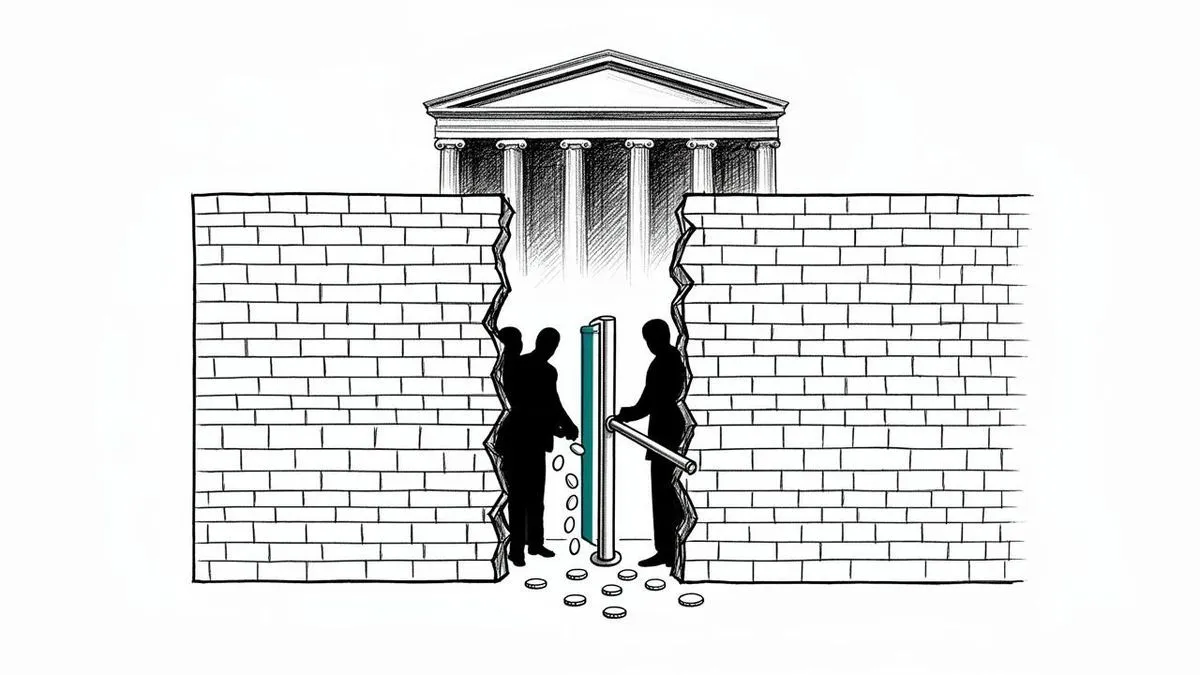
In its latest filing, Epic described Apple's 27% commission as a "junk fee," arguing that its practical effect is to make it nearly impossible for developers to steer users through in-app links to external payment channels, thereby preserving Apple's control over transactions. Epic also accused Apple of planning to circumvent the injunction from the outset, replicating the effects of its original anti-competitive rules through new fees and interface design restrictions. The filing cited an earlier admission by an Apple executive that "for any developer, the cost of an external link transaction will be higher than an in-app purchase subject to a 30% commission," and claimed Apple commissioned a "sham" report to find an economic justification for the 27% rate. Epic further noted that Apple had asserted privilege over more than 57,000 documents to conceal the relevant decision-making process, and that presiding Judge Yvonne Gonzalez Rogers had previously found that Apple's vice president of finance "blatantly lied under oath" when testifying about the timing of the new commission.
Apple denies violating the court order. Its attorney Gregory Garre, a former U.S. Solicitor General, argues that the original injunction's text does not explicitly prohibit collecting commissions and that a court cannot hold Apple in contempt based solely on a post-hoc finding that the practices contravene the injunction's spirit. In its appeal, Apple cited multiple precedents, emphasizing that courts should enforce the literal requirements of an injunction rather than its broader legislative intent.
The U.S. government took a middle-ground position in a brief supporting Apple: the original injunction did not clearly prohibit Apple from charging a 27% commission on external purchases, but Apple was correctly held in contempt for the way it restricted developers from displaying external payment buttons. The U.S. Chamber of Commerce, Chamber of Progress, and several former federal antitrust enforcement officials also filed briefs supporting Apple.
According to the Supreme Court's published schedule, the court is set to hear oral arguments on January 11, 2027, in the case docketed as Apple Inc. v. Epic Games Inc. (25-1311). Apple must file its final reply brief by December 14. The core legal question before the court is whether a court can hold a party in civil contempt based on the actual purpose and spirit of an injunction.
TimelineDevelopments2020Epic sues Apple, challenging App Store payment and distribution rules2021Federal district court in California issues anti-steering injunction requiring external links to be allowed2025District court finds Apple in contempt; Ninth Circuit upholds finding but modifies the commission prohibitionMay 2026Apple petitions the Supreme CourtJune 2026Supreme Court agrees to hear the caseSeptember 2026Apple files its opening brief; U.S. government and others file supporting briefsNovember 13, 2026Epic files its response brief and adds a veteran Supreme Court attorneyDecember 14, 2026Deadline for Apple to file its final reply briefJanuary 11, 2027Supreme Court holds oral arguments
Note: Timeline compiled from the court's public schedule and filings by both parties.
In terms of market impact, the key issue is not the 27% rate itself but how the boundaries of injunction enforcement are defined. If the Supreme Court upholds the contempt ruling, developers' room to steer users to external payment channels would gain clearer judicial backing, and Apple's practical control over in-app transaction commissions could be further weakened. If the court adopts Apple's literal interpretation of the injunction, it would mean companies can circumvent injunctions by adjusting rule designs without fear of contempt liability—a precedent that would have ripple effects on litigation and regulation targeting app store policies worldwide. For developers, whether the total cost of external link transactions can truly fall below that of in-app purchases still depends on how the final ruling addresses commissions and link restrictions.