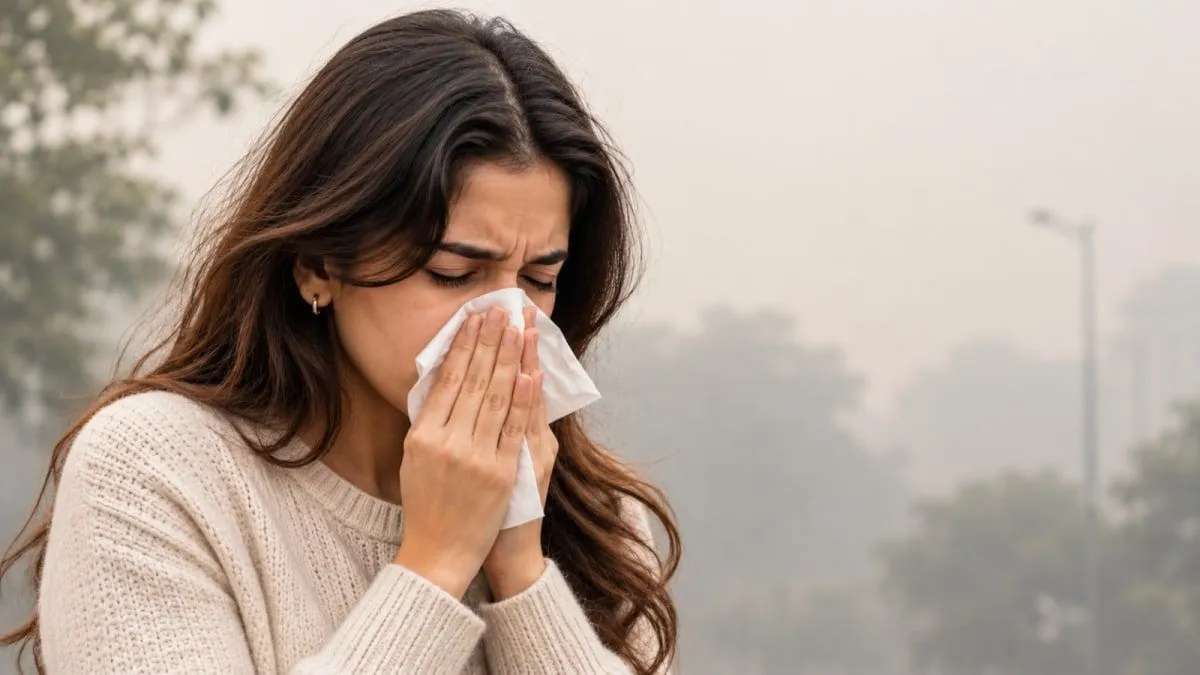
With Delhi’s AQI crossing 450, toxic air and sudden weather changes may trigger sneezing, a runny nose and congestion. Know how the three are triggered?
With the sudden change in weather, a constantly running nose, repeated sneezing or nasal congestion may make you think you are coming down with a cold. However, as Delhi’s Air Quality Index (AQI) crosses 450, toxic air could be another reason behind these symptoms.
While a common cold, allergic rhinitis and pollution-related irritation may leave you with a stuffy or runny nose, the pattern of symptoms, how long they last and what triggers them can help distinguish between the three. The tricky part is that pollution-related irritation can feel similar to a common cold or an allergy, making it difficult to identify the cause. So, how can you tell whether your runny nose is being triggered by a viral infection, an allergic reaction or the air you breathe?
“A blocked or runny nose is something many people blame on a change in weather or the latest cold going around. The same symptom can come from very different sources," Dr. Rahul Garg, Head of Department and Senior Consultant, ENT and Head-Neck Surgery, Manipal Hospital, Palam Vihar, Gurgaon, explains why recognising these differences matters and when nasal symptoms need medical attention.
Is Your Runny Nose A Sign Of A Common Cold?
A common cold is usually caused by a viral infection and may begin with a scratchy or mildly sore throat before progressing to sneezing, a runny nose and nasal congestion. Some people also experience a mild fever, body aches, cough or general fatigue.
According to Dr Garg, a cold generally develops gradually and tends to resolve within around seven days, although some symptoms, particularly a cough, may last longer. “Among 40,000 patients in India experiencing nasal symptoms, more than half screened positive for allergic rhinitis, indicating that persistent sneezing, a runny nose or nasal congestion may not always be due to a common cold," notes Dr. Garg. Symptoms that return in a particular season or after contact with a specific trigger often point toward allergy.
What you can do: Rest, drink adequate fluids and use simple measures to ease congestion. Most uncomplicated colds improve without specific treatment. Antibiotics do not work against viral infections and should not be taken unless prescribed for a bacterial infection.
If your nose starts running whenever you clean the house, enter a dusty room or spend time around pets, an allergy could be responsible.
Allergic rhinitis occurs when the immune system reacts to otherwise harmless substances such as pollen, dust mites, mould spores or pet dander. Common symptoms include repeated bouts of sneezing, a watery nasal discharge, congestion and itching in the nose, throat or eyes.
Unlike a cold, allergies generally do not cause fever. They may also persist for weeks or return whenever you encounter a particular trigger.
Dr Garg points to Indian patient screening data involving around 40,000 people with nasal symptoms, in which more than half screened positive for allergic rhinitis. This highlights why persistent sneezing and congestion should not automatically be dismissed as repeated episodes of the common cold.
What you can do: Identify and limit exposure to the suspected trigger. Depending on the cause, this may involve reducing dust accumulation, washing bedding regularly, controlling indoor mould or limiting exposure to pollen. A doctor can help establish whether the symptoms are allergy-related and recommend appropriate treatment.
Can Air Pollution Make Your Nose Run Or Feel Blocked?
Not every runny nose is caused by an infection or an allergy. Sometimes, the air you breathe can irritate the nasal passages.
Smoke, smog, fine particulate matter and chemical fumes can inflame the lining of the nose, causing dryness, a burning sensation, sneezing and congestion. These symptoms may become more noticeable after spending time outdoors, particularly on days when air quality is poor.
Research published in the Journal of Allergy and Clinical Immunology has linked higher exposure to fine particulate matter (PM2.5) with more severe nasal congestion, irritation and sneezing among people with rhinitis.
Dr Garg explains that pollution-related nasal irritation often improves when exposure to polluted air is reduced. Unlike an allergy, it may not be linked to one specific substance that triggers an immune response.
What you can do: Check local air-quality levels and limit prolonged outdoor exposure when pollution is high. Keep windows closed during periods of heavy pollution, avoid areas with smoke and dust, and use a well-fitting mask when necessary.
How Can You Protect Your Nasal Passages From Irritation?
A few everyday measures can help keep nasal passages comfortable, particularly during periods of poor air quality.
– Use saline nasal spray: It can help rinse away dust and other airborne irritants while keeping the nasal passages moist.
– Stay hydrated: Adequate fluid intake helps prevent excessive dryness.
– Improve indoor air quality: Reduce dust accumulation, avoid indoor smoking and consider suitable air filtration where needed.
– Limit outdoor exposure: Avoid prolonged outdoor activity when pollution levels are particularly high.
– Avoid cigarette smoke: Tobacco smoke can further irritate the nasal lining and worsen congestion.
When Should You See A Doctor?
Most uncomplicated colds and episodes of pollution-related irritation settle with simple care. However, persistent, recurring or worsening symptoms should not be ignored.
Dr Garg advises seeking medical evaluation if nasal symptoms do not improve, repeatedly return or become progressively worse. A high fever, facial pain, breathing difficulty or symptoms that worsen after initially getting better also warrant medical attention.
A blocked nose may seem like a minor inconvenience, but understanding what triggers it can help you choose the right approach. Whether it is a passing viral infection, an allergy or the air around you, the first step is to look beyond the symptom and identify its cause.