11 November 2026, Sydney, AU: Swapping ordinary salt for potassium-enriched salt worldwide could prevent almost 3 million deaths and more than 10 million new cases of cardiovascular and chronic kidney disease every year. That is the estimate of a modelling study led by The George Institute for Global Health and published on 4 November in the journal Nature Health.
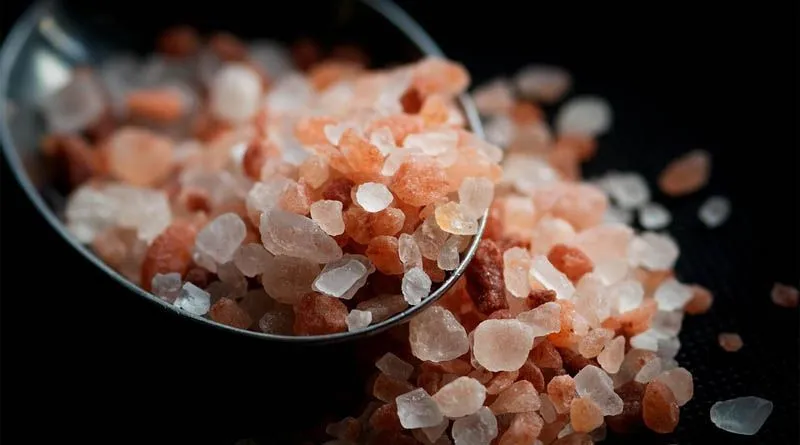
The research team simulated the switch across 193 countries, covering an adult population of about 4.6 billion people. Potassium-enriched salt is made by replacing part of the sodium chloride in regular salt with potassium chloride. The institute says the result looks, tastes and cooks much like ordinary salt. Too much sodium raises blood pressure, while potassium helps lower it, so the swap works on both at once.
In the most ambitious scenario, every source of salt is replaced, including salt added at home and salt used in processed foods and restaurant meals. That scenario prevented an estimated 2.96 million deaths and 10.17 million cases of cardiovascular disease (CVD) and chronic kidney disease (CKD) a year. Replacing only the salt people use at home prevented about 1.85 million deaths and 6.19 million cases. Replacing only the salt in processed and restaurant food prevented about 1.56 million deaths and 5.46 million cases. The institute says the switch could prevent up to one in ten cardiovascular deaths in most countries.
The researchers also tested much narrower rollouts. If 80% of people already diagnosed with high blood pressure switched their home salt, the model projected about 590,000 deaths prevented each year. Limited to 80% of people being treated for high blood pressure, the figure was about 480,000. Bruce Neal, a Senior Professorial Fellow at the institute, said even the smallest scenario showed large health gains.
China accounts for the biggest share of the projected benefit. The full-switch scenario prevented about 1.08 million deaths and 3.6 million CVD and CKD cases there each year. India followed with about 400,000 deaths and 1.5 million cases prevented. The country estimates also include about 105,000 deaths prevented in the United States, 30,000 in Mexico, 18,000 in Nigeria, 13,000 in the United Kingdom, 6,800 in South Africa and 2,100 in Australia.
The study uses disease-burden figures showing that cardiovascular disease killed 19.2 million people in 2023. The institute adds that about 1.4 billion adults aged 30 to 79, roughly one in three, have high blood pressure. In 2025 the World Health Organization published a guideline endorsing lower-sodium salt substitutes such as potassium-enriched salt to cut blood pressure and cardiovascular risk.
Where the salt comes from matters
The findings point to a large role for food manufacturers and caterers, especially in wealthy markets. The institute notes that in Europe and North America more than 70% of salt intake comes from processed and restaurant food, not the salt shaker. In those regions, switching home salt alone would capture only part of the possible benefit. Food companies would need to reformulate products, bakeries, snacks and ready meals among them, to make a full switch.
Supply is another constraint. Neal pointed to the need to scale up potassium chloride production to meet any large rise in demand. Potassium chloride is the same mineral compound that is mined in far larger volumes and sold to farmers as potash fertiliser. Food-grade potassium chloride is a purified form. Neal called a complete global switch aspirational. He said the modelling was meant as “a starting point to get countries thinking about the opportunity.”
The research also covers the main safety concern. People with advanced kidney disease can struggle to clear excess potassium, which can lead to hyperkalaemia, a dangerously high level of potassium in the blood. Precautions are also needed for people taking medicines that significantly raise blood potassium. The study found that the population-wide benefits still outweighed these risks. Professor Vivek Jha, a nephrologist (kidney specialist) and Senior Professorial Fellow at The George Institute in India, said the risks for this group could be managed through patient education, product labelling and clinical oversight.
This is a computer simulation, not a clinical trial. Its estimates depend on the assumptions built into the model about how much salt people eat, where that salt comes from, and how strongly lower sodium and higher potassium reduce disease. The press materials do not say what sodium-to-potassium ratio the model assumed. The release lists no specific funder for the work. Under the published conflict-of-interest statement, several authors received research support from the public-health organisation Resolve to Save Lives, and one author reported speaker fees and advisory roles with pharmaceutical and medical device companies.
Also Read: USDA Prepares $8 Billion Harvest Fuel Relief Payments for Farmers