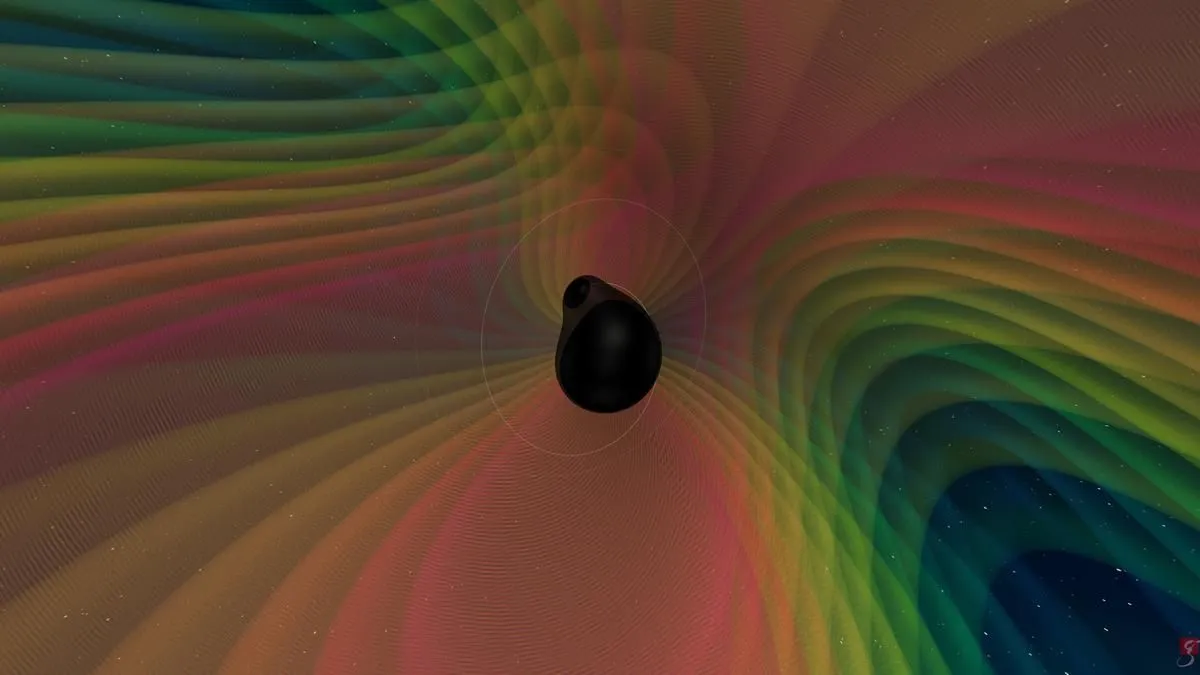
On January 14, 2025, the twin LIGO observatories in the U.S. detected a gravitational wave emitted by two black holes merging together 1.3 billion lightyears away. One black hole was 34-times as heavy as the sun and the other, around 32-times. The LIGO team called the gravitational wave signal GW250114 — and it was the clearest signal the team had recorded to date.
Scientists first began to detect and study gravitational waves in 2015. These waves are ripples in spacetime created when really heavy objects, like neutron stars and black holes, accelerate rapidly. After a decade of improvements to the LIGO detectors, by 2025, the scientists using it could study hundreds of black hole mergers at the same time and, using the data, answer questions about how different black holes form, why some are heavier than others, and whether gravity always behaves the way Albert Einstein predicted it would.